
 As with a number of other Scottish football clubs, the origins of East Stirlingshire Football Club can be traced back to cricket. In 1880, a local cricket club in the Bainsford area of Falkirk, the Bainsford Blue Bonnets (styled as ‘Bainsford Bluebonnets’ by some sources), formed a football side called Bainsford Britannia. Britannia had existed as part of the cricket club for a year, when, in 1881, the football club broke away and adopted the name ‘East Stirlingshire’ (after a previous occupant of their home ground, East Stirlingshire Cricket Club). The name East Stirlingshire refers to the historic county of Stirlingshire, of which the town of Falkirk was a part until 1975.
In 1900, when Linthouse FC folded, the Shire gained the vacant spot in the bottom tier (at that time, the Second Division) of the Scottish Football League. East Stirlingshire did not impress during this spell and, in 1915, the Second Division was dissolved due to the First World War. After the war, in 1921, the Second Division was reintroduced and the Shire gained admittance once again.
The club experienced its share of ups and downs over the comings decades. In 1932, East Stirlingshire finished the season at the top of the table, sharing the position with St Johnstone. Thanks to the Shire’s superior goal difference, they gained promotion to the top tier of Scottish football for the first time. Unfortunately, this spell would last only one season.
When the Second World War broke out in 1939, the league was suspended. After the war, the Shire was not permitted to return to the second tier. Alongside a number of other small clubs, East Stirlingshire competed in the new third tier. At various points, the Shire gained promotion to and were relegated from the second tier, but it was not until the 1963/64 season that the club competed in the top tier for a second time. As with their previous spell, they lasted only one season before relegation.
Although East Stirlingshire’s league performances have proven unremarkable, they have experienced moderate success in cup competitions, reaching the quarter-finals of the Scottish Cup on three occasions, most recently, in the 1980/81 competition. In that quarter-final, the Shire lost with a respectable 2-0 to cup-holders and eventual top tier champions Celtic.
At the end of the 2015/16 season, East Stirlingshire gained the dubious distinction of being the first club to have lost their place in the Scottish Professional Football League as a result of a play-off, relinquishing their place to the Lowland Football League champions, Edinburgh City 2-1 over two legs. Since that time, the Shire have competed in the Lowland League.
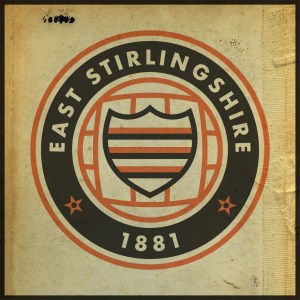
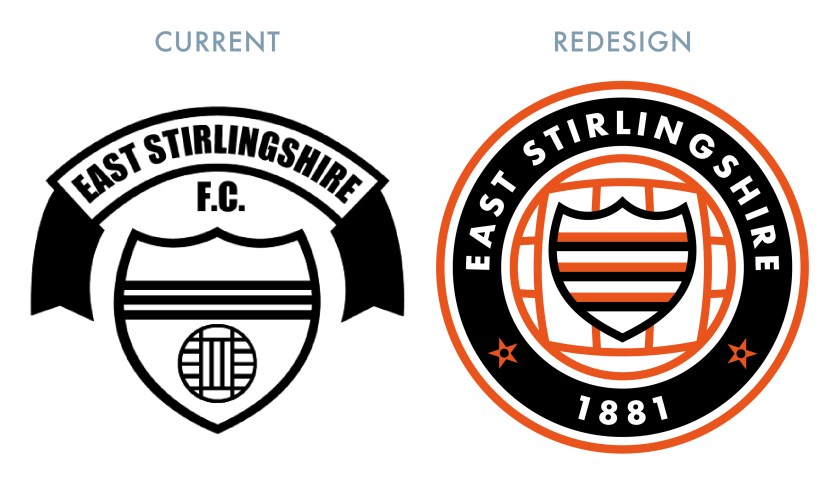
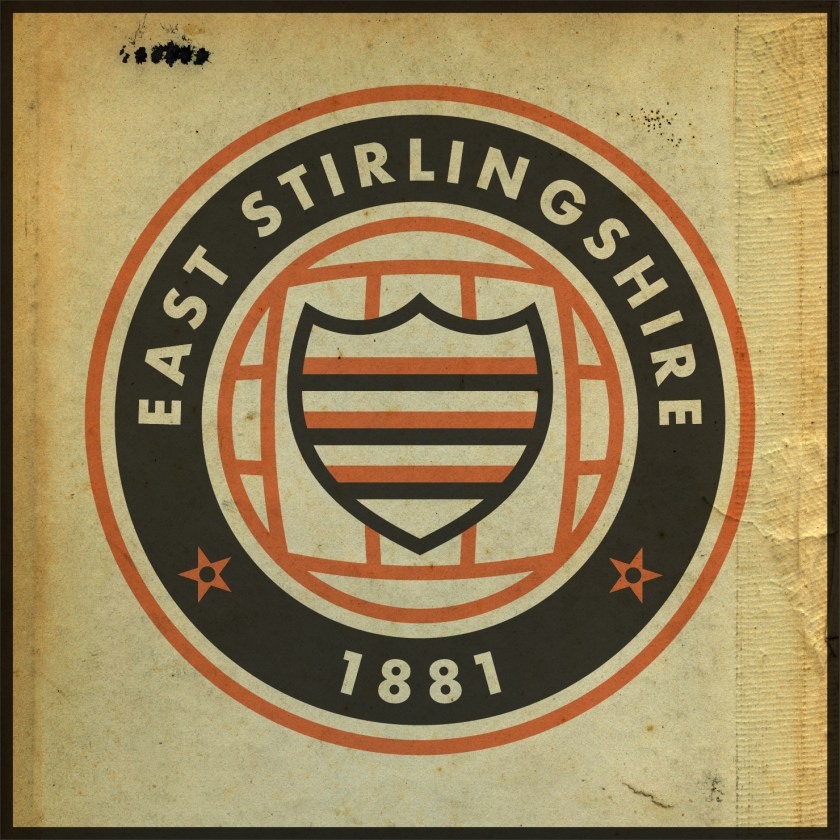
A version of East Stirlingshire’s current badge was first used in 1987. This first version incorporated orange as an accent colour, which first featured in the club’s 1980 badge. For my redesign, I have chosen to make use of the orange accent, which I find striking alongside the black and white. The roundel and the shield design call back to the 1980 badge, which I find particularly handsome. The two stars in the roundel call back to the old Stirlingshire coat of arms and depict two rowels (the spiked discs at the end of spurs).
For the home kit redesign, I went with East Stirlingshire’s traditional black and white hoops (used in the vast majority of the club’s home kits from 1883 onward). The red socks first featured in 1946 and have been used often ever since. The home kit also features a 1970s-styled collar. The away kit makes use of the orange accent. The shorts for both kits feature only the central portion of the redesigned badge.

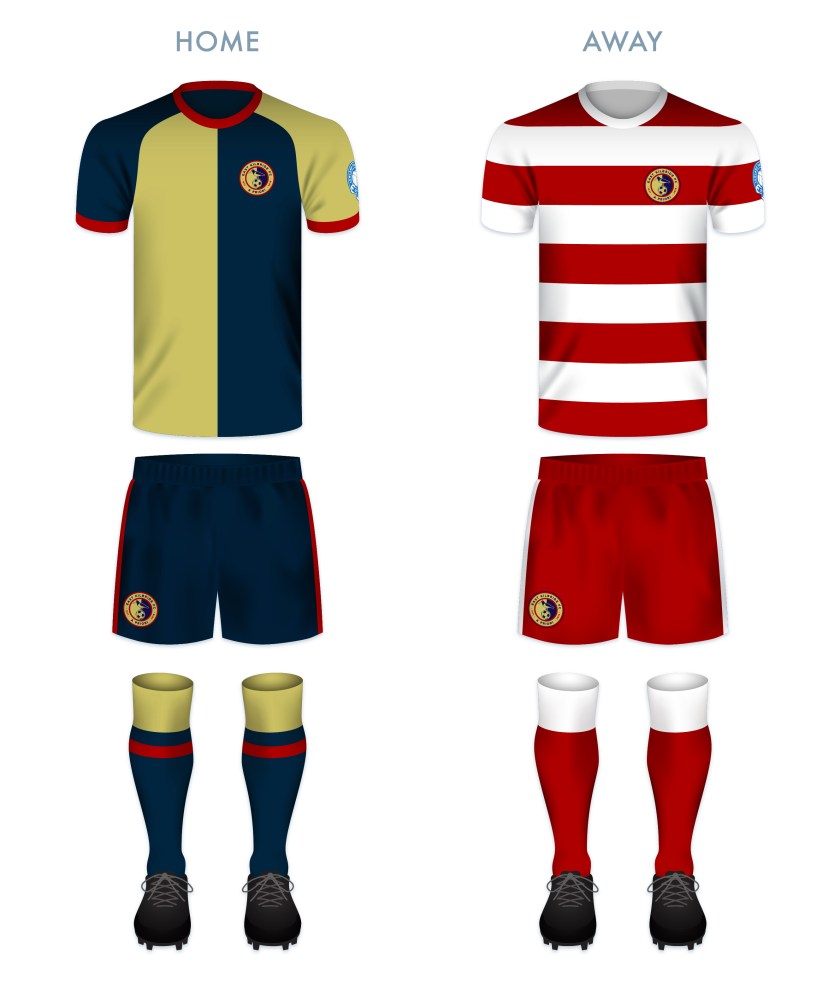
 The original East Kilbride Football Club was established in 1871, making it one of the earliest association football clubs in Scotland, after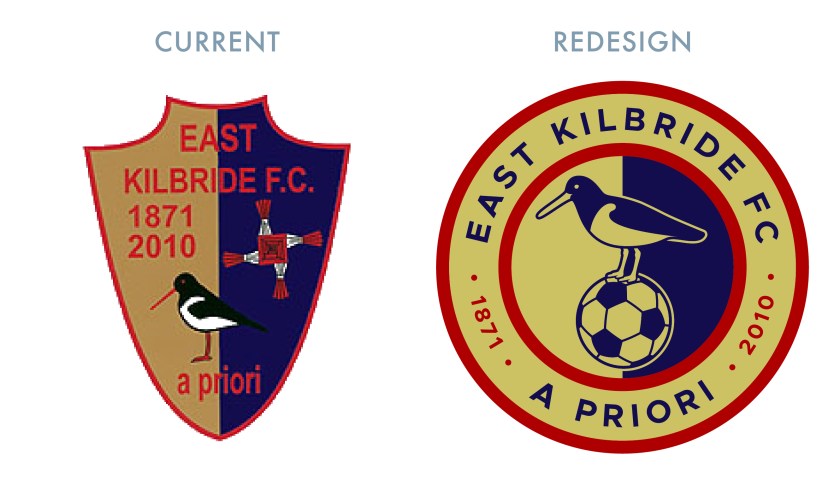
 The name Dalbeattie Star Football Club was used as early as 1900 for a team in the Kirkcudbrightshire town which played a number of local friendlies, but it was not until 1905 that Dalbeattie Star began to play competitive fixtures. In 1906, it was decided that the club would compete as a senior side and in August 1907, Dalbeattie Star were admitted into the SFA.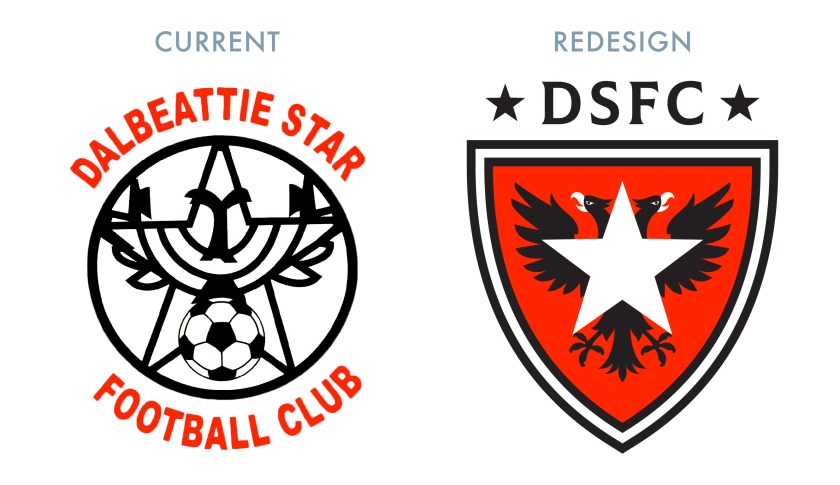
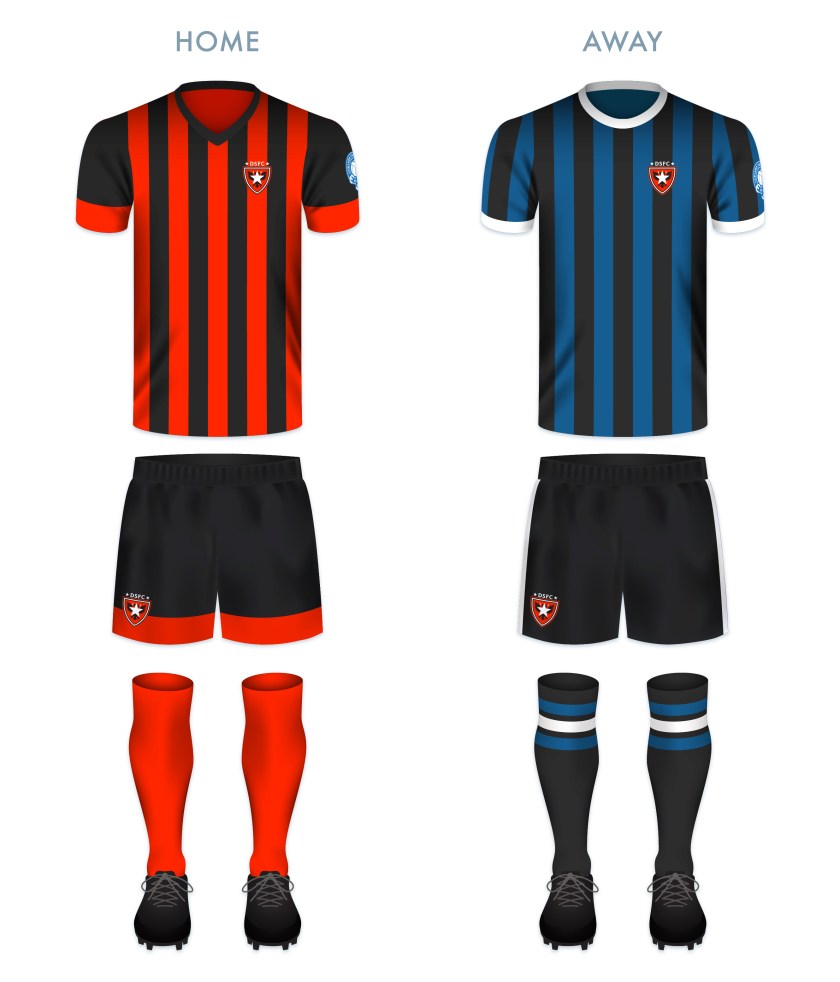
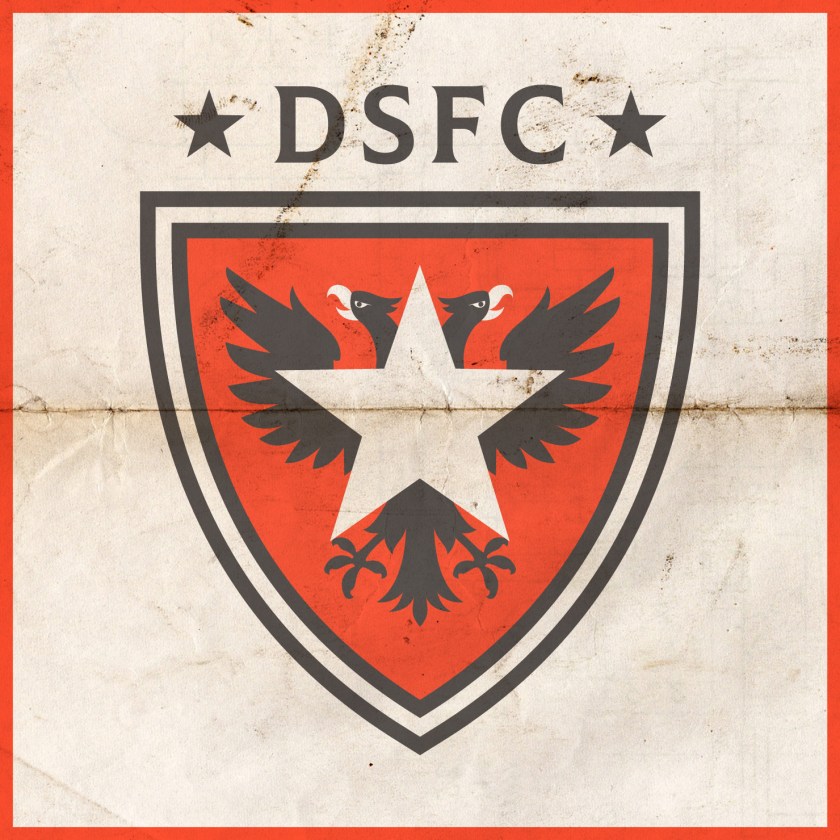
 Cumbernauld Colts Football Club was established as a youth football club (hence, the use of ‘Colts’) in 1969.
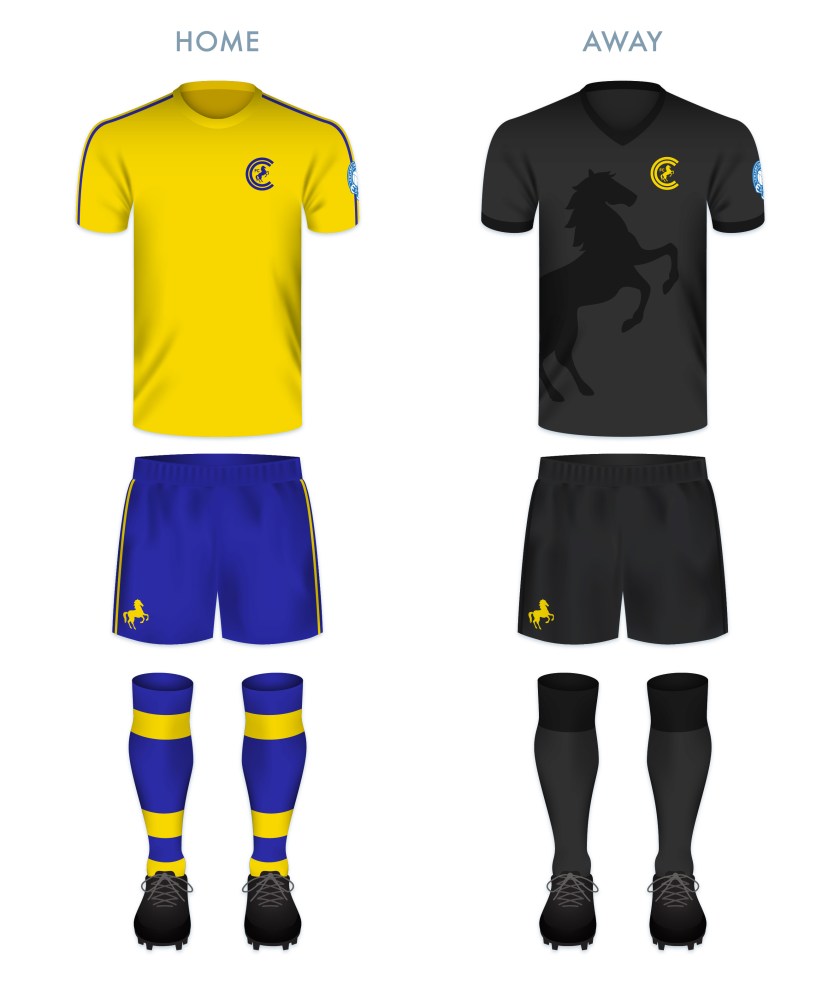
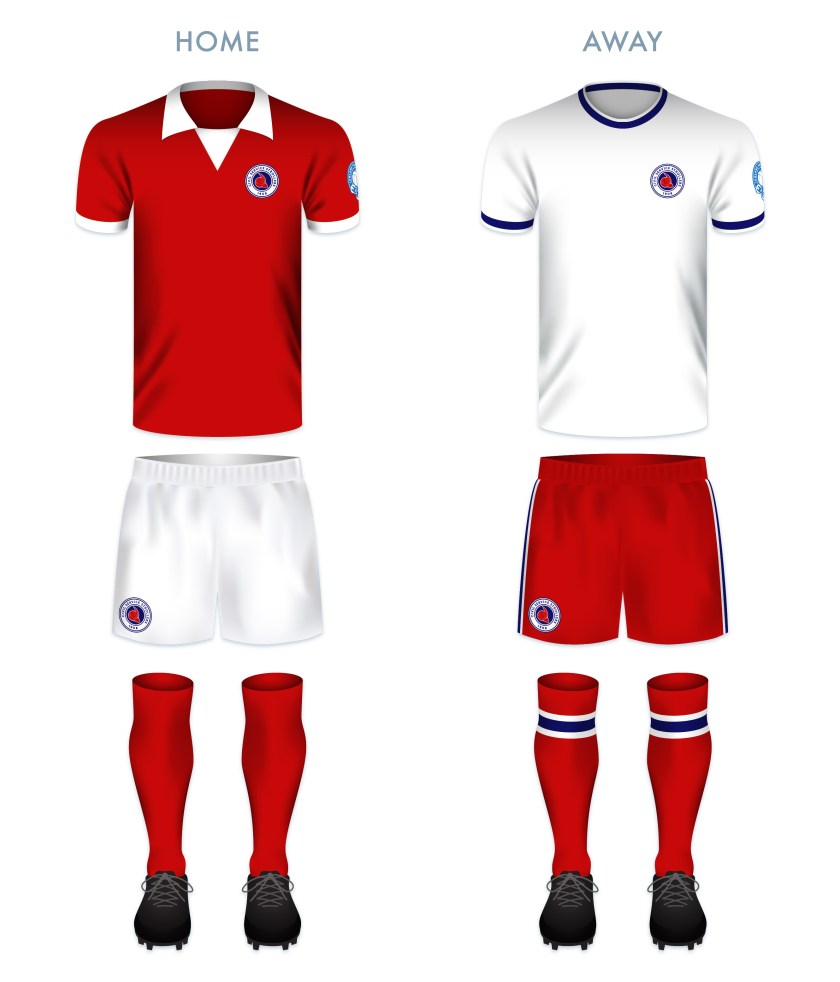
 Civil Service Strollers Football Club was established as Edinburgh Civil Service Football Club in 1908. The club was based at Stenhouse Stadium until moving to Pinkhill Stadium in Corstorphine in the 1920s. In 1957, the club moved to the Edinburgh Area Civil Service Sports Association in Muirhouse, where they continue to play today.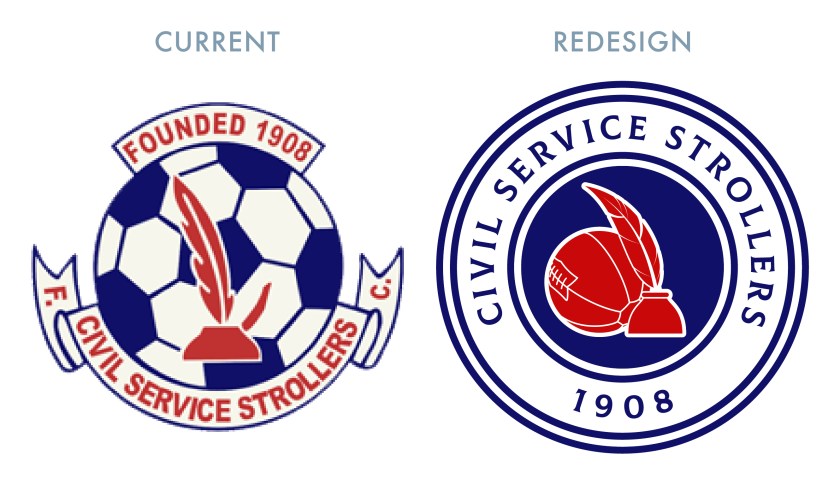
 Broomhill Sports Club was founded in Glasgow in 2004. A decade later, BSC Glasgow Football Club was established and since the 2014/15 season, the club has been competed in the


 ellliottt