
 Fort William Football Club was established in 1974, making the club the second-youngest in the Highland Football League (after Strathspey Thistle, established in 1993). From their formation, Fort William had campaigned unsuccessfully to gain admittance into the Highland Football League. They would not participate in a competitive league until joining the North Caledonian League in 1983.
In their first season with the NCL, Fort William finished second-top in the league table. By the end of the following season, they were crowned league champions. After this success, the club was finally granted a place in the Highland League.
Fort William’s time in the Highland League can be characterised as rocky. They have yet to achieve any honours and in 2018, all six club directors resigned. The club has survived, but the 2018/19 season is not proving especially fruitful, having won two points from two draws and having been deducted nine points to finish December at the bottom of the table with -7 points and a -149 goal difference after 21 matches.
Things are looking quite bleak for Fort William these days, but here’s hoping that the club can find some inspiration to fight on and produce some significant results.
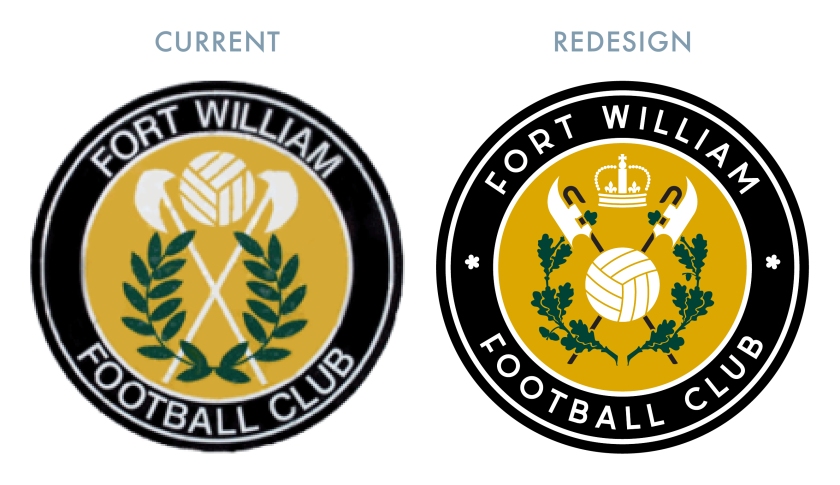
For the badge redesign, I decided to retool the current badge, which features a version of the Fort William coat of arms. The minimalism of the current badge is to be admired, though I have several issues with it. The first is that the Lochaber axes, crossed to form a Saltire – well, they don’t much resemble axes to me. Additionally, the Fort William coat of arms features a chaplet of oak branches, not of what appears to be olive branches. Lastly, the football takes the place of the crown found in the actual coat of arms. Cards on the table, I am not a monarchist, but the Fort William coat of arms is more about the town’s history than the present, with Fort ‘William’ having been named after William of Orange. Although the initial fort had been constructed during the rule of Oliver Cromwell, by the eighteenth century, it was used as an outpost against Jacobite forces.
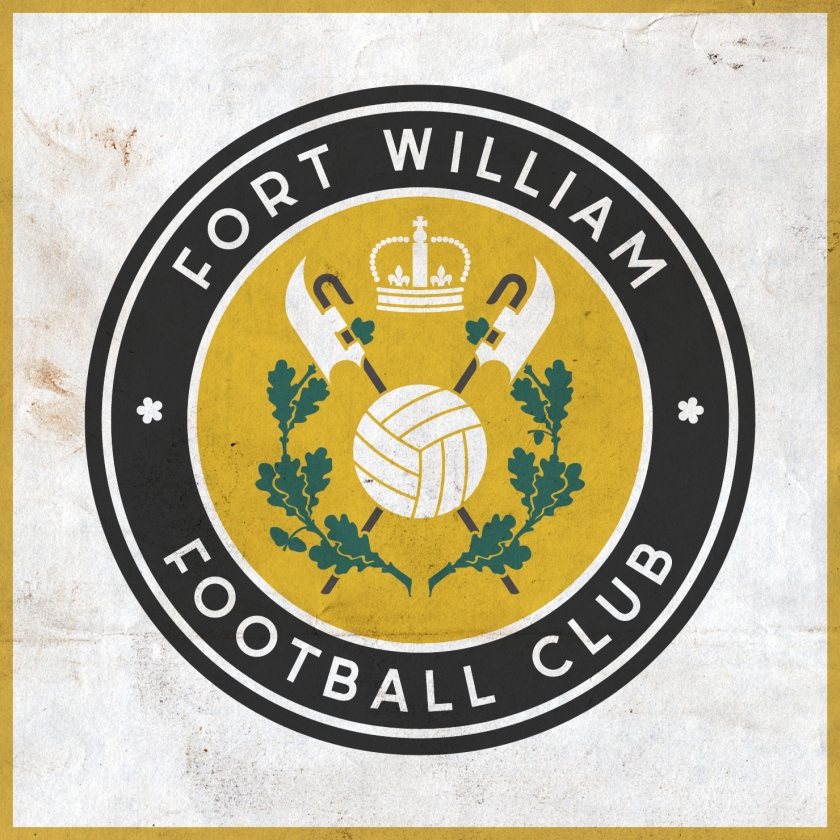
For my redesign, I decided to include all of the traditional elements of the Fort William coat of arms and place a football, similar to the one in the current badge, at the centre. In order to avoid a clear association with ‘one side’ or the ‘other’ (read: Scottish sectarianism), I have also included two small white cinquefoils in the outer circlet, symbolising the Jacobite history of the region.
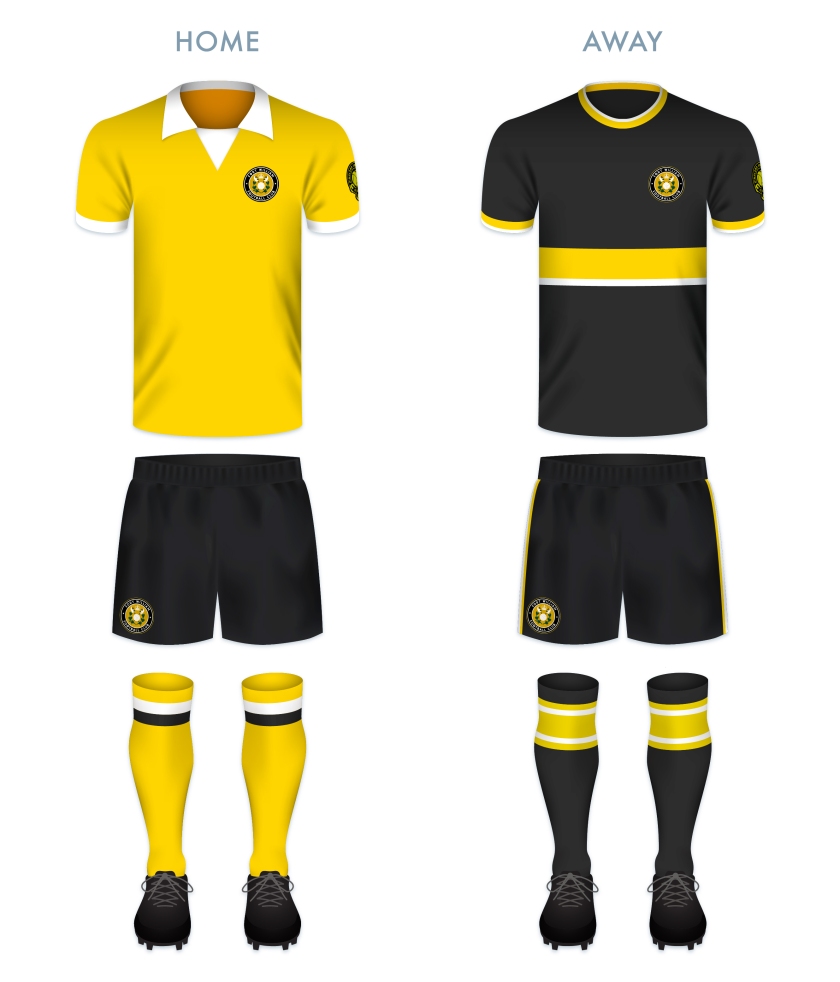
For the home kit redesign, I went with something that calls back to the club’s formation in 1974. The away kit makes use of the current black-dominated away colour scheme.
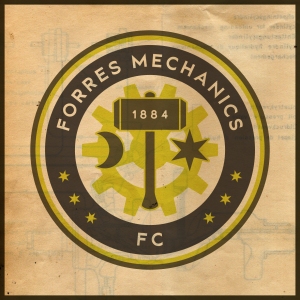 Forres Mechanics Football Club was established in 1884. Several different theories have been posited to explain the club’s unusual name. One theory suggests that the club was formed when students at an establishment called the Forres Mechanics Institute (a number of Mechanics Institutes were established throughout the United Kingdom and former British Empire from 1821) formed their own club.


 Formartine United Football Club was established in the village of Pitmedden, Aberdeenshire, in 1948. The exact circumstances of the club’s formation are something of a mystery. It is known that an amateur club, Pitmedden FC, played in the village prior to the founding of United, but the relationship between the two is unclear.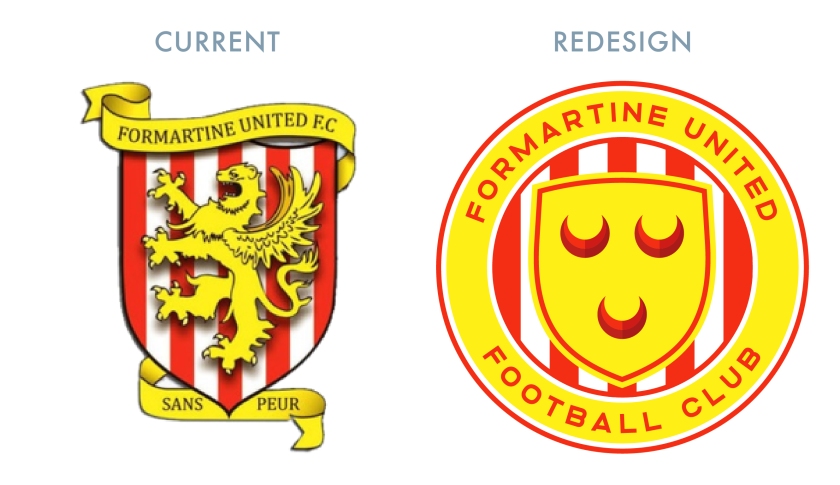
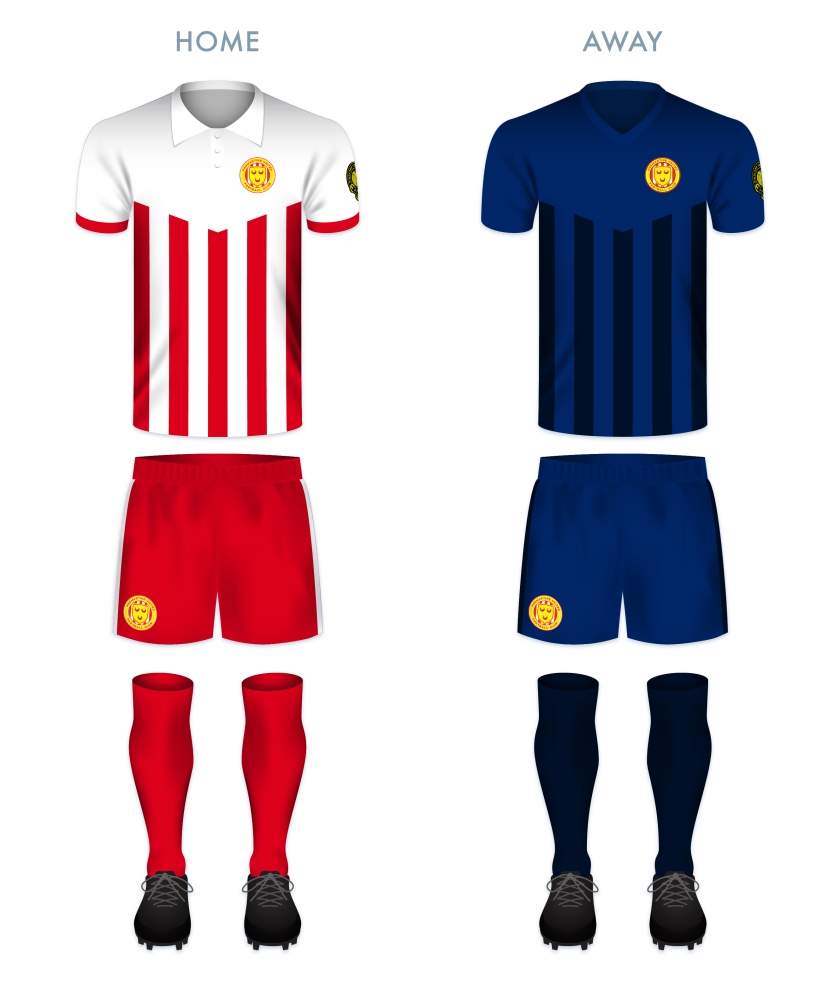
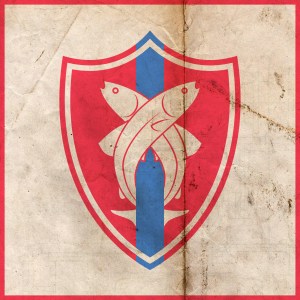 Deveronvale Football Club was established in 1938 at the union of two pre-existing clubs, Deveron Valley and Banff Rovers. The club name comes from the River Deveron, which separates the twin fishing towns of Banff and Macduff on the northern Aberdeenshire coast.
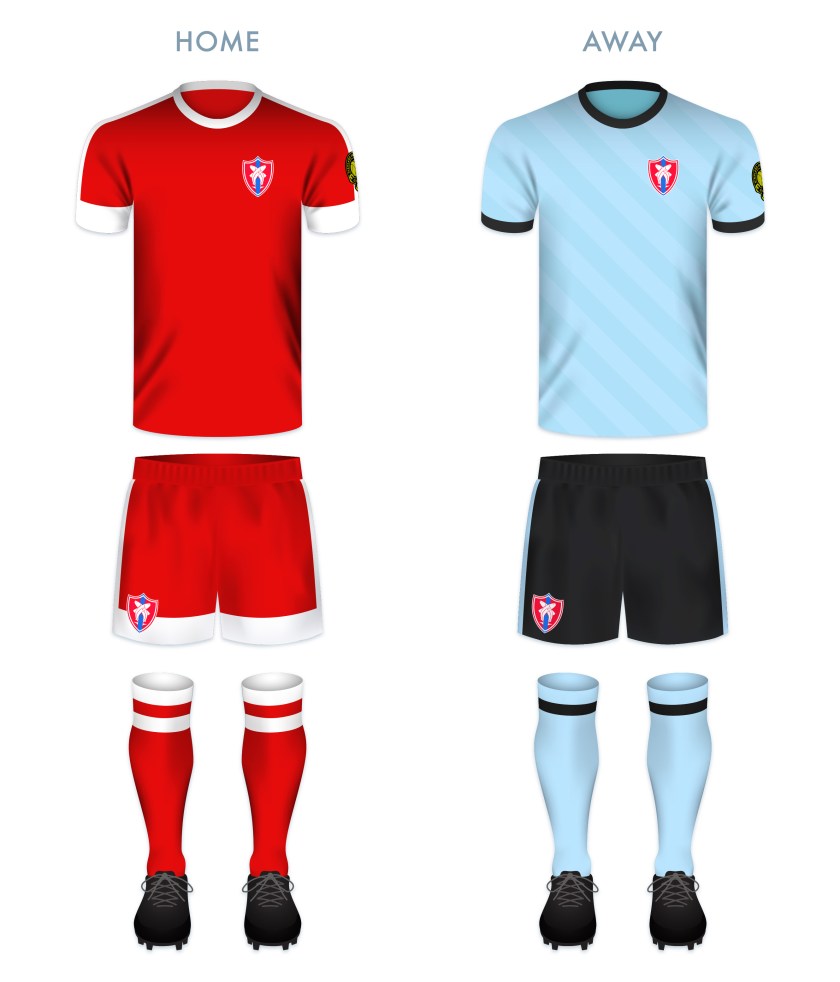

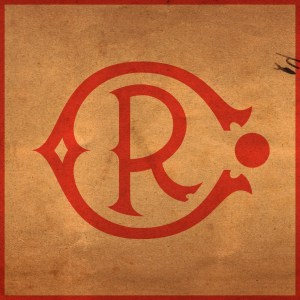 Cove Rangers Football Club was established in 1922. The club takes its name from Cove Bay, located in the southeastern corner of the city of Aberdeen, in which they play.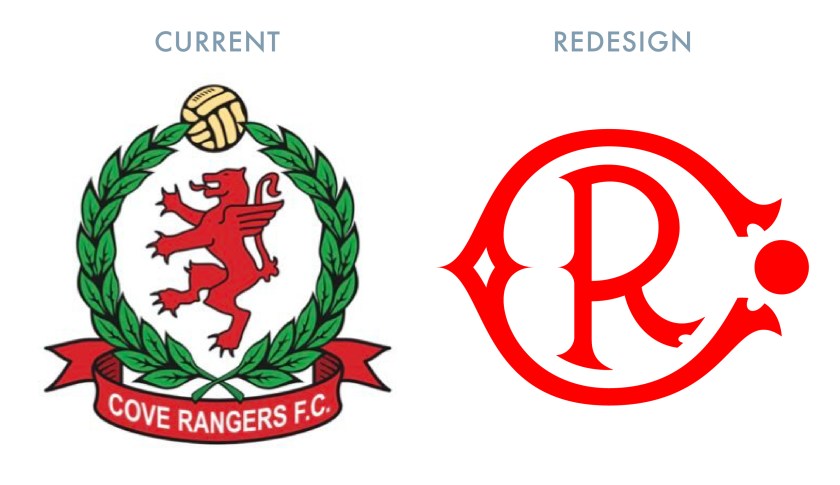

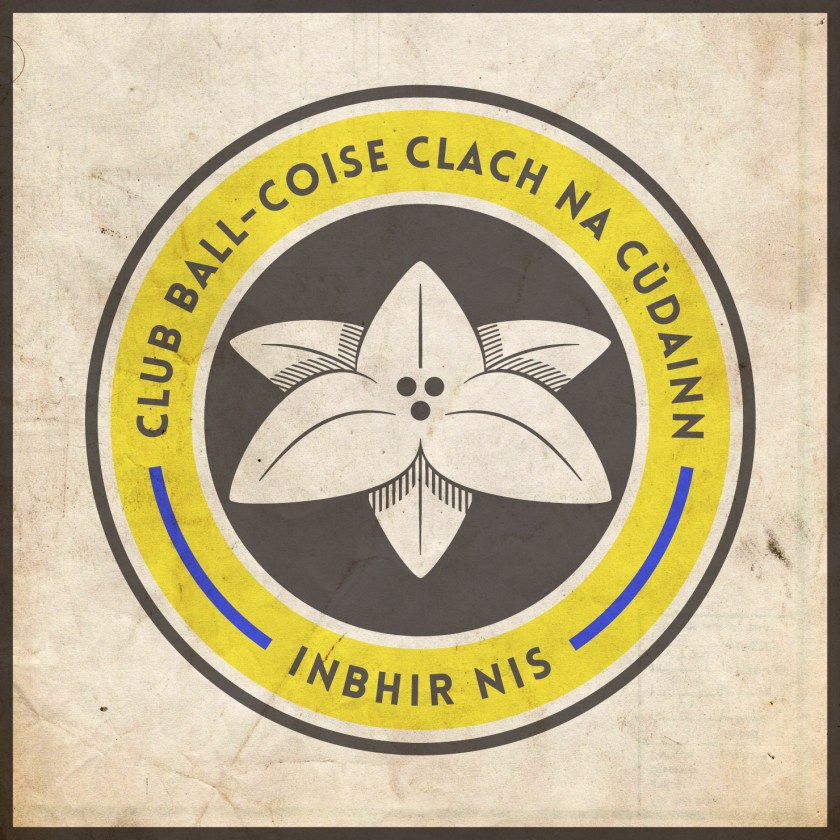
 Clachnacuddin Football Club was established in 1885. The name of the club is an Anglicisation of the Scottish Gaelic Clach na Cùdainn, meaning, ‘Stone of the Tub’, a reference to a particular landmark in the club’s locality, the Merkinch area of Inverness. (It is said that Merkinch, which is situated between the Caledonian Canal on the west and the River Ness on the east, was home to a particular stone at which locals would do their washing, hence the ‘tub’.)

 The early history of Buckie Thistle Football Club is something of a mystery. Although the exact year of the club’s founding is unknown, it is accepted generally to have been established in 1889. The club’s green-and-white hooped home shirts resemble that of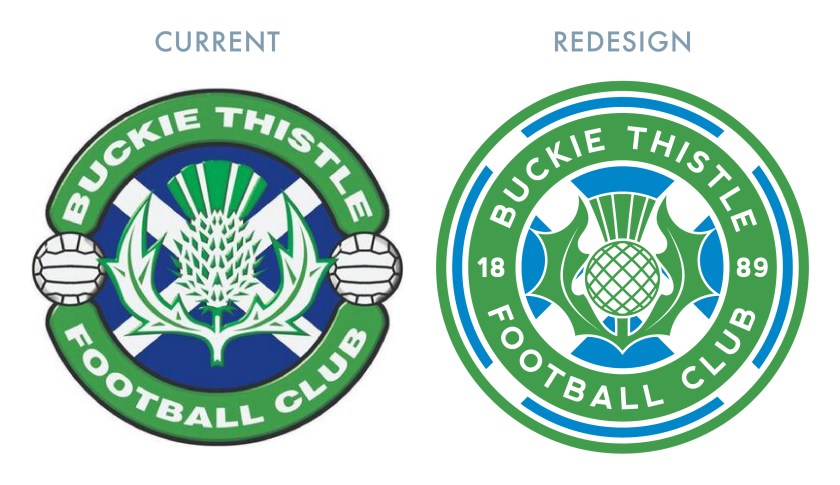


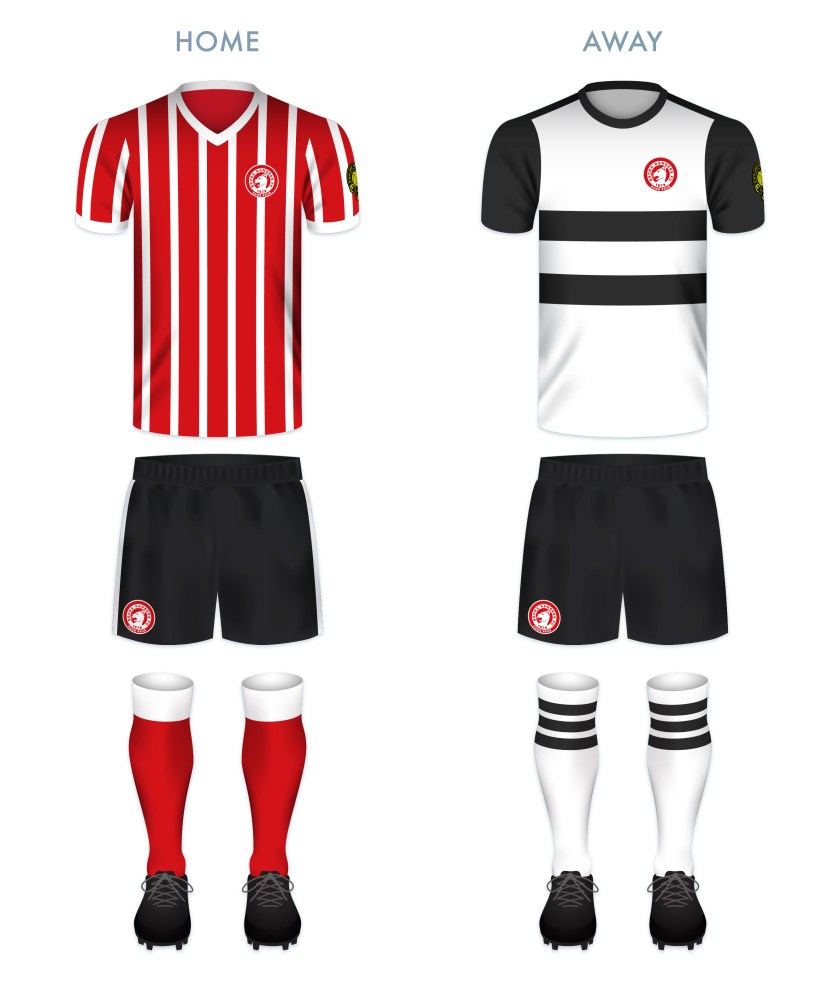
 Brora Rangers Football Club was established in the village of Brora, Sutherland in 1879. In 1933, the club became members of the Scottish Football Association and in 1962, they began to compete in the
 I first began redesigning Scottish football badges in 2013 as a personal challenge. In 2018, I set myself the task of tweaking or completely redesigning my initial rebrandings, and completing badge and strip redesigns for the

 I first began redesigning Scottish football badges in 2013 as a personal challenge. Eventually, I lost a bit of steam, but have found myself reembarking on the endeavour as of late. In 2018, I set myself the task of tweaking or completely redesigning my initial rebrandings, particularly those which I have found uninspiring or too similar to current badges. I have also expanded beyond my original redesigns (the 2013/14 top tier and a smattering of lower division clubs) to include the

 ellliottt