ellliottt

design & illustration

Menu

Skip to content
  • HOME
  • ABOUT
  • GRAPHIC
    • ALL GRAPHIC DESIGN
    • AUTOMOTIVUS
    • REBRAND: SPFL
      • Premiership
        • Aberdeen
        • Celtic
        • Dundee United
        • Heart of Midlothian
        • Hibernian
        • Kilmarnock
        • Livingston
        • Motherwell
        • Rangers
        • Ross County
        • St Johnstone
        • St Mirren
      • Championship
        • Arbroath
        • Ayr United
        • Cove Rangers
        • Dundee
        • Greenock Morton
        • Hamilton Academical
        • Inverness CT
        • Partick Thistle
        • Queen’s Park
        • Raith Rovers
      • League One
        • Airdrieonians
        • Alloa Athletic
        • Clyde
        • Dunfermline Athletic
        • FC Edinburgh
        • Falkirk
        • Kelty Hearts
        • Montrose
        • Peterhead
        • Queen of the South
      • League Two
        • Albion Rovers
        • Annan Athletic
        • Bonnyrigg Rose
        • Dumbarton
        • East Fife
        • Elgin City
        • Forfar Athletic
        • Stenhousemuir
        • Stirling Albion
        • Stranraer
    • REBRAND: SHFL
      • Brechin City
      • Brora Rangers
      • Buckie Thistle
      • Clachnacuddin
      • Deveronvale
      • Formartine United
      • Forres Mechanics
      • Fraserburgh
      • Huntly
      • Inverurie Loco Works
      • Keith
      • Lossiemouth
      • Nairn County
      • Rothes
      • Strathspey Thistle
      • Turriff United
      • Wick Academy
    • REBRAND: SLFL
      • Berwick Rangers
      • Bo’ness United
      • Broomhill
      • Caledonian Braves
      • Civil Service Strollers
      • Cowdenbeath
      • Cumbernauld Colts
      • Dalbeattie Star
      • East Kilbride
      • East Stirlingshire
      • Edinburgh University
      • Gala Fairydean Rovers
      • Gretna 2008
      • Spartans
      • Tranent Juniors
      • University of Stirling
  • 2D
  • 3D
    • ALL 3D
    • INSTALLATION
  • PHOTO
  • SHOP

Lowland Football League

ReBrand: East Stirlingshire FC

graphic

ESFC badge new-01As with a number of other Scottish football clubs, the origins of East Stirlingshire Football Club can be traced back to cricket. In 1880, a local cricket club in the Bainsford area of Falkirk, the Bainsford Blue Bonnets (styled as ‘Bainsford Bluebonnets’ by some sources), formed a football side called Bainsford Britannia. Britannia had existed as part of the cricket club for a year, when, in 1881, the football club broke away and adopted the name ‘East Stirlingshire’ (after a previous occupant of their home ground, East Stirlingshire Cricket Club). The name East Stirlingshire refers to the historic county of Stirlingshire, of which the town of Falkirk was a part until 1975.

In 1900, when Linthouse FC folded, the Shire gained the vacant spot in the bottom tier (at that time, the Second Division) of the Scottish Football League. East Stirlingshire did not impress during this spell and, in 1915, the Second Division was dissolved due to the First World War. After the war, in 1921, the Second Division was reintroduced and the Shire gained admittance once again.

The club experienced its share of ups and downs over the comings decades. In 1932, East Stirlingshire finished the season at the top of the table, sharing the position with St Johnstone. Thanks to the Shire’s superior goal difference, they gained promotion to the top tier of Scottish football for the first time. Unfortunately, this spell would last only one season.

When the Second World War broke out in 1939, the league was suspended. After the war, the Shire was not permitted to return to the second tier. Alongside a number of other small clubs, East Stirlingshire competed in the new third tier. At various points, the Shire gained promotion to and were relegated from the second tier, but it was not until the 1963/64 season that the club competed in the top tier for a second time. As with their previous spell, they lasted only one season before relegation.

Although East Stirlingshire’s league performances have proven unremarkable, they have experienced moderate success in cup competitions, reaching the quarter-finals of the Scottish Cup on three occasions, most recently, in the 1980/81 competition. In that quarter-final, the Shire lost with a respectable 2-0 to cup-holders and eventual top tier champions Celtic.

At the end of the 2015/16 season, East Stirlingshire gained the dubious distinction of being the first club to have lost their place in the Scottish Professional Football League as a result of a play-off, relinquishing their place to the Lowland Football League champions, Edinburgh City 2-1 over two legs. Since that time, the Shire have competed in the Lowland League.

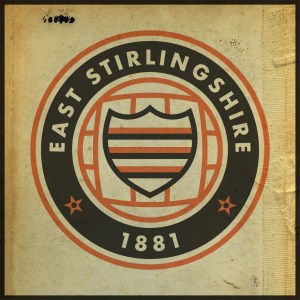
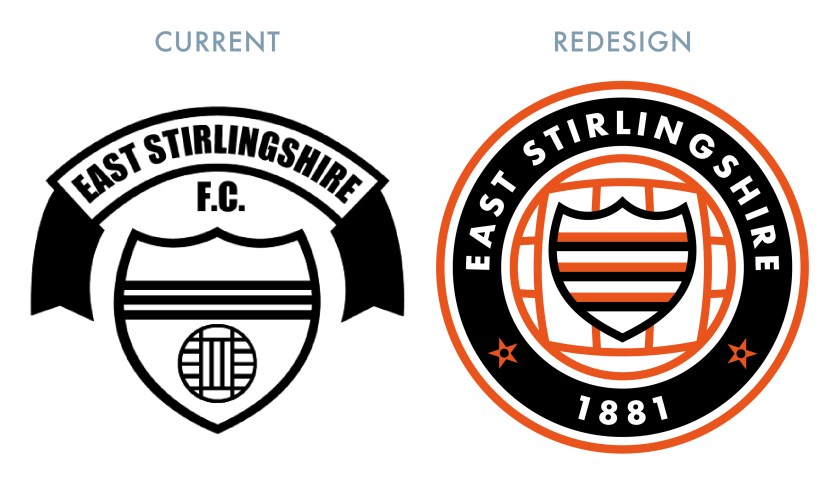
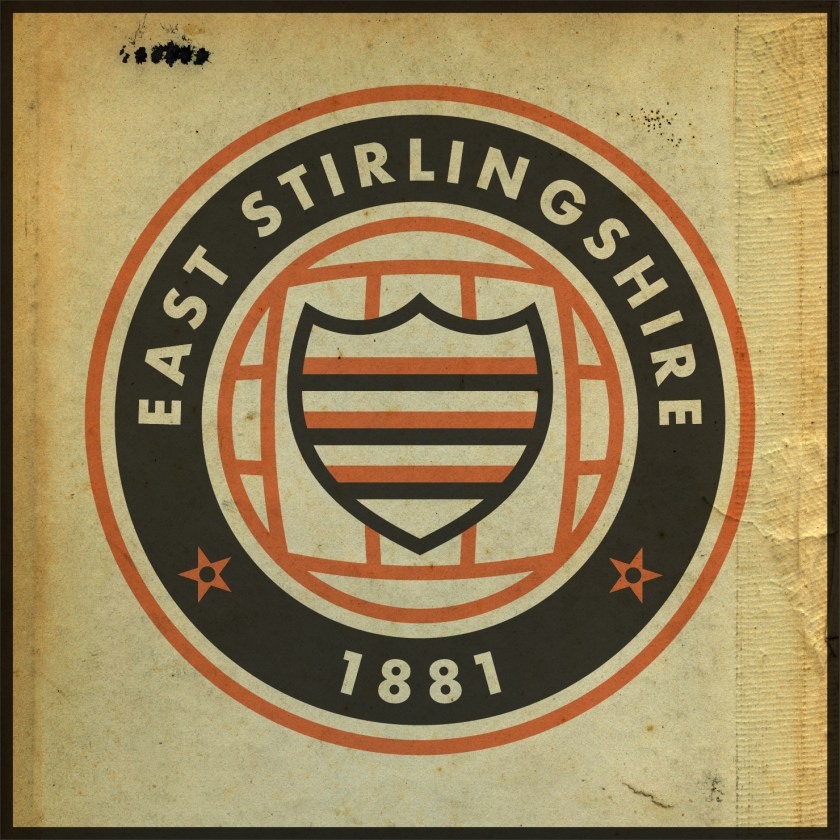
A version of East Stirlingshire’s current badge was first used in 1987. This first version incorporated orange as an accent colour, which first featured in the club’s 1980 badge. For my redesign, I have chosen to make use of the orange accent, which I find striking alongside the black and white. The roundel and the shield design call back to the 1980 badge, which I find particularly handsome. The two stars in the roundel call back to the old Stirlingshire coat of arms and depict two rowels (the spiked discs at the end of spurs).
ESFC badge-01

For the home kit redesign, I went with East Stirlingshire’s traditional black and white hoops (used in the vast majority of the club’s home kits from 1883 onward). The red socks first featured in 1946 and have been used often ever since. The home kit also features a 1970s-styled collar. The away kit makes use of the orange accent. The shorts for both kits feature only the central portion of the redesigned badge.

ESFC kit-01

ESFC badge new-01

10 June 201924 February 2020 E Tagged badge, Bainsford, Bainsford Blue Bonnets, Bainsford Blue Bonnets Cricket Club, Bainsford Britannia, Bainsford Britannia FC, Bainsford Britannia Football Club, crest, cricket, East Stirlingshire, East Stirlingshire FC, East Stirlingshire Football Club, Europe, Falkirk, football, LFL, logo, Lowland Football League, Lowlands, rebrand, redesign, Scotland, Scottish Lowland Football League, Shire, SLFL, sport, texture, The Shire, UK, United Kingdom Leave a comment

ReBrand: East Kilbride FC

graphic

EKFC badge new-01The original East Kilbride Football Club was established in 1871, making it one of the earliest association football clubs in Scotland, after Queen’s Park (1867), Kilmarnock (1869) and Stranraer (1870). East Kilbride’s early years, like many football clubs at that time, were precarious, with the club folding and reforming on several occasions. Ultimately, the club folded for good after about a decade and the town of East Kilbride went unrepresented at the senior level for more than a century.
In 2010, the local junior sides Stewartfield FC and Jackton Boys Club merged to form a new club, taking the defunct East Kilbride FC name. For the 2012/13 season, East Kilbride competed in the South of Scotland Football League before becoming members of the Lowland Football League in its inaugural season the following year. Since joining the league, East Kilbride have proven very formidable, coming second in 2014/15, winning the league in 2016/17, coming second again in 2017/18 before securing their second league championship in 2018/19.

Having won the Lowland League on two occasions, East Kilbride were eligible to compete in a play-off against the Highland Football League champions for a chance at gaining a place in the Scottish Professional Football League. In 2017, East Kilbride beat Buckie Thistle with an aggregate score of 4-3 in order to advance to the League Two play-offs against last-place Cowdenbeath. The first leg, which took place at East Kilbride’s home ground of K-Park, ended with no score. The second leg ended 1-1 after extra time, forcing a penalty shootout to decide which would compete in the SPFL the following season. The shootout proved heart-breaking for East Kilbride, who lost 5-3.

The club’s second chance at promotion to the SPFL came following their latest league championship (2018/19), though the Kilby lost to the Highland League champions, Cove Rangers with an aggregate score of 5-1 (Cove went on to gain promotion to the SPFL with a 7-0 aggregate victory over Berwick Rangers).

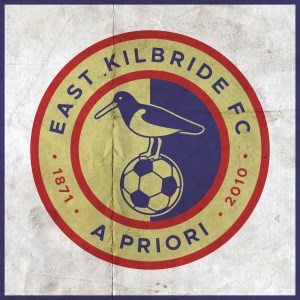
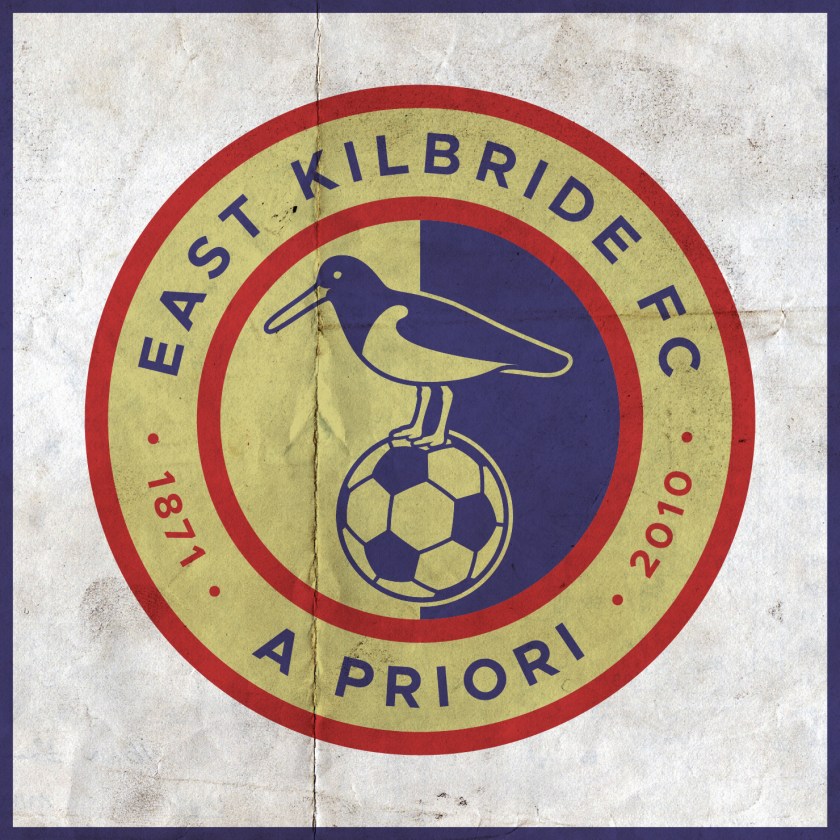
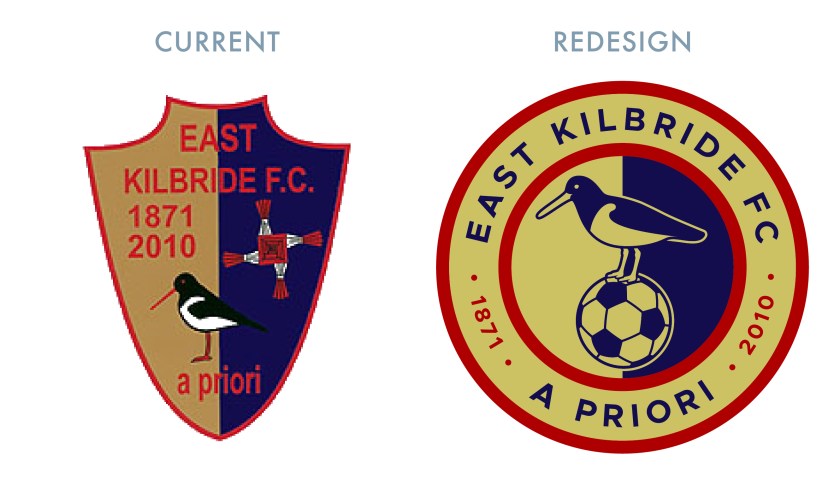
The club’s current badge is attempting to do a lot. It draws its colours from the 1871 club’s colours of gold and dark blue and employs a number of local symbols. The use of the oystercatcher, the cross and the colour red represent St Brigid of Kildare, after whom ‘Kilbride’ is named. The current badge also features the date of the original club’s founding as well as the Latin motto, a priori, meaning ‘from the earlier’, which is yet another reference to the original club.

While I appreciate the symbolism of the current badge, I feel it tries to do too much in its current form. In order to comply with an ancient heraldic Scottish law, my redesigned badge takes the form of a roundel. The central image is an oystercatcher atop a football. The outer circle includes the club’s name, the Latin motto and the years of the founding of the original and current East Kilbride FC.

EKFC badge-01

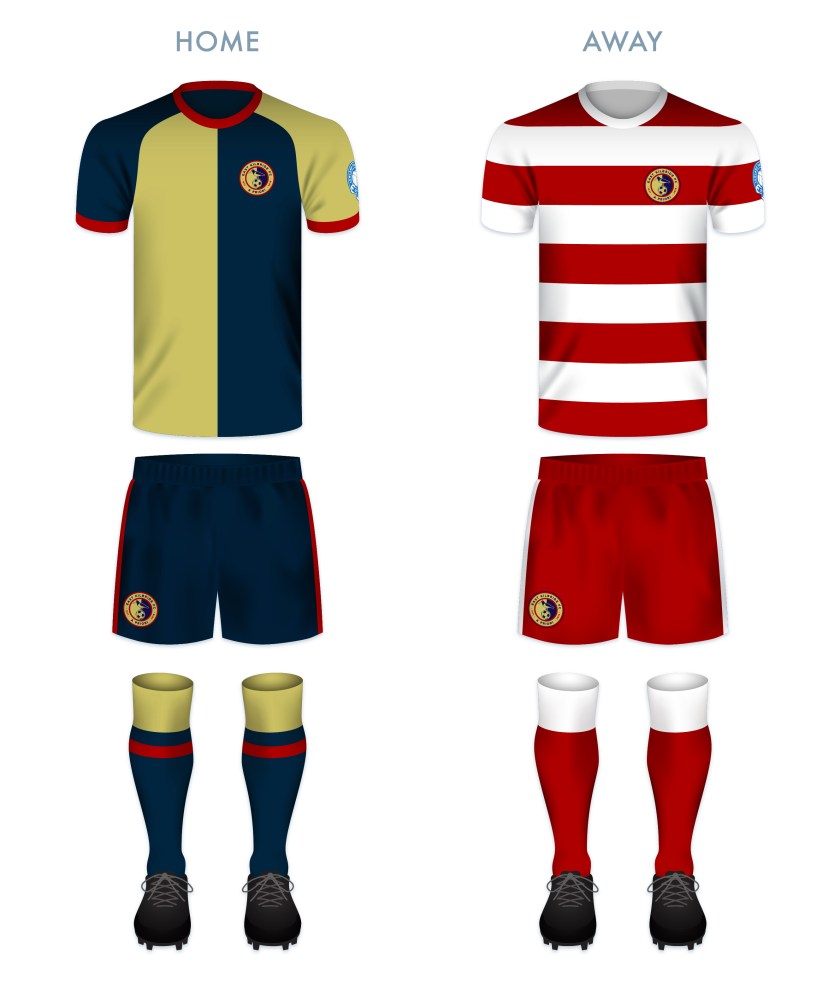
For the home kit redesign, I have gone with the traditional East Kilbride harlequin-style shirt of gold and dark blue and for the away kit I have made use of the current away colour scheme of red and white, though instead of opting for harlequin-style featured in the current away kit, I have gone with bold, thick hoops.

EKFC kit-01

EKFC badge new-01

4 June 201924 February 2020 E Tagged badge, bird, crest, East Kilbride, East Kilbride FC, East Kilbride Football Club, EK, Europe, football, Kilby, Lanarkshire, Latin, LFL, logo, Lowland Football League, Lowlands, oystercatcher, rebrand, redesign, Scotland, Scottish Lowland Football League, SLFL, South Lanarkshire, sport, texture, The Kilby, UK, United Kingdom 1 Comment

ReBrand: Dalbeattie Star FC

graphic

DSFC badge new-01The name Dalbeattie Star Football Club was used as early as 1900 for a team in the Kirkcudbrightshire town which played a number of local friendlies, but it was not until 1905 that Dalbeattie Star began to play competitive fixtures. In 1906, it was decided that the club would compete as a senior side and in August 1907, Dalbeattie Star were admitted into the SFA.
Sporadic local success came to the club until the cessation of football with the outbreak of the First World War. When competition resumed in 1919, the club’s committee decided to pursue professional football, though this proved to be a financial disaster. Even in the midst of financial hardship, the club experienced a number of local honours, winning the South of Scotland League title in 1924/25 and then again for five consecutive seasons from 1920/30 to 1933/34. The following season, the club withdrew from competition for a year and struggled up until the Second World War. In 1948, Dalbeattie Star ceased all operations.

Nearly three decades later, in 1976, the club was resurrected and regained a place in the South of Scotland League. An assortment of local achievements and qualifications in the early rounds of the Scottish Cup would follow. In 2001, Dalbeattie Star became part of the East of Scotland League before rejoining the South of Scotland League for the 2009/10 season. In total, Dalbeattie Star topped the South of Scotland League eleven times before entering the newly-formed Lowland League for the 2013/14 season.

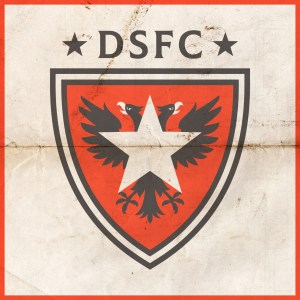
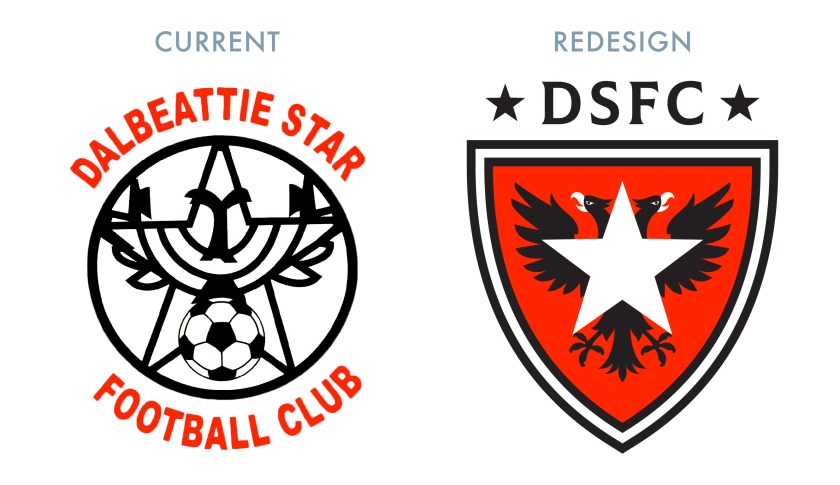
Presumably, the current club badge has been in use for some time. Although the quality of the badge is lacking, it depicts a double-headed eagle taken from the Dalbeattie coat of arms, which itself is taken from the coat of arms of the Maxwell Earls of Nithsdale. For my redesign, I decided to make use of the double-headed eagle and the star, all within a shield. I’ve also added a red background in the hope of making the badge more striking.

DSFC badge-01

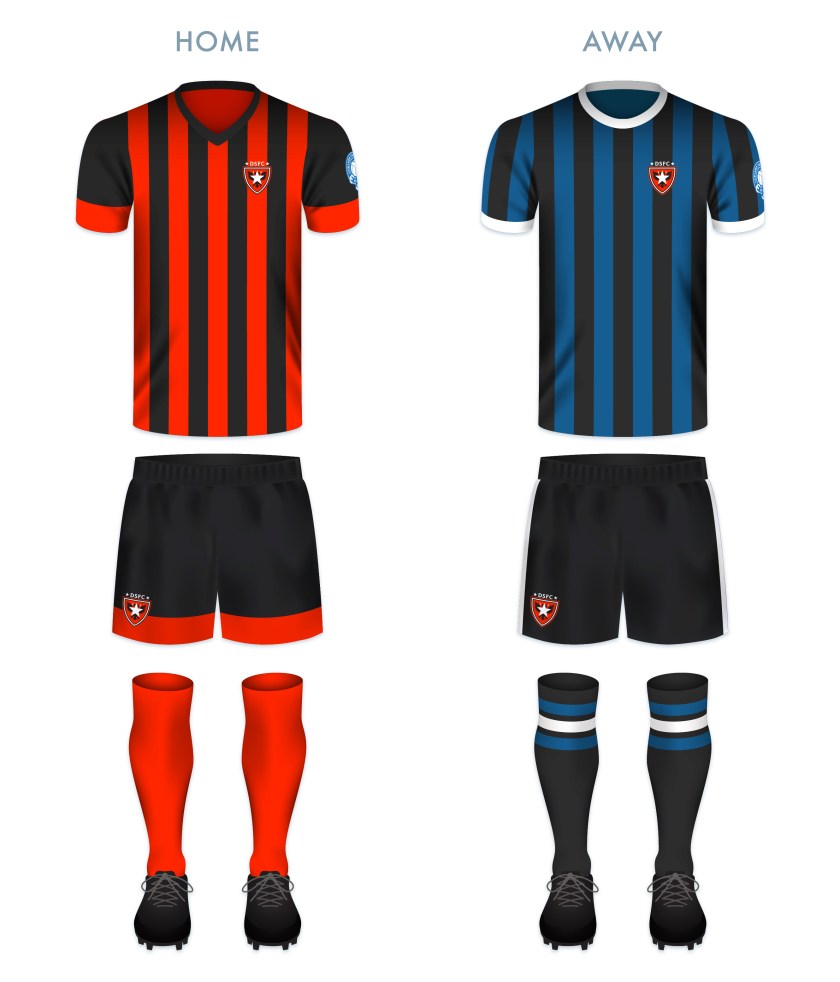
For the home kit, I went with the club’s traditional colour scheme and design, namely, the vertical black and red stripes.

DSFC kit-01

DSFC badge new-01

4 June 201924 February 2020 E Tagged badge, crest, Dalbeattie, Dalbeattie Star, Dalbeattie Star FC, Dalbeattie Star Football Club, Dumfries & Galloway, Dumfries and Galloway, Europe, football, Kirkcudbright, Kirkcudbrightshire, LFL, logo, Lowland Football League, Lowlands, Maxwell, rebrand, redesign, Scotland, Scottish Lowland Football League, SLFL, South of Scotland League, sport, star, texture, The Star, UK, United Kingdom Leave a comment

ReBrand: Cumbernauld Colts FC

graphic

CCFC badge new-01Cumbernauld Colts Football Club was established as a youth football club (hence, the use of ‘Colts’) in 1969.
During these early years, the club developed several players who went on to success in senior football, including Scottish internationals Derek Whyte (who went on to play for Celtic, Middlesbrough, Aberdeen and Partick Thistle) and Jackie McNamara (who went on to play for Dunfermline Athletic, Celtic, Wolverhampton Wanderers, Aberdeen, Falkirk and Partick Thistle).

In the 1990s, several of the club’s teams disbanded and during the 1998/99 season, the final Colts club folded. The following season, the club was relaunched and continued to grow, gaining full membership into the Scottish Football Association and admittance into the Lowland Football League in 2015. Since that time, the Colts came in runners-up in the 2016/17 Scottish Football Association South Region Challenge Cup in and won the 2017/18 Lowland League Cup.

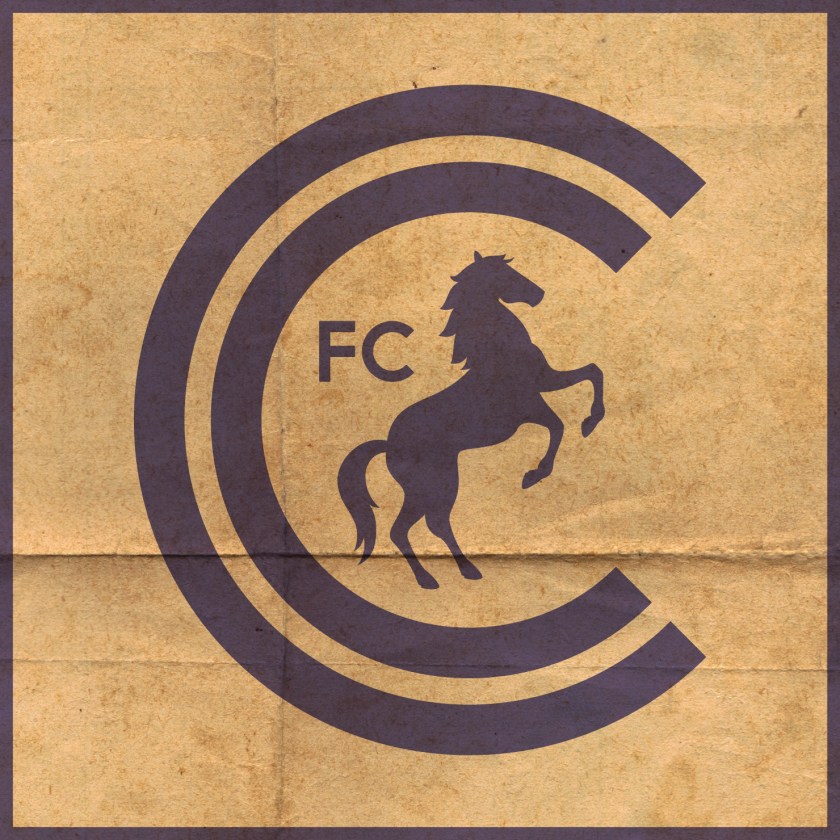
I find the club’s current badge to be a bit dated and it reminds me of an amateur American football club logo. For the redesign, I decided to opt for simplicity by illustrating a more anatomically correct silhouette of a horse within two ‘C’s.

CCFC badge-01

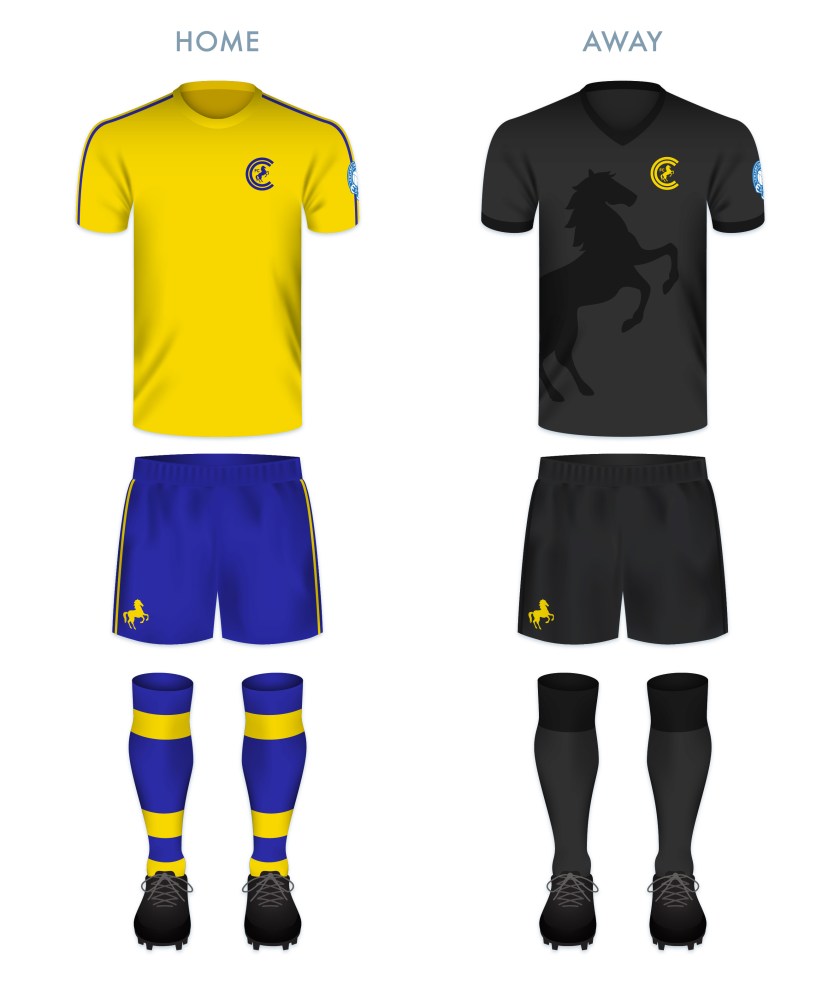
The home kit employs the club’s traditional yellow and blue with a 1970s feel, while the away kit is dark grey, accented with a large silhouette.

CCFC kit-01

CCFC badge new-01

3 June 201924 February 2020 E Tagged badge, Colts, crest, Cumbernauld, Cumbernauld Colts, Cumbernauld Colts FC, Cumbernauld Colts Football Club, Dunbartonshire, Europe, football, LFL, logo, Lowland Football League, Lowlands, North Lanarkshire, rebrand, redesign, Scotland, Scottish Lowland Football League, SLFL, sport, texture, UK, United Kingdom Leave a comment

ReBrand: Civil Service Strollers FC

graphic

CSSFC badge new-01Civil Service Strollers Football Club was established as Edinburgh Civil Service Football Club in 1908. The club was based at Stenhouse Stadium until moving to Pinkhill Stadium in Corstorphine in the 1920s. In 1957, the club moved to the Edinburgh Area Civil Service Sports Association in Muirhouse, where they continue to play today.
In 2000, the club began to develop youth football sides, at which point the ‘Civil Service Stollers’ name first came into use. Before being admitted into the Lowland Football League in 2016, the Strollers experienced sporadic success in the East of Scotland Football League, but their greatest achievement came in the 2017/18 season, when they won the Scottish Football Association South Challenge Cup with a 2-1 victory after extra time over BSC Glasgow.

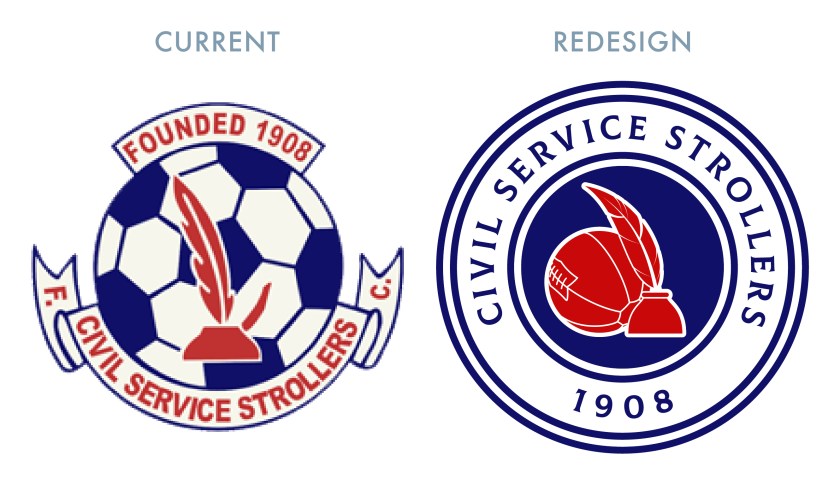
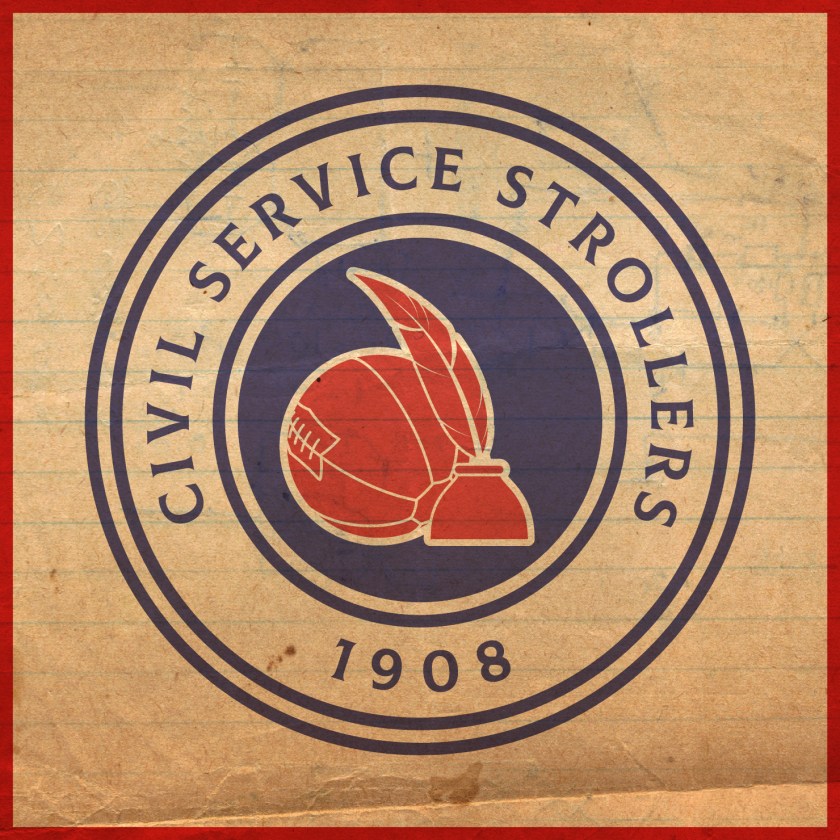
For the badge redesign, I sought to incorporate the club’s current symbols of a football and an inkwell and quill. The football redesign is more reflective of the club’s date of founding. I have also replaced the typeface with a serif-type and placed the lot within a roundel.

CSSFC badge-01

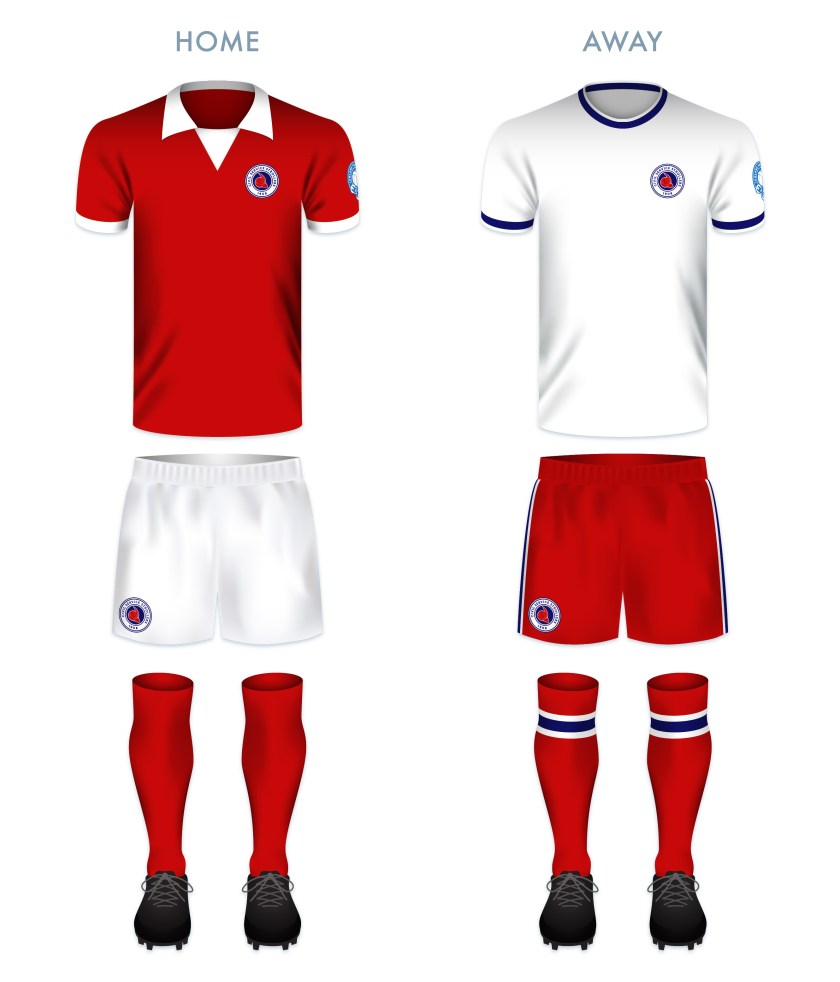
The home kit calls back to the 1970s, when the Strollers experienced some minor success in the East of Scotland Football League.

CSSFC kit-01

CSSFC badge new-01

3 June 201924 February 2020 E Tagged badge, Civil Service, Civil Service Stollers FC, Civil Service Strollers, Civil Service Strollers Football Club, crest, Edinburgh, Edinburgh Civil Service, Edinburgh Civil Service FC, Europe, football, LFL, logo, Lowland Football League, Lowlands, Muirhouse, rebrand, redesign, Scotland, Scottish Lowland Football League, SLFL, sport, Strollers, texture, UK, United Kingdom Leave a comment

ReBrand: Broomhill FC

graphic

BFC badge newBroomhill Sports Club was founded in Glasgow in 2004. A decade later, BSC Glasgow Football Club was established and since the 2014/15 season, the club has been competed in the Lowland Football League. During this first season, BSC Glasgow won the SFA South Region Challenge Cup, a tournament featuring some 69 non-league clubs in the south of Scotland. The club reached the final of the Challenge Cup for a second time in 2018, though they lost to Civil Service Strollers after extra time.

On 1 July 2021, the club announced that it had broken away from Broomhill Sports Club and changed their name to ‘Broomhill Football Club’. This name change was short-lived as in May 2022, a partnership with football media brand Open Goal was announced. Since the beginning of the 2022/23 season, the club has been known as ‘Open Goal Broomhill’.

For my original badge redesign, I opted to do away with the large white negative space at the centre of the current badge and replace it with a football. I also employed a more stylised ‘BSC’.

BSCGFC badge-01

With the current name, I have decided to present the club as ‘Broomhill FC’, making use of the more recent colour scheme and employing it in a minimalistic roundel.

BFC badge 02

31 May 20192 August 2022 E Tagged Alloa, badge, Broomhill Sports Club, Broomhill Sports Club Glasgow, BSC, BSC Glasgow, BSC Glasgow FC, BSC Glasgow Football Club, Clackmannanshire, crest, Europe, football, Glasgow, Lanarkshire, LFL, logo, Lowland Football League, Lowlands, rebrand, redesign, Scotland, Scottish Lowland Football League, SLFL, sport, texture, UK, United Kingdom Leave a comment

ReBrand: Berwick Rangers FC

graphic

BRFC badge new-01Berwick Rangers Football Club was formed in 1884 by a group of railway clerks from Newcastle, England who played a match against a team of millworkers from Dunbar, Scotland.
Until 2019, these ‘Wee Gers’ were the only club in the Scottish Professional Football League that isn’t from Scotland (though, as of July 2019, the squad is made up entirely of Scottish players). Based in Berwick-upon-Tweed, Northumberland, England, just two-and-a-half miles (four kilometres) south of the Scottish border, Berwick Rangers played in the Scottish Football League and subsequent Scottish Professional Football League from 1905 until relegation to the Scottish Lowland Football League in 2019. Their departure from the SPFL came after a devastating 0-7 aggregate loss to Highland League champions Cove Rangers.

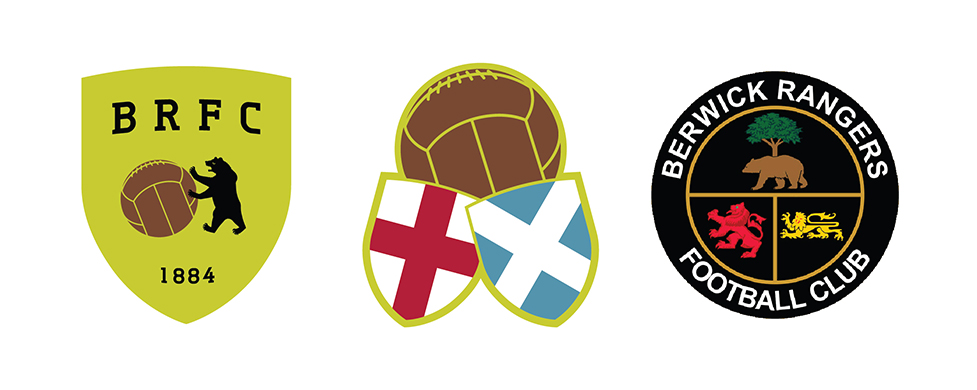
Due to the club’s geographic significance, when first designing this badge in 2014, I found it difficult to pin down a single design that captured what their current badge offers – the heraldic symbol of the historic Scottish county of Berwickshire with a bear and a tree, the Scottish lion rampant and the English lion passant. Instead, I shared two simple designs. For the first design I set the bear upright against a football, within a minimalistic yellow shield including the club’s initials above and the year of the club’s founding below. The second design omitted any writing and simply featured a football upon which rested the flags of England and Scotland within shields. Below are these initial designs, which I published on 5 November 2014:

BRFC old

Ultimately, while I appreciated the minimalism of these initial redesigns, I found them lacking, especially as two separate ideas. In 2018, I attempted a second redesign, though I also found this unsatisfying. Now that the Wee Gers are rebuilding in the Lowland League, I’ve decided to give the badge another go. Included are the flags of England and Scotland in a mustard and black colour scheme. I’ve also included the Latin motto of Berwick-upon-Tweed, VICTORIA, GLORIA, MERCES (‘victory, glory, reward’).

BRFC badge-01

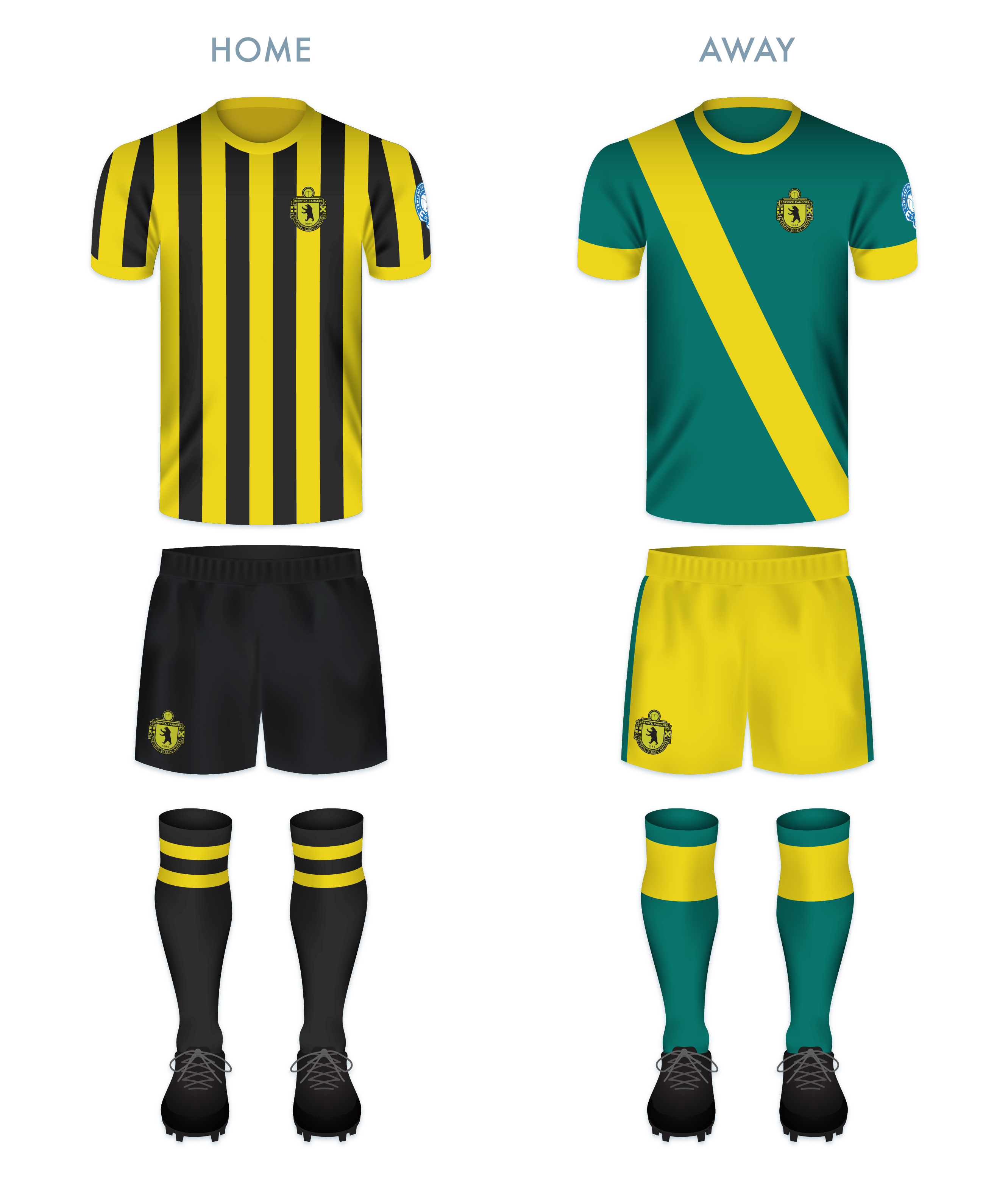
The home kit features black and gold vertical stripes, used by the club in nearly every home kit since 1908. The away kit is dominated by the emerald green of the current away kit with gold features.

BRFC kit-01

BRFC badge new-01

As ever, I am indebted to Dave at Historical Football Kits for some of the historical information used above.

23 May 201824 February 2020 E Tagged Berwick, Berwick Rangers FC, Berwick Rangers Football Club, Berwick-upon-Tweed, Black & Gold, Black and Gold, Borderers, brand, branding, BRFC, Dream Team, England, Europe, football, Latin, logo, Lowland Football League, Northumberland, rebrand, redesign, Scottish Lowland Football League, SLFL, sport, The Black & Gold, The Black and Gold, The Borderers, The Dream Team, The Wee Gers, UK, United Kingdom, Wee Gers Leave a comment

Posts navigation

Next →
Widgets
Create a website or blog at WordPress.com
Privacy & Cookies: This site uses cookies. By continuing to use this website, you agree to their use.
To find out more, including how to control cookies, see here: Cookie Policy
  • Subscribe Subscribed
    • ellliottt
    • Join 53 other subscribers
    • Already have a WordPress.com account? Log in now.
    • ellliottt
    • Subscribe Subscribed
    • Sign up
    • Log in
    • Report this content
    • View site in Reader
    • Manage subscriptions
    • Collapse this bar
 

Loading Comments...