
 In 1951, the Spartans Football Club was established by Elliot Wardlaw and Jimmy Beaumont, two former Edinburgh University players. It was their intention that the club would field graduates of the university, though the constitution soon allowed for the admission of ‘other interested parties’.
Upon their founding, the Spartans were admitted into the East of Scotland Football League, where they would compete for more than six decades and amass nine league championships (including a spell of three consecutive championships between 2009 and 2011). It was also during this time that the Spartans pulled off some impressive Scottish Cup runs – advancing to the fourth round in the 2003/04 season after defeating Buckie Thistle and league sides Alloa Athletic and Arbroath. Eventually, this run would end at the hands of top-tier side Livingston. The club would reach the fourth round on two more occasions — in 2005/06 and in 2008/09 — defeating many league sides in the process.
In 2013, the Spartan’s long stay in the EoSFL ended when they became founding members of the Lowland Football League. During that first season, the club topped the table for the first time. Their greatest Scottish Cup performance came in the 2014/15 competition. By the fifth round (the round of 16), the Spartans were the only non-league side remaining. On 7 February 2015, the Spartans drew 1-1 with Berwick Rangers, forcing a replay. Ten days later, the Spartan’s run would end in England, with a 1-0 loss away at Berwick.
After winning the Lowland League in the 2017/18 season, the Spartans qualified for the League Two play-off semi-finals. As Lowland League champions, they faced the Highland Football League champions, Cove Rangers. Cove proved too strong over two legs and the Spartans went away losing 2-5 on aggregate.
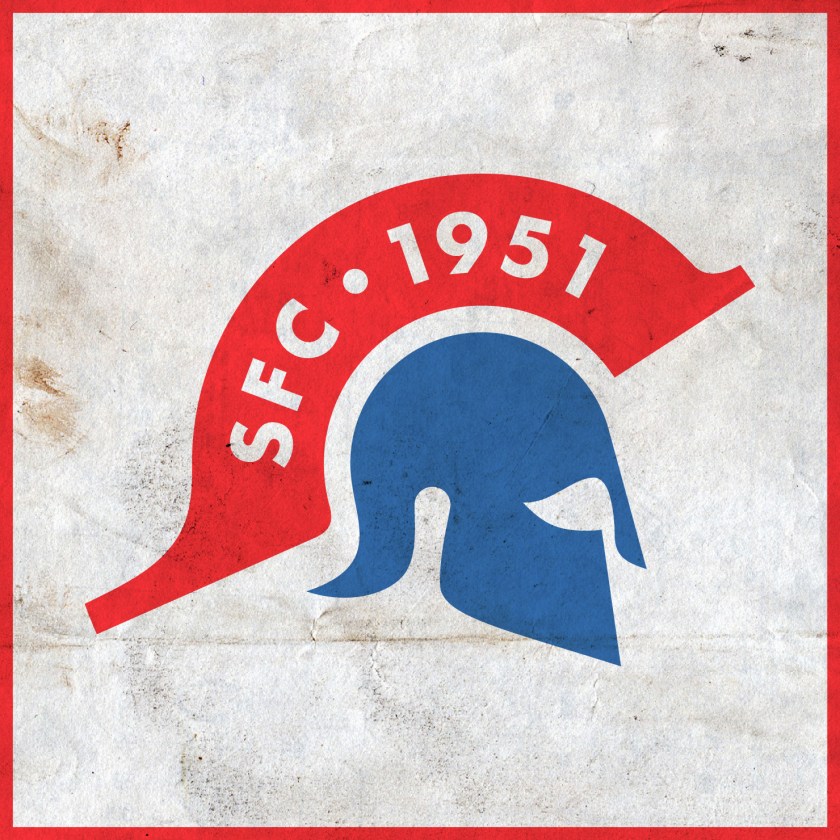
For the badge redesign, I sought to capture and build upon the boldness and strength of the current badge. I decided upon a minimalist badge, incorporating a depiction of the Spartan helmet alone. Within the crest of the helmet is found the club’s initials and the year of the club’s founding.

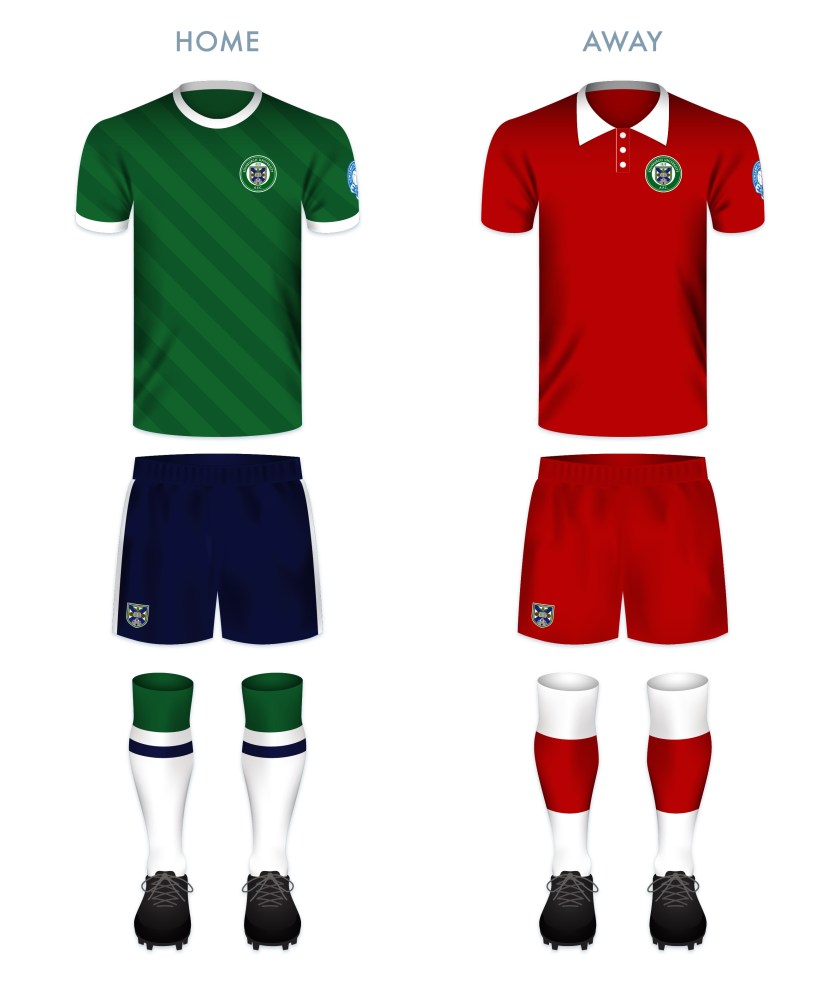
The home kit incorporates the traditional Spartans strip of a white shirt with red shorts and white socks. The top features red details in a scheme resembling the handsome Admiral strips from the early 1980s. The away kit also incorporates a bold 1980s athletic feel, making use of the badge’s blue and red colour scheme while presenting the redesigned badge in white.

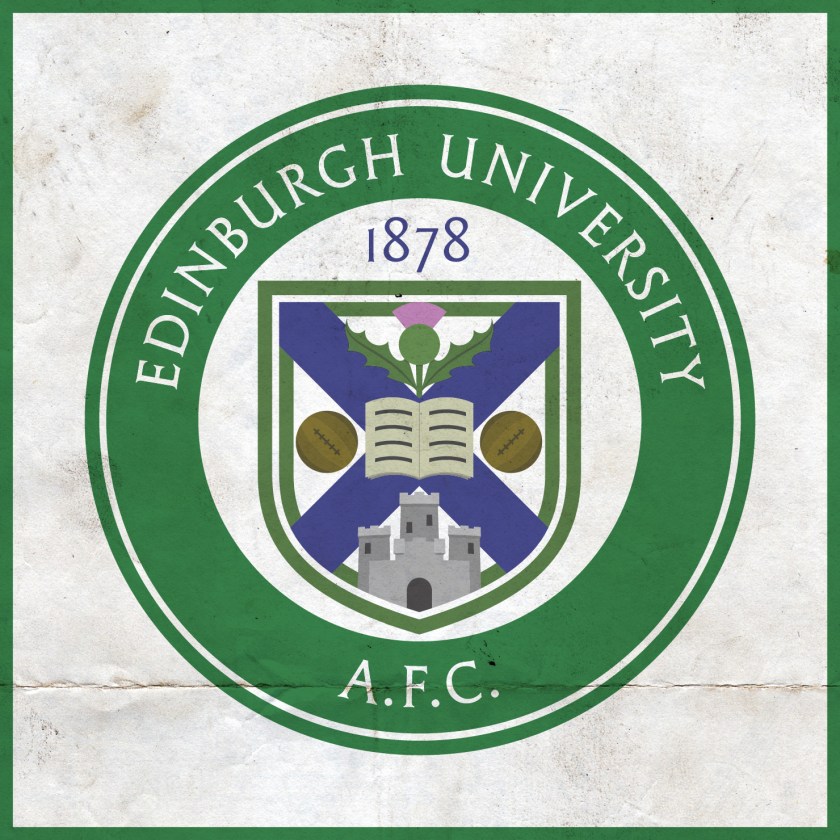
 Edinburgh University Association Football Club was constituted formally in 1878 and has been a member of the Scottish Football Association since the same year.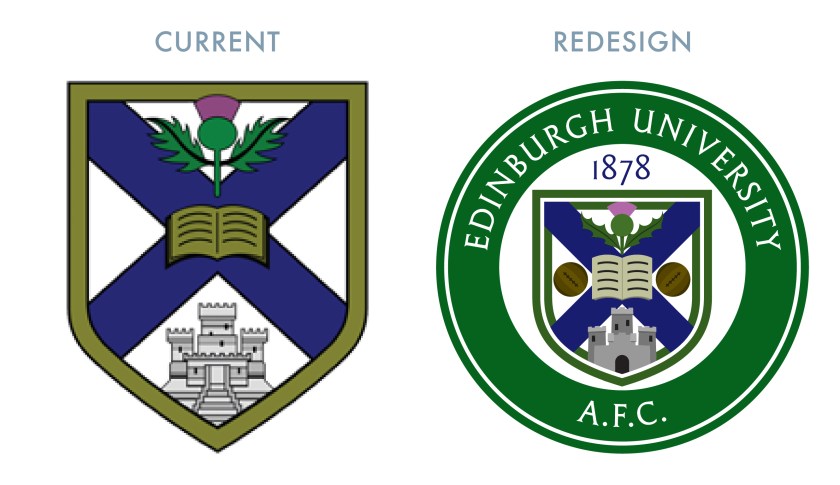
 Civil Service Strollers Football Club was established as Edinburgh Civil Service Football Club in 1908. The club was based at Stenhouse Stadium until moving to Pinkhill Stadium in Corstorphine in the 1920s. In 1957, the club moved to the Edinburgh Area Civil Service Sports Association in Muirhouse, where they continue to play today.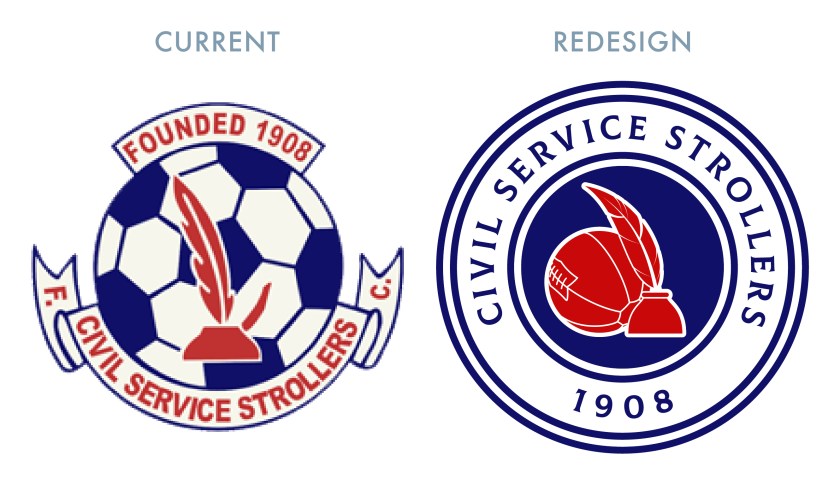
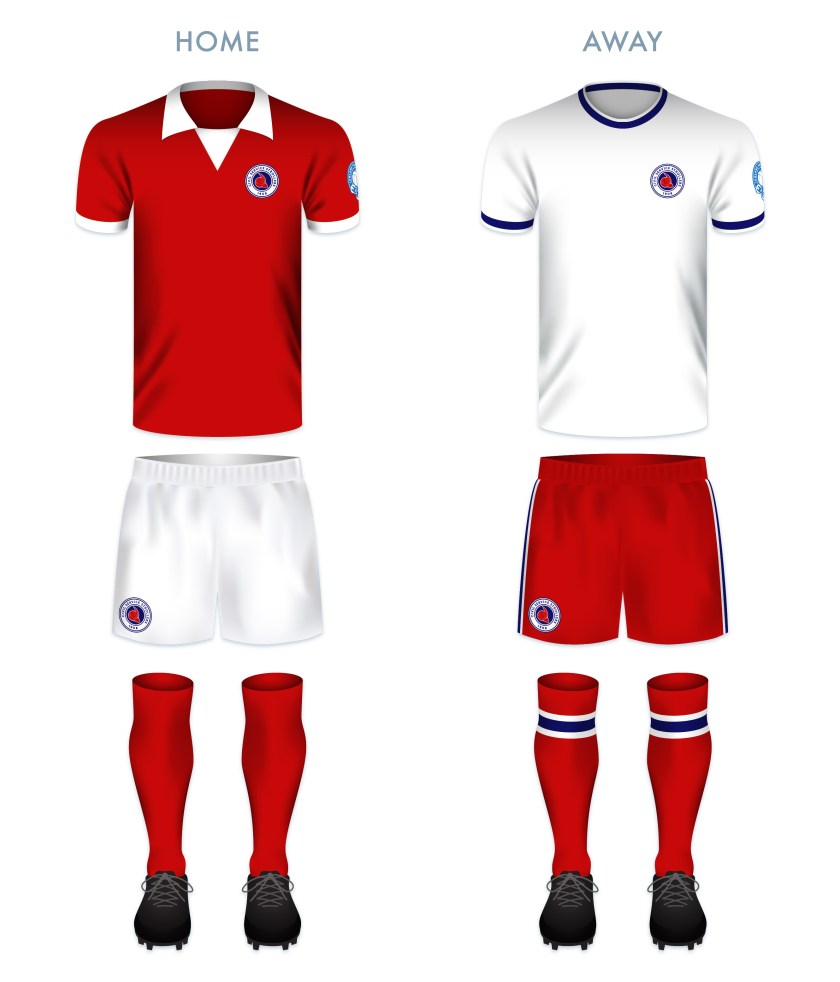
 Edinburgh City Football Club was first formed in 1928 as an amateur side, akin to Queen’s Park. Although the club joined the Scottish Football League in 1931, they struggled throughout the fifteen subsequent seasons and reverted to junior status in 1946. By 1955, the lease at their playing ground (City Park) expired and the football club folded, continuing only as a social club.
 The history of Livingston Football Club is one of the most tumultuous in all of Scottish football.

 During the challenging years of the Great Famine in the nineteenth century, many Irish emigrated to Scotland, with most settling in and around Glasgow. Smaller groups of Irish immigrants settled in the east, especially in Dundee and Edinburgh. A particularly concentrated Irish population settled in the Cowgate area of Edinburgh and it was there that in 1875, Irish-born priest Canon Edward Joseph Hannon of St Patrick’s Church was encouraged by Michael Whelahan to establish a football club in order to promote a life of temperance and religious adherence among the young Irish Catholic male population in Edinburgh. Hibernian Football Club was thus formed, with Whelahan acting as the club’s first captain and Canon Hannon acting as the club’s first manager.

 The precise origin of the Heart of Midlothian Football Club is unclear. A report in The Scotsman from 1864 first mentions ‘Heart of Midlothian’ as a cricket club, though it is not known for certain whether—alongside the likes of










 ellliottt