
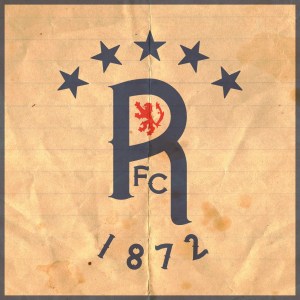
 In February 1872, brothers and avid rowers Moses and Peter McNeil met with fellow rowers Peter Campbell and William McBeath at Flesher’s Haugh (now part of Glasgow Green), on the northern bank of the River Clyde. It was not rowing that monopolised their attention that morning, but the spectacle of a group of men playing football on the green. Their imaginations were captured and they decided that they would turn their energies to organising their own football team.
Since 1868, Charles Alcock, founding member of the Football Association in England, had been publishing the The Football Annual. While reading the latest Annual, Moses McNeil came across the name Swindon Rangers, an English rugby club. It is from this club that McNeil drew inspiration for his new club’s name. In May, Rangers played their first-ever match, resulting in a 0-0 draw against Callander FC (1872-74).
In these early years, prior to the founding of the Scottish Football League in 1890, Rangers showed themselves to be fierce competitors. Over the next 122 seasons, the club secured the Scottish championship 54 times, more top tier championships than any other football club in the world (as of the end of the 2018/19 season, Celtic, who are on pace for a record-tying nine league championships in-a-row, have amassed 50).
The recent hardships faced by Rangers are no secret in Scottish culture. In 2012, the club entered into administration and was eventually liquidated, with the assets of the club transferred to a new company. Although this reformed Rangers club was unable to regain its place in the top tier, they were accepted into what was then the Scottish Football League (now the Scottish Professional Football League) and began a campaign of securing two consecutive division championships, before stalling in the second tier until the end of the 2015/16 season, when Rangers won the second tier (the Scottish Championship), gaining automatic promotion to the top tier, where they have competed ever since.
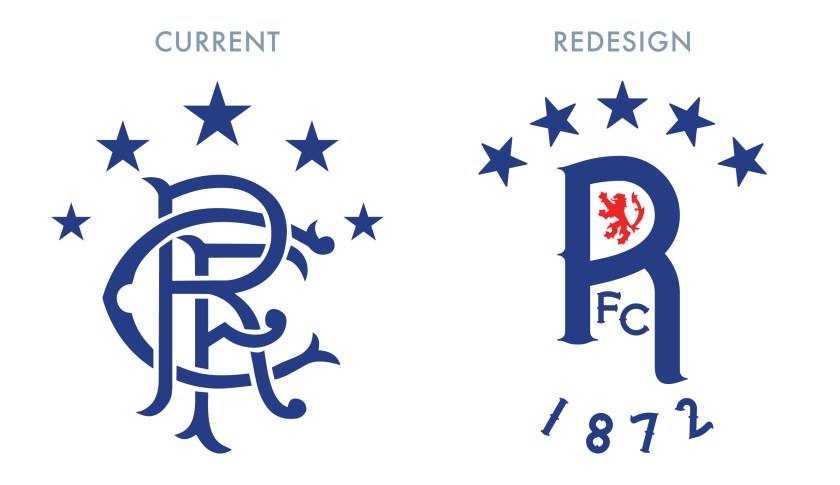
Rangers did not incorporate a badge on their kit until 1968. When they did this, they chose a design featuring intertwined club initials. The earliest use of this design was featured in the 1881/82 season ticket. (Another design, which has never featured on a kit, includes a lion rampant and the club motto, ‘READY’. The earliest version of this design was used in 1959.) In 2003, following their fiftieth top tier championship, Rangers added five stars (one for each ten championships) to their badge.
I found this redesign especially difficult as I consider the ‘RFC’ monogram badge to be an outstanding design. But this personal project of rebranding Scottish football clubs has never been about abandoning the old. Instead, it’s an exploration of history and a personal challenge to try new things.
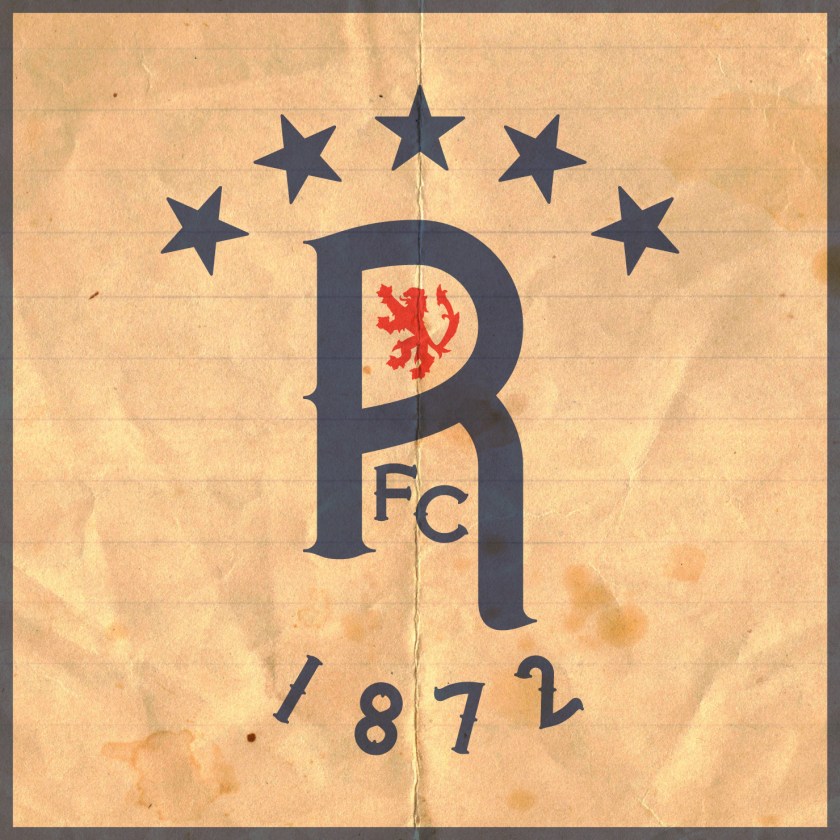
For the rebrand, I designed a typeface inspired by late-nineteenth century aesthetics. I opted to make all five stars the same size, to include the lion rampant as well as the year of Rangers’ founding. It’s nothing too frilly, but clean, simple and traditional.
The home strip is inspired by several Rangers home strips from the 1980s. The away strip is inspired by historical Rangers away strips from the middle of the twentieth century, especially those used between 1949 and 1952.

As ever, I am indebted to Dave at Historical Football Kits for some of the historical information used above.
 Partick Thistle Football Club was established in 1876, playing in the then-independent burgh of Partick (which was incorporated into Glasgow in 1912). For the first 33 years of their history, the Jags occupied various home grounds in and around what is now the West End of Glasgow.
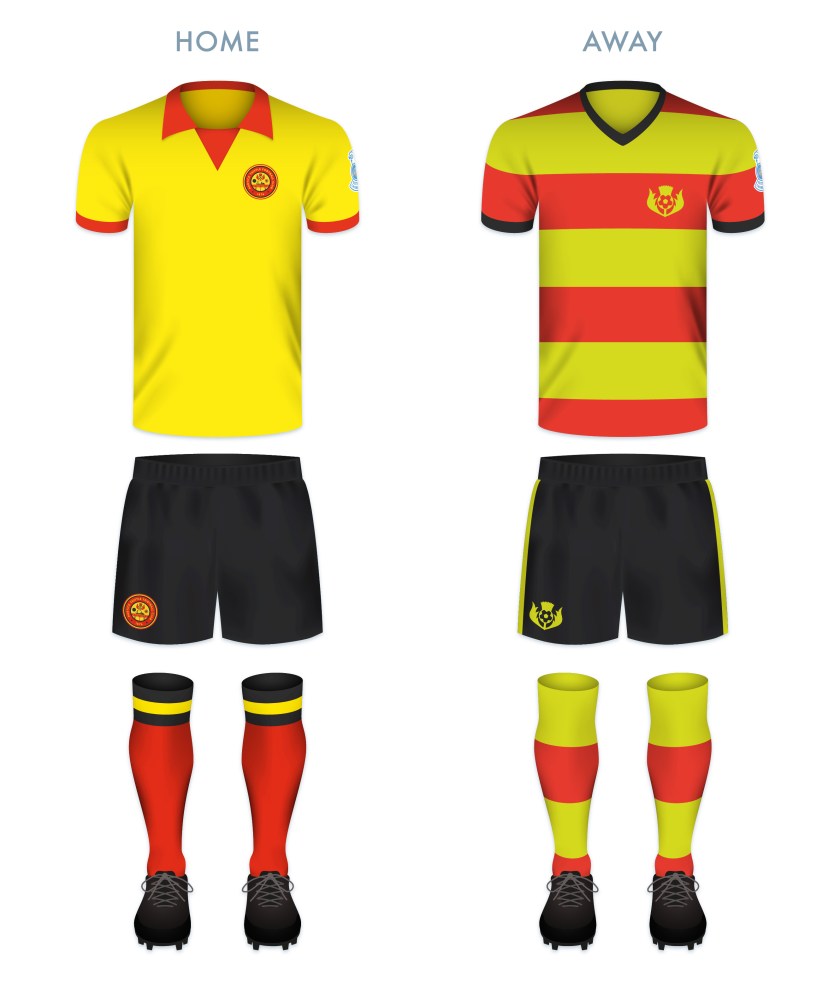
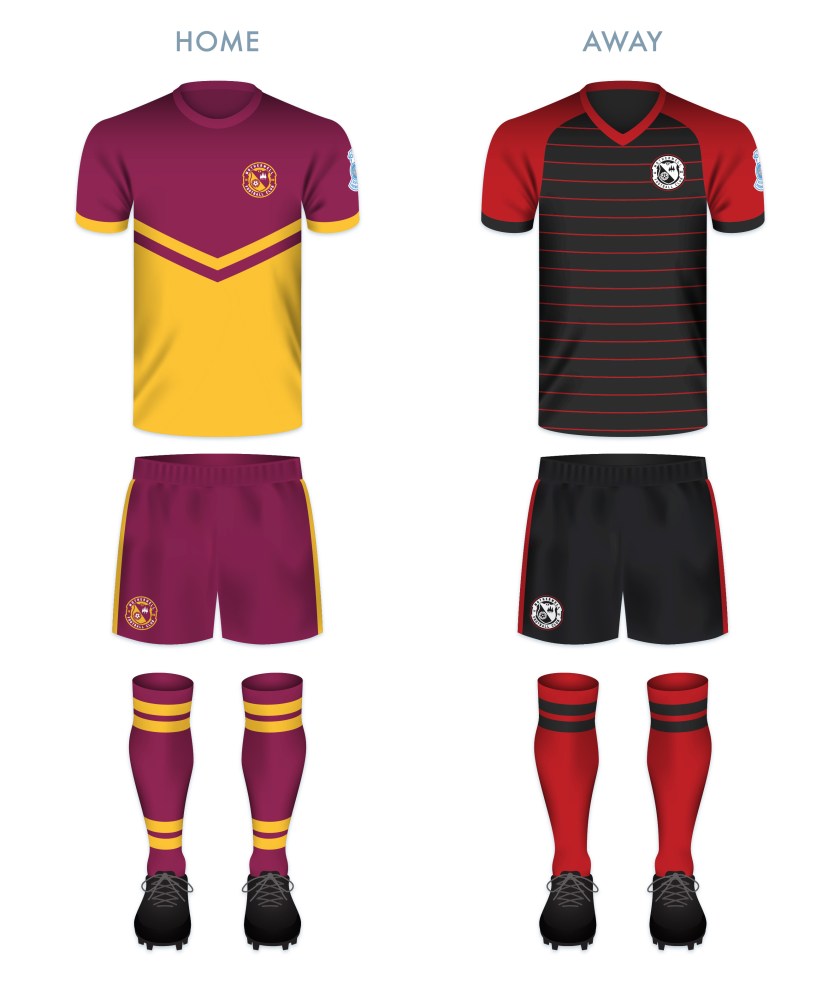
 Motherwell Football Club was established in 1886 at the merging of two Motherwell-based teams: Glencairn FC (established in 1877 and named after the soldier and politician John Glencairn Carter Hamilton, 1st Baron Hamilton of Dalzell) and Alpha FC (established as the Alpha Steam Crane and Engine Works team in 1881).

 Kilmarnock Football Club was formed in 1869, making it one of the oldest football clubs in the world. Before this time, Kilmarnock was an established cricket club, playing according to rugby football code in the cricket off-season. This rugby football code history is reflected in the naming of the club’s ground, Rugby Park.
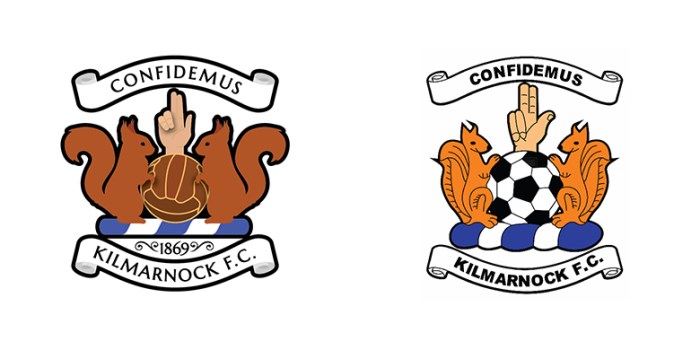 I was never quite satisfied with the redesign above. I have long appreciated the content of the current Kilmarnock badge, but have found the execution to be lacking. Ultimately, with my redesign here, I decided to go for something far more minimalistic, calling back to the original badge used from 1873 to 1887.


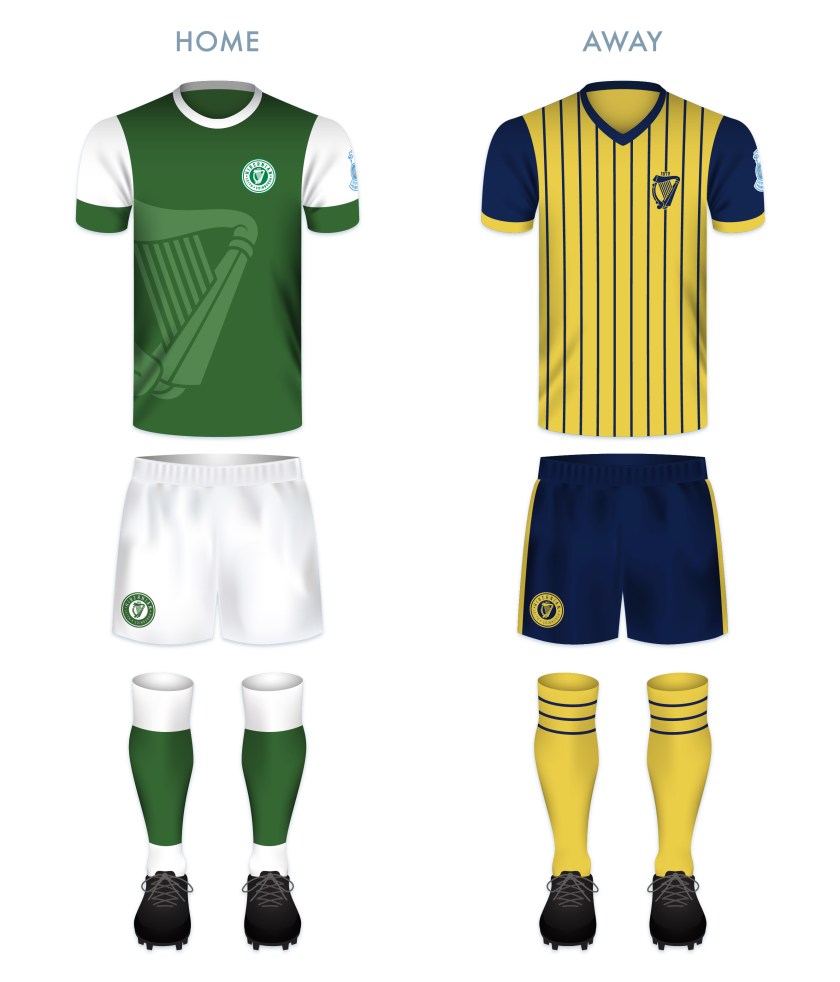
 During the challenging years of the Great Famine in the nineteenth century, many Irish emigrated to Scotland, with most settling in and around Glasgow. Smaller groups of Irish immigrants settled in the east, especially in Dundee and Edinburgh. A particularly concentrated Irish population settled in the Cowgate area of Edinburgh and it was there that in 1875, Irish-born priest Canon Edward Joseph Hannon of St Patrick’s Church was encouraged by Michael Whelahan to establish a football club in order to promote a life of temperance and religious adherence among the young Irish Catholic male population in Edinburgh. Hibernian Football Club was thus formed, with Whelahan acting as the club’s first captain and Canon Hannon acting as the club’s first manager.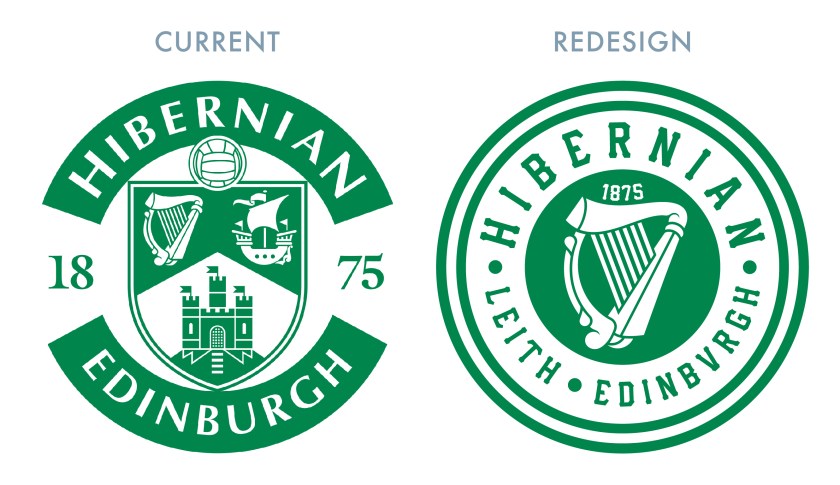

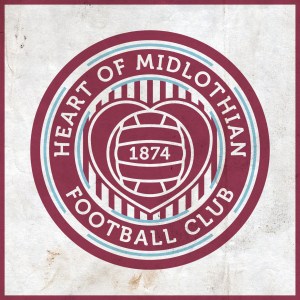 The precise origin of the Heart of Midlothian Football Club is unclear. A report in The Scotsman from 1864 first mentions ‘Heart of Midlothian’ as a cricket club, though it is not known for certain whether—alongside the likes of


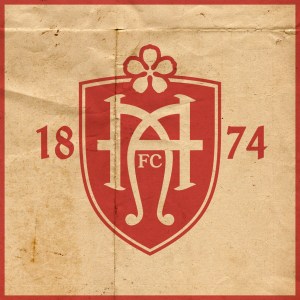 Hamilton Academical Football Club was established in 1874 by, as the name suggests, pupils and the rector of Hamilton Academy (1588-1972).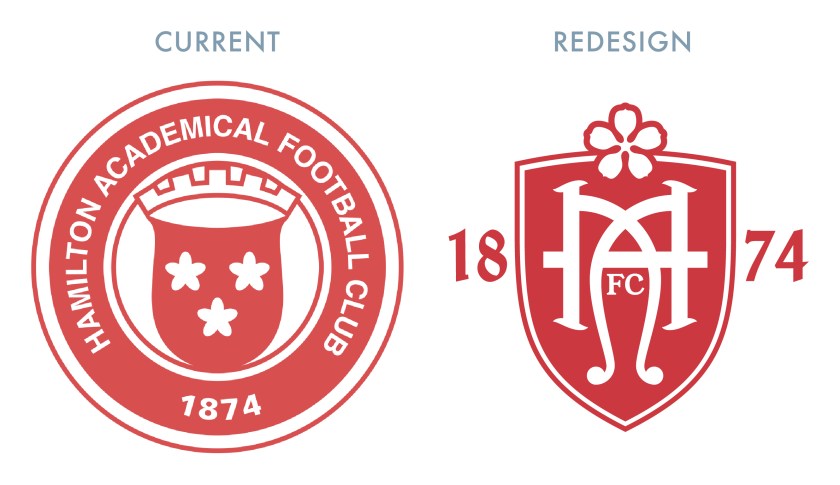
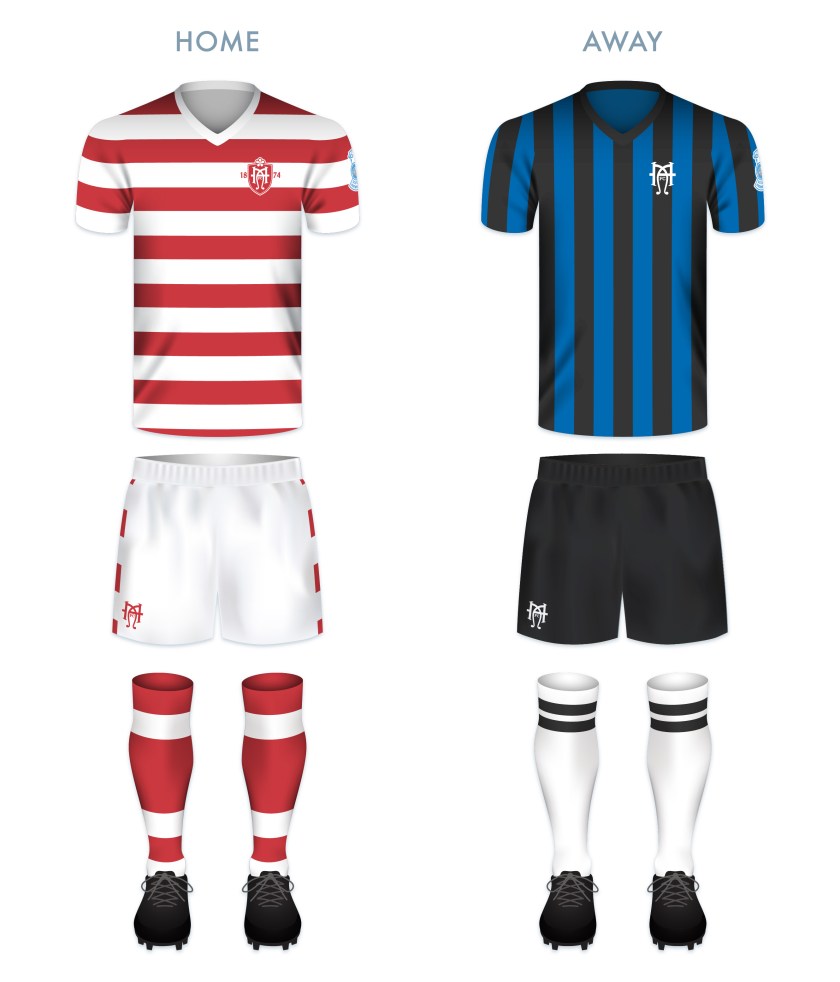

 Established in 1893 by way of a merger between two Dundee football clubs—East End and Our Boys (both formed in 1877)—throughout the club’s history, Dundee Football Club have experienced their fair share of glory. The club won the Scottish Cup in 1909/10, as well as the Scottish League Cup in 1951/52, 1952/53 and 1973/74. The Dee were also crowned 1961/62 Scottish champions and the following season, they reached the semi-final of the European Cup.


 This whole
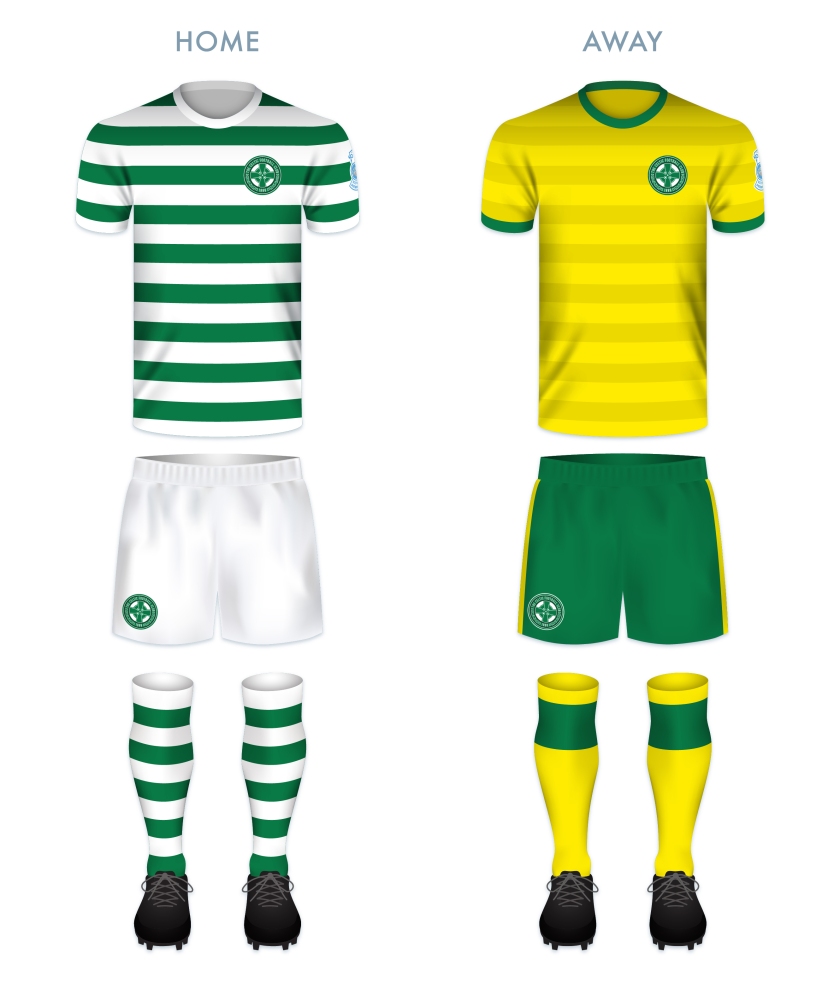
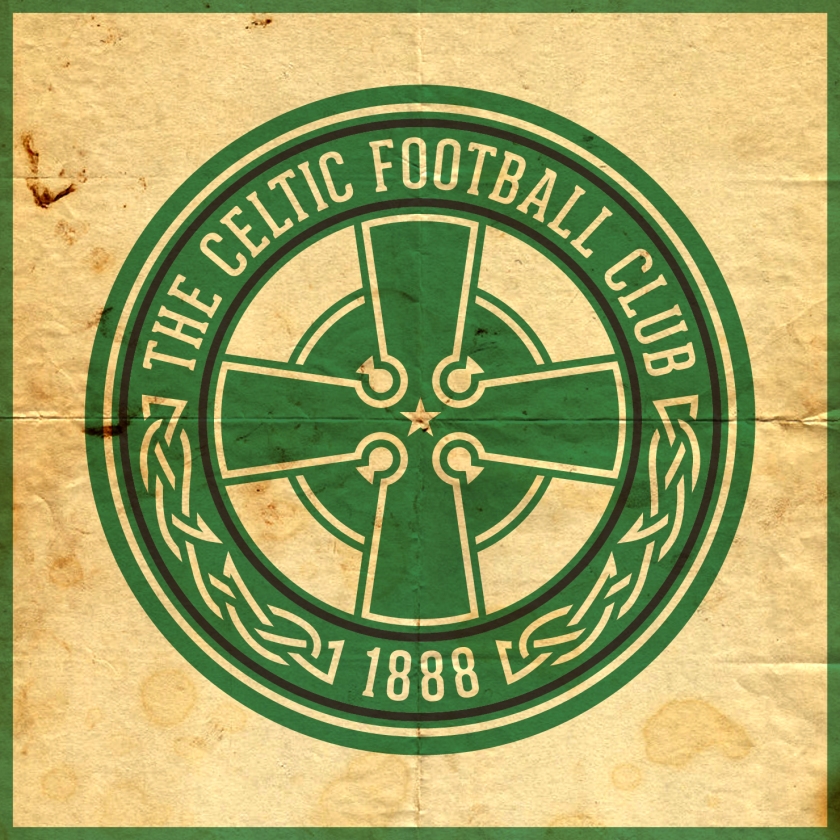
 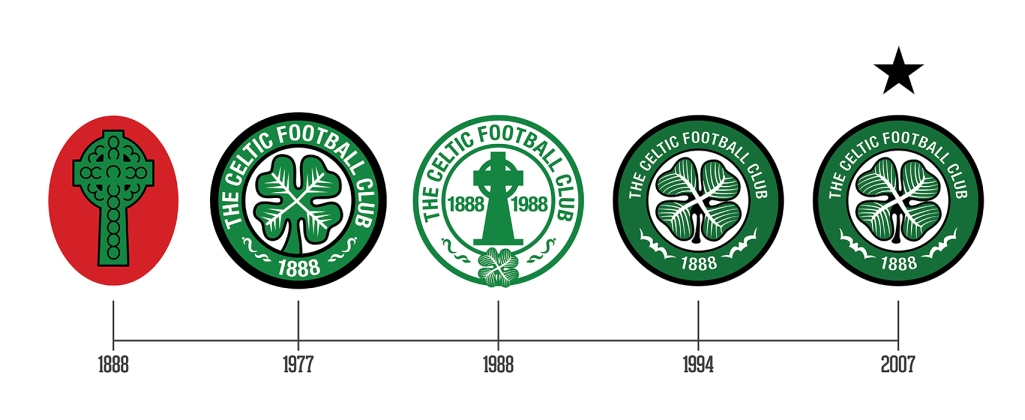 After the 2007/08 season, the star was retained and the badge remained the same until 2012/13 season, when Celtic celebrated their 125th anniversary by using a 1994 badge encircled by an attractive Celtic knot and an alternative badge featuring a Celtic cross.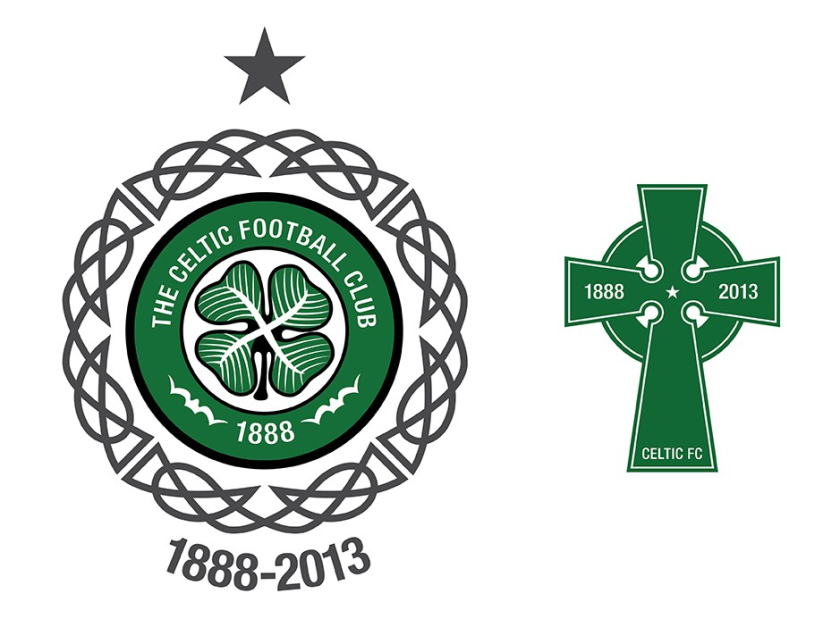
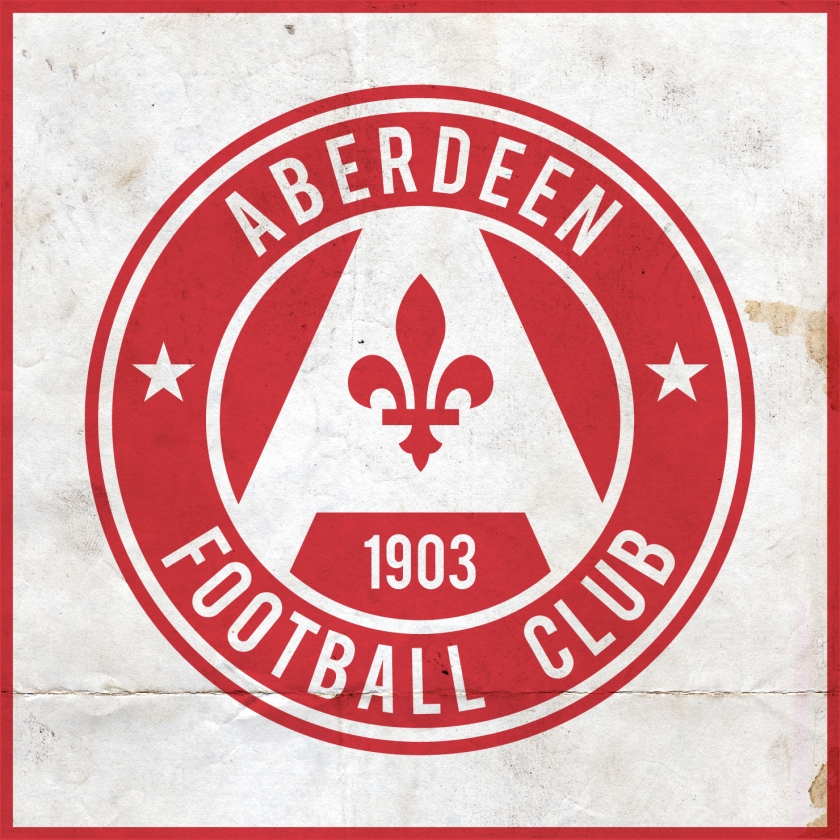
 Aberdeen Football Club was established in 1903. Since that time, the club has amassed a variety of honours. This includes seven Scottish Cups (fifth most, behind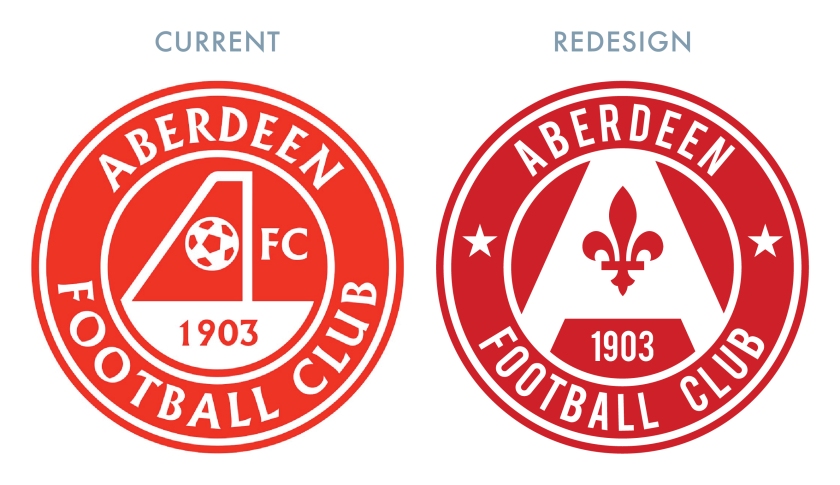

 ellliottt