
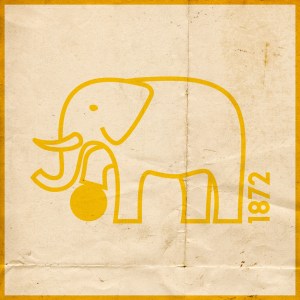
 Dumbarton Football Club was established in 1872, making it the fourth oldest association football club in Scotland, after Queen’s Park (1867), Kilmarnock (1869) and Stranraer (1870).
During these early years, Dumbarton—or ‘the Sons’, as they are known—were one of the most competitive sides in Scottish football. They were regular features in the Scottish Cup (winning in 1882/83 and coming runners-up on five occasions between 1880 and 1897). Dumbarton also have the distinction of being crowned Scottish champions for the first two seasons of the Scottish Football League (1890/91 and 1891/92) and of being one of only two clubs (the other being Rangers) to win each of the four tiers in Scottish professional football.
Over the years, I have found it difficult to pursue a redesign of the Dumbarton badge. Put simply, the current badge is excellent. To even consider redesigning it is a daunting task. Still, I thought of what was possibly missing from the current badge. Certainly, the year the club was founded is of note. Being that the elephant in the current badge represents Dumbarton Rock (mounted by Dumbarton Castle) and given the fact that Dumbarton’s home ground is at the foot of the rock, I also saw an opportunity to incorporate a football at the elephant’s foot.
Ultimately, I decided that I wanted to retain an elephant image. With that exception, I departed fully from Dumbarton’s handsome badge. 1 FC Köln and Derby County FC, with their iconic animal badges, came to mind. But I wanted something yet more simple. Very intentionally, the elephant in my redesign is unbridled and more lively than the one in the current Dumbarton badge—and it’s ever-so-slightly more anatomically correct, while maintaining a light, minimalistic feel.

The home shirt I designed has a 1970s feel, with alternating vertical bars of two shades of gold. The away strip takes its colours and hoops from the 1881 to 1885 home strip used by Dumbarton Athletic FC (which merged with Dumbarton in 1889).


As ever, I am indebted to Dave at Historical Football Kits for some of the historical information used above.
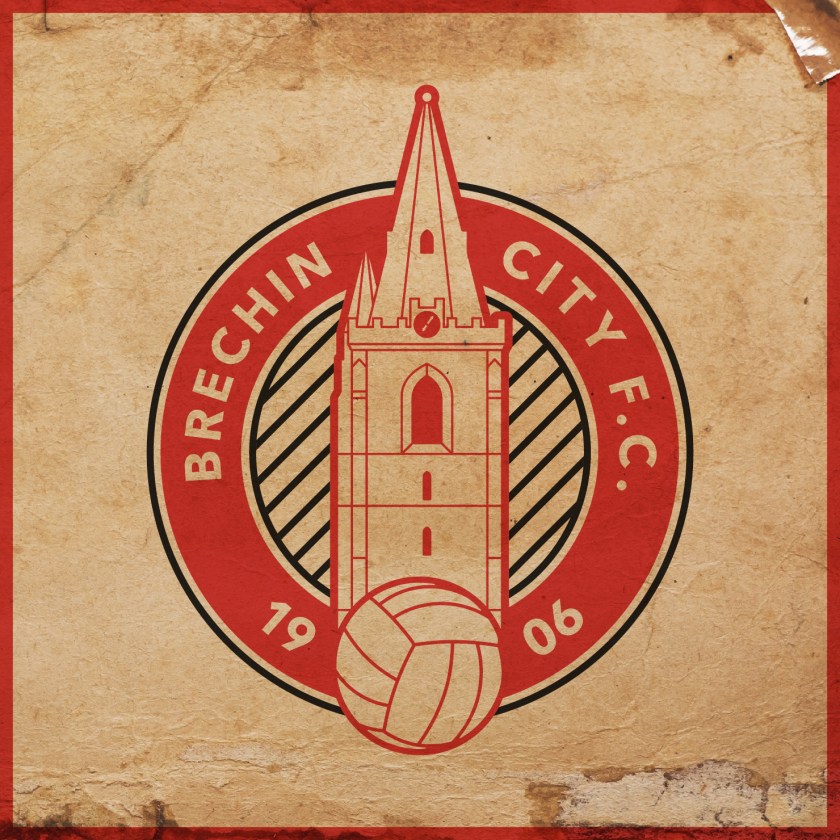
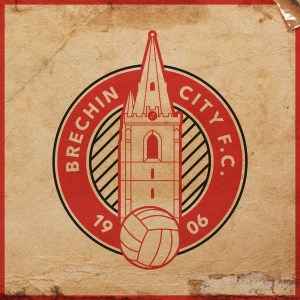 The 2017/18 season was unpleasant for Brechin City Football Club. They finished at the bottom of the

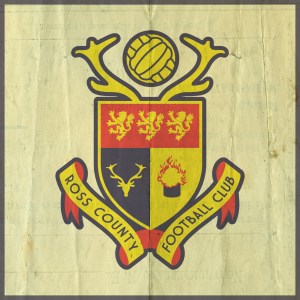 Dingwall-based Ross County Football Club were formed in 1929. Although the club was not admitted into the Scottish Football League until 1994, County has a long history of faring well against league sides in early rounds of the Scottish Cup while members of the Highland Football League. Since entering the SFL (and later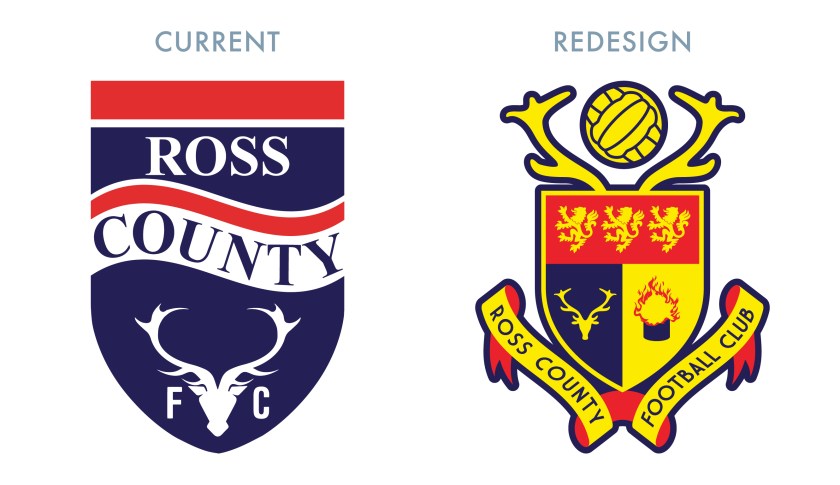


 In February 1872, brothers and avid rowers Moses and Peter McNeil met with fellow rowers Peter Campbell and William McBeath at Flesher’s Haugh (now part of Glasgow Green), on the northern bank of the River Clyde. It was not rowing that monopolised their attention that morning, but the spectacle of a group of men playing football on the green. Their imaginations were captured and they decided that they would turn their energies to organising their own football team.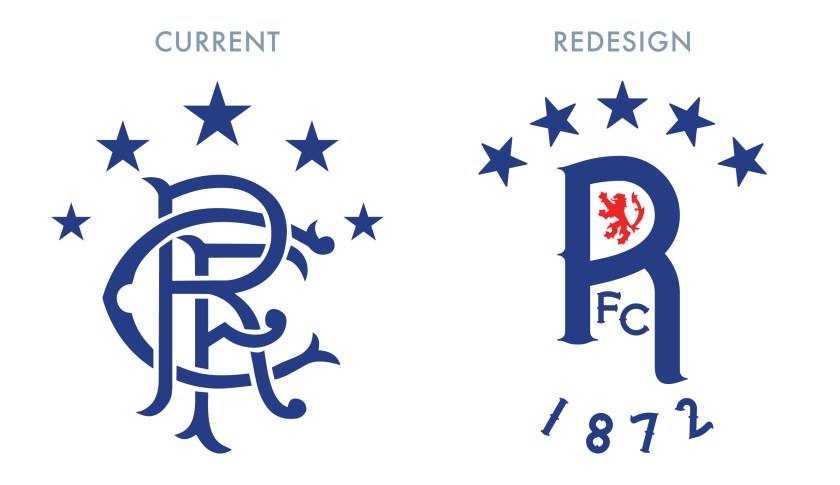

 Motherwell Football Club was established in 1886 at the merging of two Motherwell-based teams: Glencairn FC (established in 1877 and named after the soldier and politician John Glencairn Carter Hamilton, 1st Baron Hamilton of Dalzell) and Alpha FC (established as the Alpha Steam Crane and Engine Works team in 1881).

 Kilmarnock Football Club was formed in 1869, making it one of the oldest football clubs in the world. Before this time, Kilmarnock was an established cricket club, playing according to rugby football code in the cricket off-season. This rugby football code history is reflected in the naming of the club’s ground, Rugby Park.
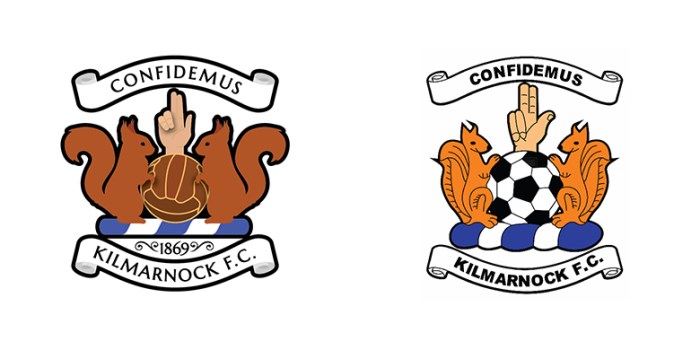 I was never quite satisfied with the redesign above. I have long appreciated the content of the current Kilmarnock badge, but have found the execution to be lacking. Ultimately, with my redesign here, I decided to go for something far more minimalistic, calling back to the original badge used from 1873 to 1887.


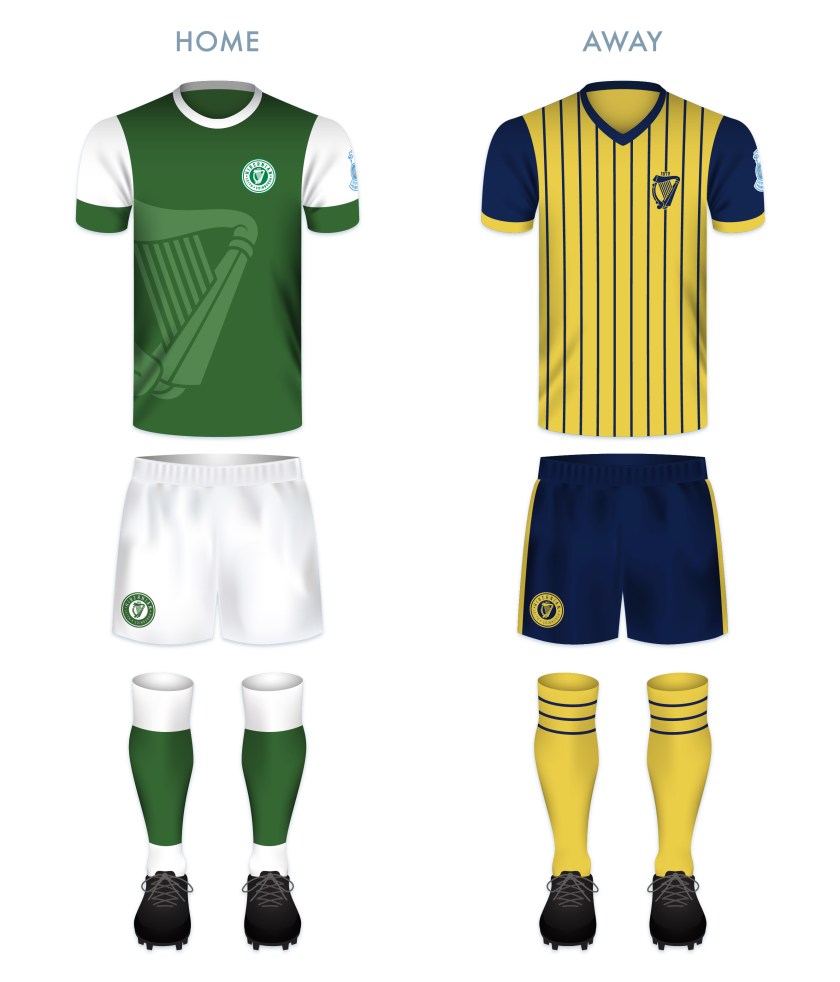
 During the challenging years of the Great Famine in the nineteenth century, many Irish emigrated to Scotland, with most settling in and around Glasgow. Smaller groups of Irish immigrants settled in the east, especially in Dundee and Edinburgh. A particularly concentrated Irish population settled in the Cowgate area of Edinburgh and it was there that in 1875, Irish-born priest Canon Edward Joseph Hannon of St Patrick’s Church was encouraged by Michael Whelahan to establish a football club in order to promote a life of temperance and religious adherence among the young Irish Catholic male population in Edinburgh. Hibernian Football Club was thus formed, with Whelahan acting as the club’s first captain and Canon Hannon acting as the club’s first manager.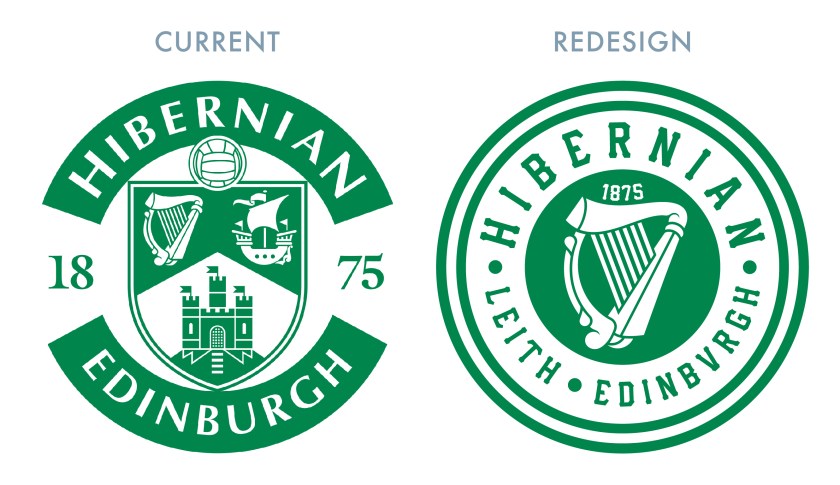

 The precise origin of the Heart of Midlothian Football Club is unclear. A report in The Scotsman from 1864 first mentions ‘Heart of Midlothian’ as a cricket club, though it is not known for certain whether—alongside the likes of


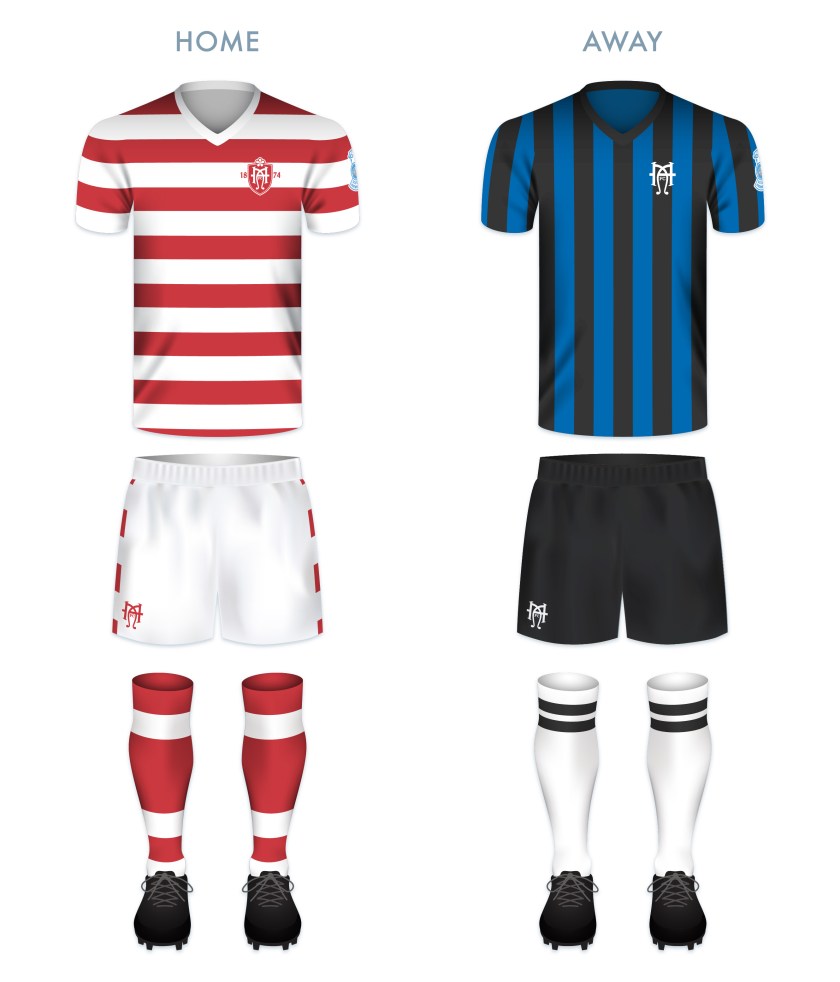
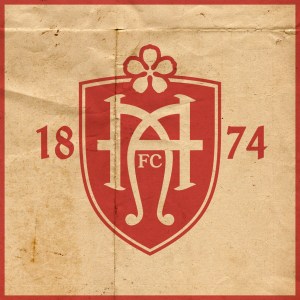 Hamilton Academical Football Club was established in 1874 by, as the name suggests, pupils and the rector of Hamilton Academy (1588-1972).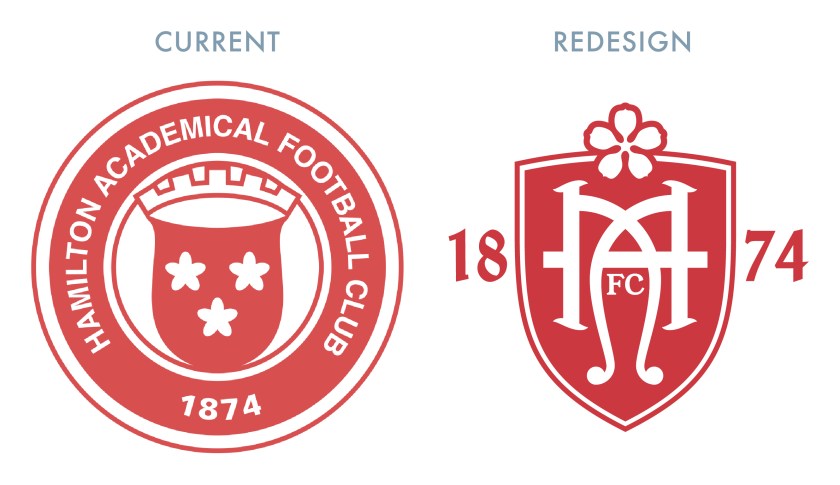

 Established in 1893 by way of a merger between two Dundee football clubs—East End and Our Boys (both formed in 1877)—throughout the club’s history, Dundee Football Club have experienced their fair share of glory. The club won the Scottish Cup in 1909/10, as well as the Scottish League Cup in 1951/52, 1952/53 and 1973/74. The Dee were also crowned 1961/62 Scottish champions and the following season, they reached the semi-final of the European Cup.


 ellliottt