
 In 1910, the two rival football clubs in Ayr, Ayr FC and Ayr Parkhouse FC, determined that their town was too small to both support two senior teams and for those teams to rival the leading Scottish clubs. The result of this realisation was the formation of Ayr United Football Club. (Historically, Ayr Football Club had already formed as an amalgamation of several clubs, the earliest of which was Ayr Eglinton, formed in 1875.)
Despite the noble intentions of the two clubs that formed Ayr United in 1910, the club has never been counted among the most competitive in Scotland. Still, they continue to survive, boasting such honours as reaching the final of the 2001/02 Scottish League Cup (where they were defeated by Rangers) and being crowned champions of the second tier on six occasions (1911/12, 1912/13, 1927/28, 1936/37, 1958/59 and 1965/66). More recently, Ayr United gained promotion to the Scottish Championship after topping the League One table in the 2017/18 season.
Ayr United’s kit first featured a badge in 1938. This badge consisted of a stylised black anchor within a white shield with a black border and was used until 1948. Another badge appeared for the 1967/68 season, though regular use of a badge wouldn’t feature until 1977. From that time until 2017, some form of this 1967/68 badge was used.
In 2016, an anonymous complaint to the Court of the Lord Lyon challenged the use of the club’s badge, noting that it featured both a Saltire and the club’s initials within a shield, both a breach of an ancient heraldic law in Scotland, the same which caused bother for Airdrieonians in 2015. Reluctantly, in 2016, Ayr United opened up a competition in which fans could vote on their favourite badge from a pool of finalists. A badge designed by Jamie Stevenson, a Scottish Ayr United supporter living abroad, came out on top, ganering 48% of the vote. This new badge, seen on the left below, was then incorporated into the kit for the 2017/18 season.
The current badge utilises several features from the previous badge, including the Saltire and a football within a cord of rope, the rope recalling the town’s maritime heritage. At the bottom of the badge is the club’s nickname, ‘The Honest Men’, which comes from the Robert Burns poem ‘Tam o’ Shanter’ (1790). The second verse of the poem reads,
‘This truth fand honest Tam o’ Shanter,
As he frae Ayr ae night did canter,
(Auld Ayr, wham ne’er a town surpasses,
For honest men and bonny lasses.)’
For my redesign, I decided to make use of some of the historical imagery of the club, though with a significant departure from the club’s current badge. The colours used—black, white and red—are consistent with the historic club colours. I omitted the Saltire in favour of a singular image of a horse rampant upon an anchor. The anchor calls back to the original Ayr United badge from 1938.
The stylised horse with a missing tail is a visual reference—which, in a badge, I prefer over an overt, written reference—to ‘Tam o’ Shanter’ and the club’s nickname. In the narrative poem, the eponymous character, Tam, is depicted as having a ‘gray mare, Meg’. In the climax of the poem, Tam, demonstrating his ‘honest’ character, is escaping from a ‘hellish legion’ of the devil, warlocks, and witches who have begun to shed their clothing (noting one particularly attractive witch, Nannie Dee, with an undersized ‘cutty-sark’ or ‘shirt’). When Tam is fleeing upon his trusty Meg, Nannie is able to grab hold of Meg’s ‘gray tail’, which is left behind.

The home kit is based upon Ayr United’s traditional home colour scheme of a white top with black shorts. The away strip makes use of the club colours in a vertical stripe running down a dark blue kit, borrowing from the old Ayr FC’s early colours.


As ever, I am indebted to Dave at Historical Football Kits for some of the historical information used above.
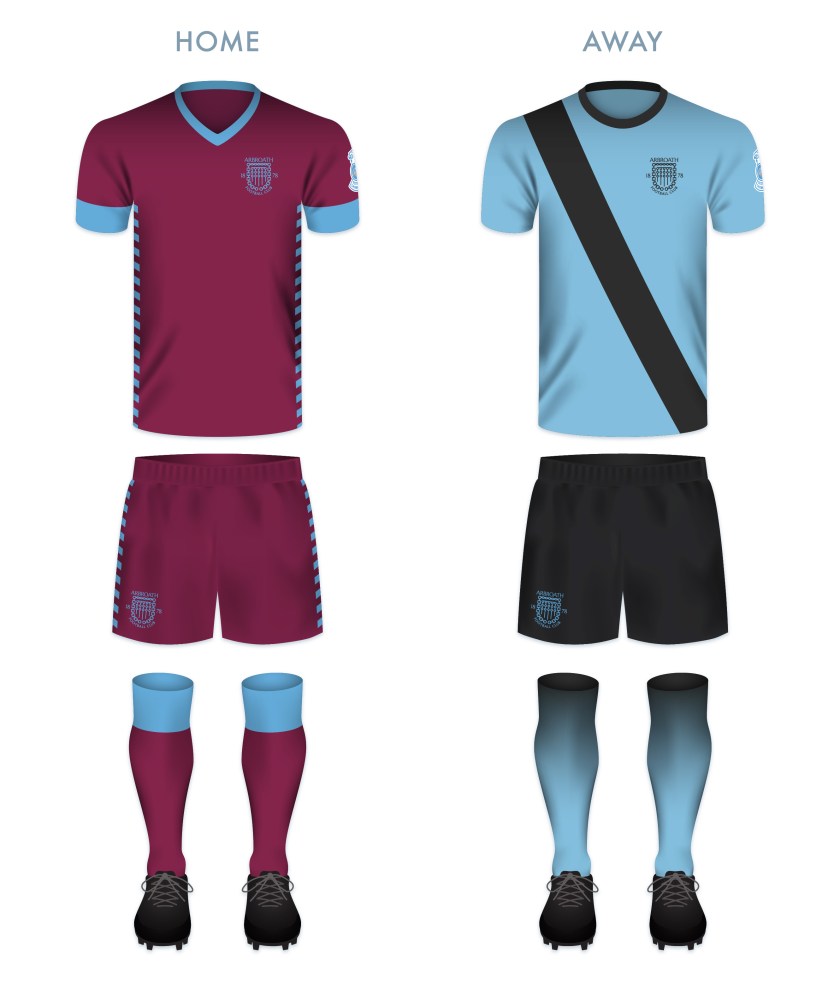
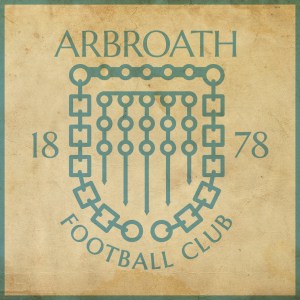 Arbroath Football Cub was established in 1878 and as early as 1885, their shirts featured a badge consisting of a golden portcullis sewn into a large shield, representing the entrance to the ruined Arbroath Abbey (famous, in part, for its association with the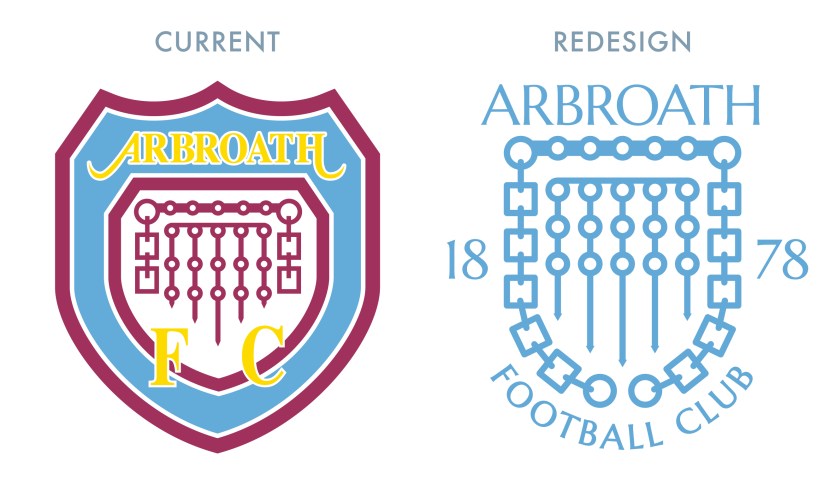

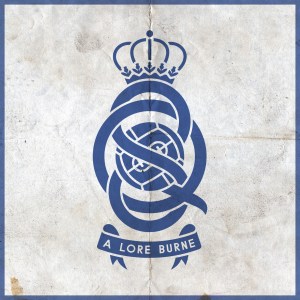 Queen of the South Football Club was established in 1919. This new club was result of a union between three pre-existing clubs: Maxwelltown Volunteers FC (formed in 1896 and renamed 5th King’s Own Scottish Borderers in 1908), Dumfries FC (formed in 1897) and the Arrol-Johnston Motor Company works team. The name, ‘Queen of the South’, was taken from a local poet, David Dunbar, who, while standing for Parliament in the 1857 general election, called the town of Dumfries the ‘Queen of the South’ in one of his addresses.
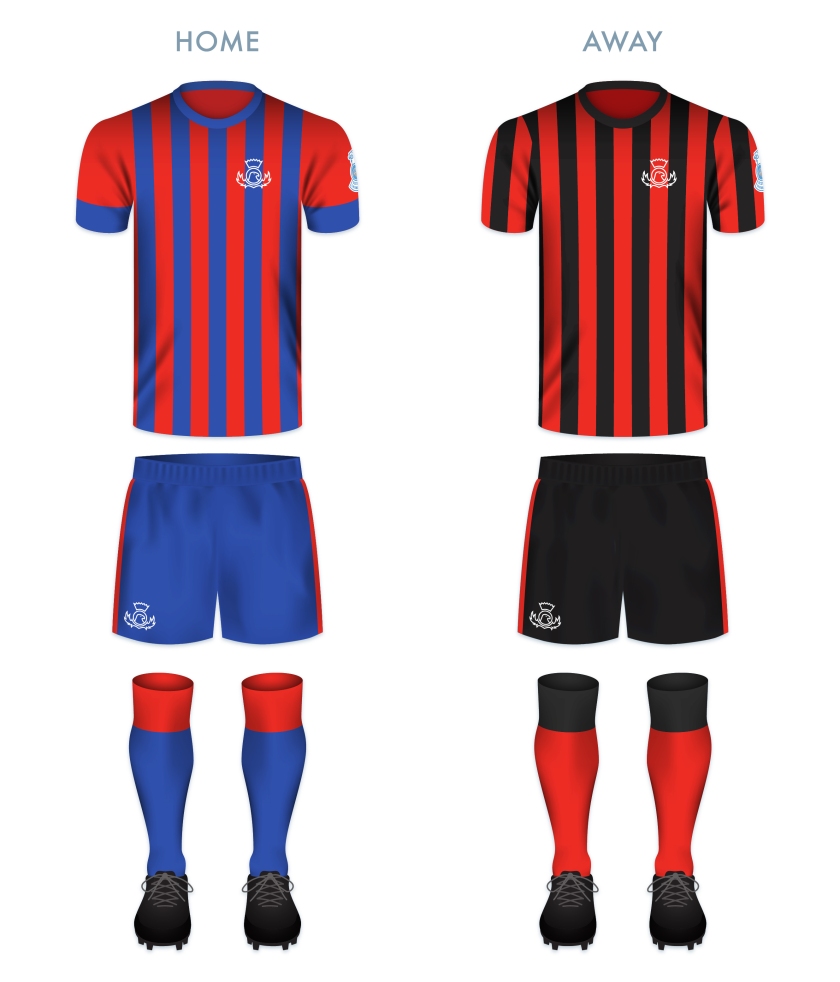
 Caledonian Thistle Football Club was the result of a 1994 union between two historic Invernessian football clubs – Inverness Thistle and Caledonian, both established in 1885. In 1996, Inverness District Council requested that ‘Inverness’ be added to the club’s name. Instead of going the easy route with Inverness United FC or something of that ilk, we have the monstrosity that is ICTFC. More on that later.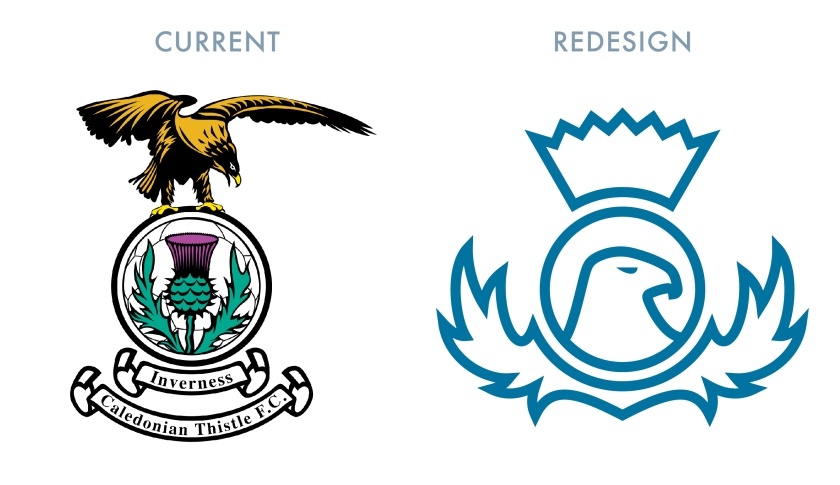

 Greenock Morton Football Club was established as Morton Football Club in 1874, making them the sixth oldest football club in Scotland. The precise origin of the name ‘Morton’ is unclear, though it may have been taken from ‘Morton Terrace’, a row of houses where some of the players stayed beside of the club’s original playing field.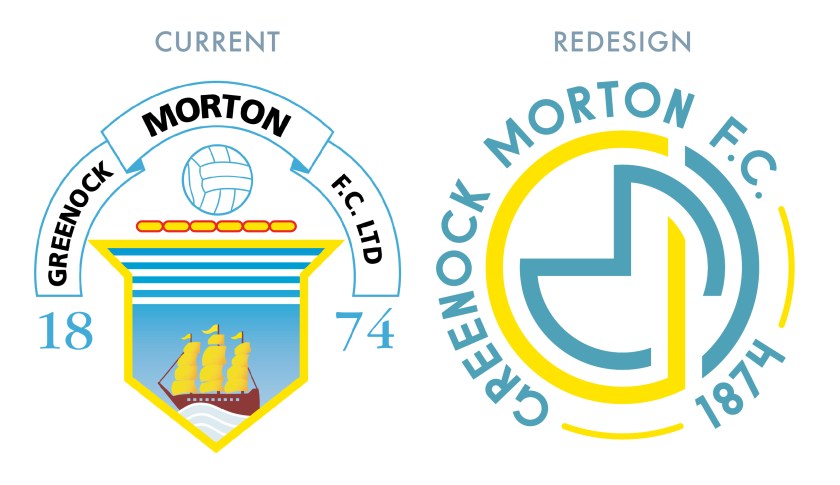


 The history of association football in Scotland is tied inextricably to cricket. Along with clubs such as

 It is recorded that by the middle of the nineteenth century, nearly 20% of Dundee’s population were Irish-born immigrants. As
 ellliottt