
 Edinburgh City Football Club was first formed in 1928 as an amateur side, akin to Queen’s Park. Although the club joined the Scottish Football League in 1931, they struggled throughout the fifteen subsequent seasons and reverted to junior status in 1946. By 1955, the lease at their playing ground (City Park) expired and the football club folded, continuing only as a social club.
In 1966, Postal United Football Club was established and adopted the Edinburgh City name in 1986. By the mid-1990s, this new incarnation of Edinburgh City FC became members of the Scottish Football Association. After competing in the East of Scotland Football League for a number of years, Edinburgh City, along with Gretna 2008, Preston Athletic, Spartans, the University of Stirling, Vale of Leithen and Whitehill Welfare, transferred to the new Lowland Football League for the 2013/14 season.
Edinburgh City were crowned Lowland League champions in the second year of the competition, giving them the opportunity to compete in the Scottish League Two play-off semi-final for a spot in the Scottish Professional Football League. Unfortunately, Edinburgh City lost to the Highland Football League champions, Brora Rangers over two legs. (Brora Rangers would go on to lose to last-place League Two side, Montrose 3-2 on aggregate.)
Edinburgh City would have better luck when they won the Lowland League again in the 2015/16 season. This time, the club faced Cove Rangers in the semi-final. After winning with a 4-1 aggregate score over two legs, Edinburgh City faced the last-place League Two side, East Stirlingshire. The first leg ended in a 1-1 draw. In the second leg, Edinburgh City took the spoils with a 0-1 victory, gaining promotion to the SPFL.
Edinburgh City performed well during its first few seasons in League Two and finished the 2021/22 season in fourth place. This enabled them to enter into the SPFL League One play-off, where they first faced Dumbarton. The Citizens advanced to the next round after having defeated Dumbarton 5-2 over two legs. Next came Annan Athletic, who Edinburgh City beat narrowly (3-2), securing their admittance into League One. After the end of that season, Edinburgh City’s name was changed Football Club of Edinburgh, or simply FC Edinburgh, before reverting back to Edinburgh City FC in June 2023.
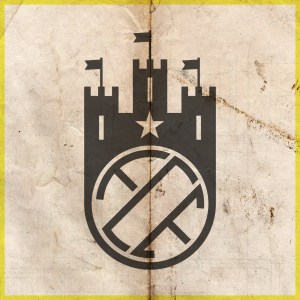
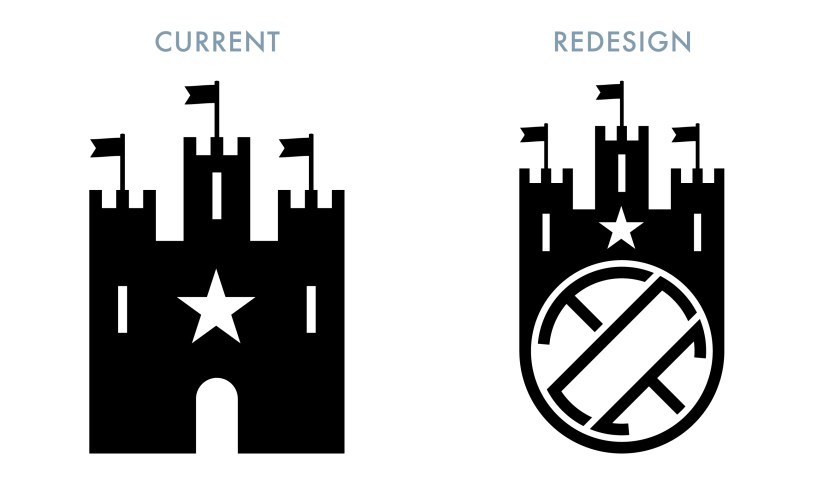
In their early years, the kit of the original Edinburgh City FC featured the coat of arms of Edinburgh. By 1938, the club used an ‘ECFC’ monogram as their badge. Upon the adoption of the Edinburgh City name by Postal United, a new badge, featuring a castle above the club’s initials was used. In 1998, a new club badge was launched, featuring the same castle from 1986, encircled by the club’s full name. For the 2018/19 season, an update on this badge was introduced which included a gold accent. With the most recent renaming of the club, a simple castle is used as the club’s badge.
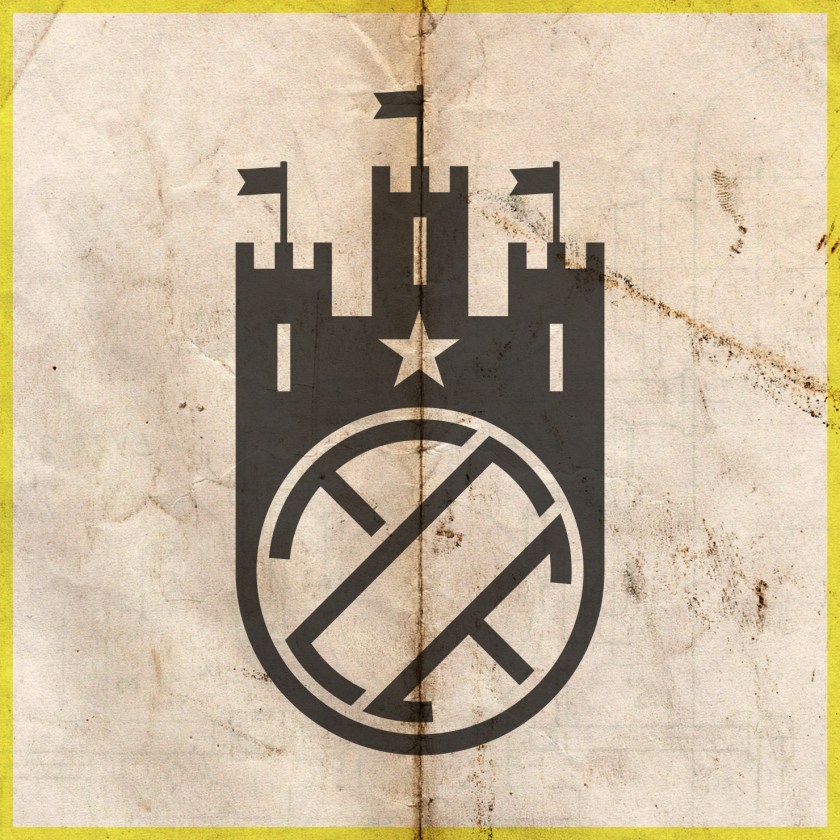
For this redesign, I opted to include a varation on the stylised football ECFC monogram I had employed in an earlier design, topped with a version of the castle in current use:
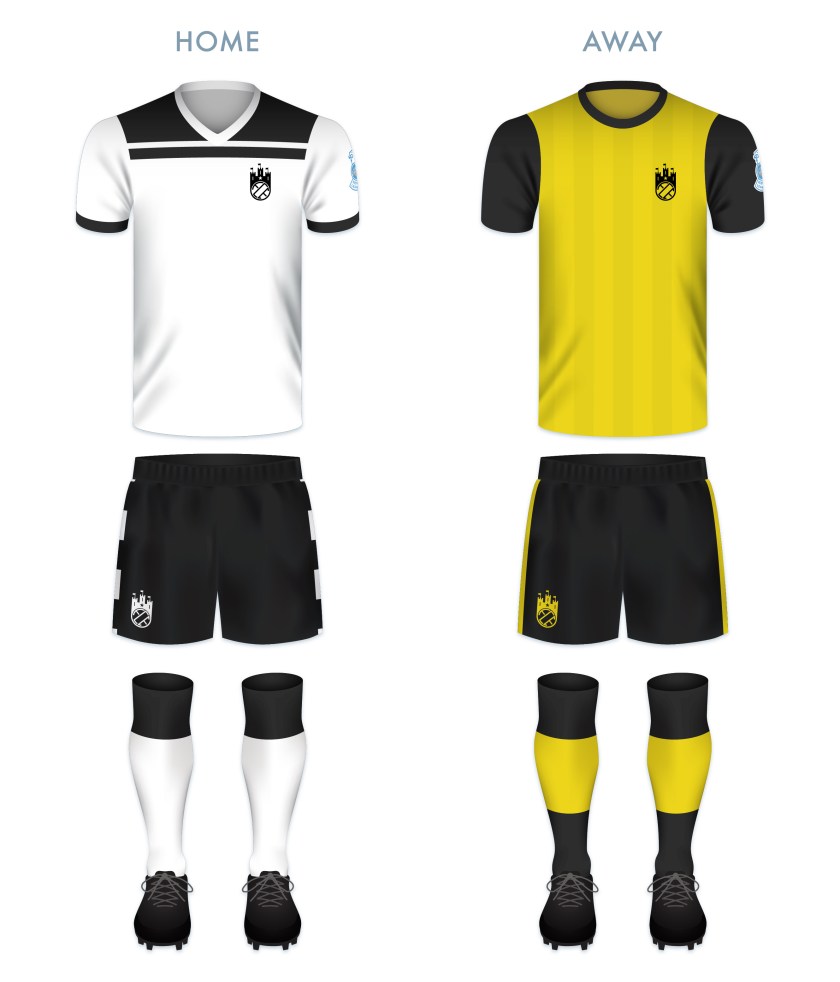
The redesigned home kit consists of a white top with black shorts, the traditional colour scheme since 1928. The top features black details in a scheme resembling Admiral strips from the early 1980s. The away kit is inspired primarily by the 2016/17 Edinburgh City away kit.
As ever, I am indebted to Dave at Historical Football Kits for some of the historical information used above.
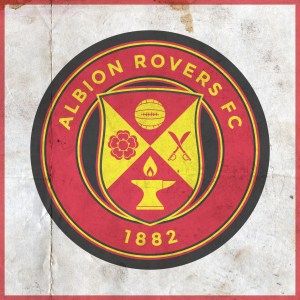 In 1882, two Coatbridge-based football clubs, Albion FC and Rovers FC, merged to form Albion Rovers Football Club. In 1903, these ‘Wee Rovers’ joined the Scottish Football League, competing in the Second Division. During the First World War, the Second Division was suspended and the Rovers would not return to the SFL until 1919. With that season came the club’s greatest achievement.

 Dumbarton Football Club was established in 1872, making it the fourth oldest association football club in Scotland, after


 The 2017/18 season was unpleasant for Brechin City Football Club. They finished at the bottom of the

 In February 1872, brothers and avid rowers Moses and Peter McNeil met with fellow rowers Peter Campbell and William McBeath at Flesher’s Haugh (now part of Glasgow Green), on the northern bank of the River Clyde. It was not rowing that monopolised their attention that morning, but the spectacle of a group of men playing football on the green. Their imaginations were captured and they decided that they would turn their energies to organising their own football team.


 ellliottt