
 Forres Mechanics Football Club was established in 1884. Several different theories have been posited to explain the club’s unusual name. One theory suggests that the club was formed when students at an establishment called the Forres Mechanics Institute (a number of Mechanics Institutes were established throughout the United Kingdom and former British Empire from 1821) formed their own club.
A more likely explanation is found in the research of Colin G. Watson. In his 1984 book, Forres Mechanics: The First Hundred Years, Watson argues that the club was formed when players left a pre-existing club based in the town, St Lawrence (now, a cricket club exclusively). Watson also argues that the name ‘Mechanics’ has nothing to do with the Mechanics Institute, but rather, is a reference to the occupations of these early players.
The Highland Football League was established in 1893 by members of the Inverness Workman’s Club. Forres Mechanics were among the founding members of the league, which also included Caledonian, Cameron Highlanders, Clachnacuddin, Inverness Citadel, Inverness Thistle and Inverness Union. Cameron Highlanders, Inverness Citadel and Inverness Union have all ceased operations. In 1994, Caledonian and Inverness Thistle merged to form Inverness Caledonian Thistle, who have competed as professionals since that time. Of these founding members, only Clachnacuddin and Forres Mechanics remain.
The Mechanics’ honours include two Highland League titles, seven Highland League Cups, eight North of Scotland Cups and the 1963/64 Scottish Qualifying Cup (North). In 2016, the Mechanics qualified for the Scottish Cup competition and reached the third round—their highest ever advancement in the tournament—where they lost to League One side Stenhousemuir over two legs (having drawn the first 2-2 at home).
The current Forres Mechanics badge is distinctive. Its centrepiece is a version of the Forres coat of arms, which originates from at least the fifteenth century. It features the town’s patron saint, St Lawrence, standing between two victory palms. He holds the Gospels as well as a gridiron, upon which he met his martyrdom. It is most likely that the crescent and star relate to a paraphrase of Psalm 139.12 associated with Lawrence: ‘The darkness is no darkness to me, but the night is all as clear as the morning that shineth more and more unto the perfect day.’
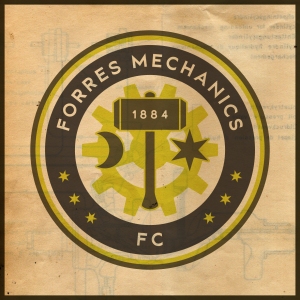
I have great affection for the current badge, but in my redesign I wanted to present something that was not simply a version of the town’s coat of arms. In wishing to tie in both the town and the ‘mechanics’ side of the club’s name and history, I included the crescent and star of St Lawrence, which are flanking a hammer, all set in front of a cog. Upon the head of the hammer is found the year of the club’s founding. I have also included three six-pointed stars on either side of the outer ring, calling back to the current badge. For the primary colour scheme, I utilised the club’s traditional gold and brown.

The kit designs were made in keeping with the club’s traditional colours and occasional use of hoops, both of which I find particularly attractive.


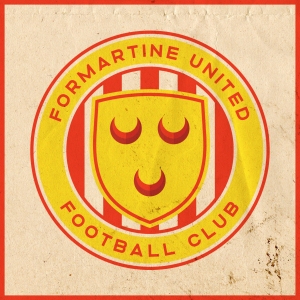 Formartine United Football Club was established in the village of Pitmedden, Aberdeenshire, in 1948. The exact circumstances of the club’s formation are something of a mystery. It is known that an amateur club, Pitmedden FC, played in the village prior to the founding of United, but the relationship between the two is unclear.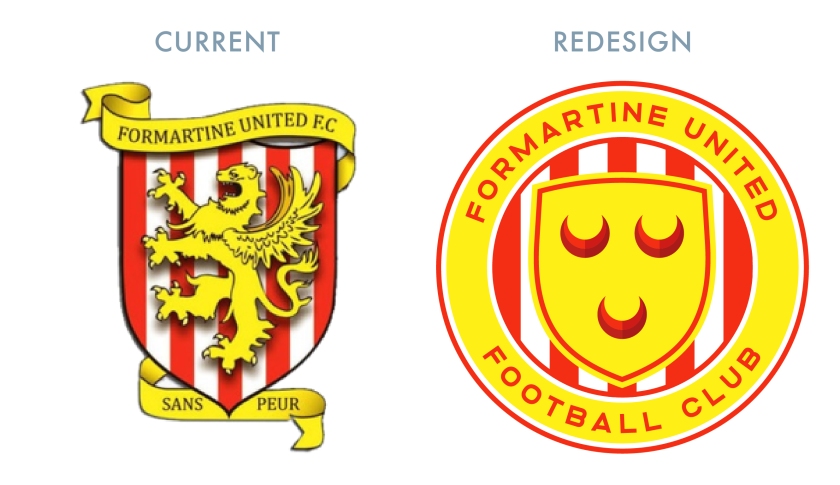
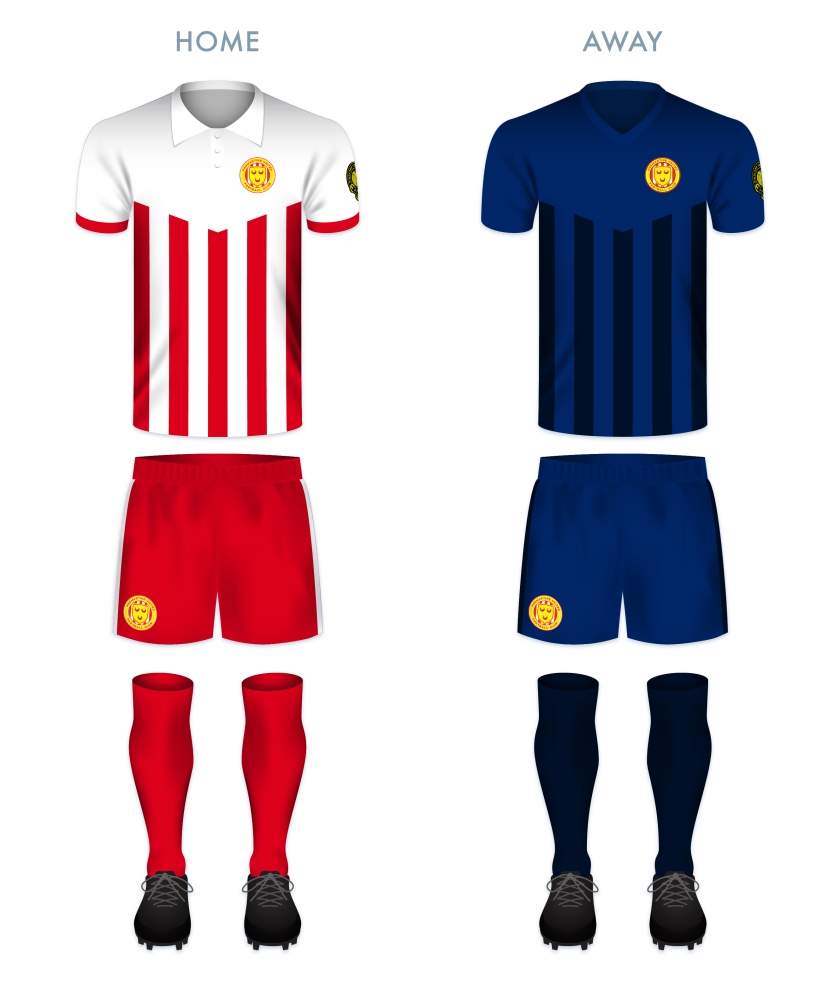
 Deveronvale Football Club was established in 1938 at the union of two pre-existing clubs, Deveron Valley and Banff Rovers. The club name comes from the River Deveron, which separates the twin fishing towns of Banff and Macduff on the northern Aberdeenshire coast.
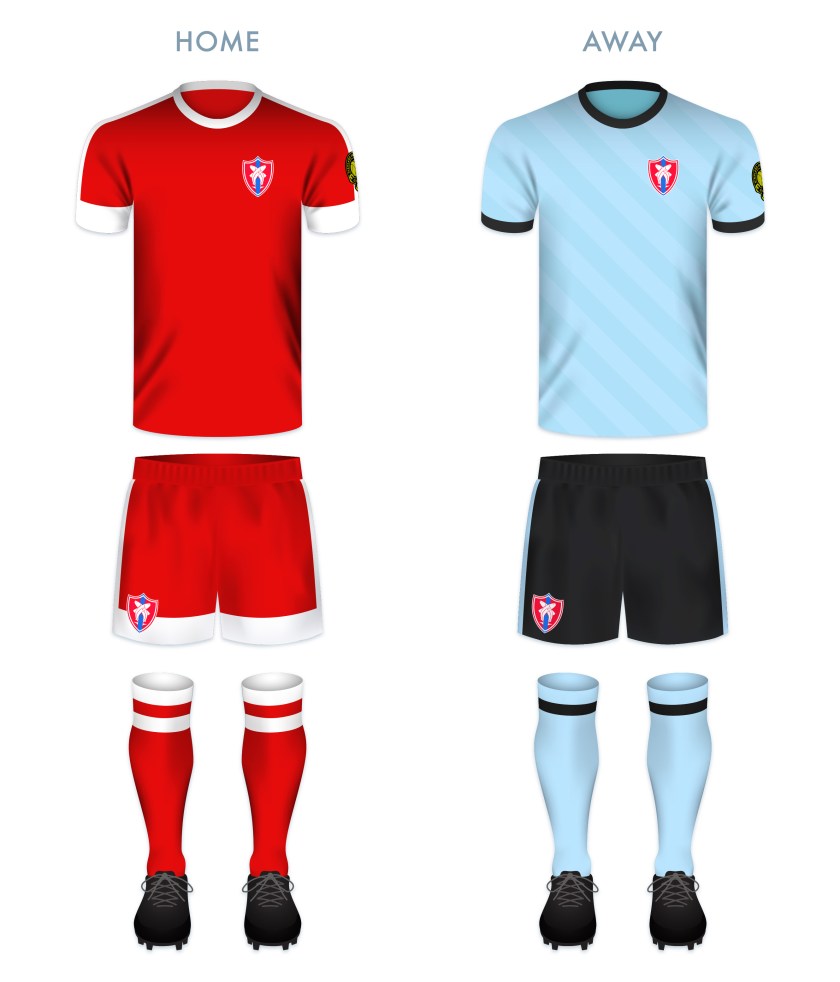

 Cove Rangers Football Club was established in 1922. The club takes its name from Cove Bay, located in the southeastern corner of the city of Aberdeen, in which they play.

 Clachnacuddin Football Club was established in 1885. The name of the club is an Anglicisation of the Scottish Gaelic Clach na Cùdainn, meaning, ‘Stone of the Tub’, a reference to a particular landmark in the club’s locality, the Merkinch area of Inverness. (It is said that Merkinch, which is situated between the Caledonian Canal on the west and the River Ness on the east, was home to a particular stone at which locals would do their washing, hence the ‘tub’.)

 The early history of Buckie Thistle Football Club is something of a mystery. Although the exact year of the club’s founding is unknown, it is accepted generally to have been established in 1889. The club’s green-and-white hooped home shirts resemble that of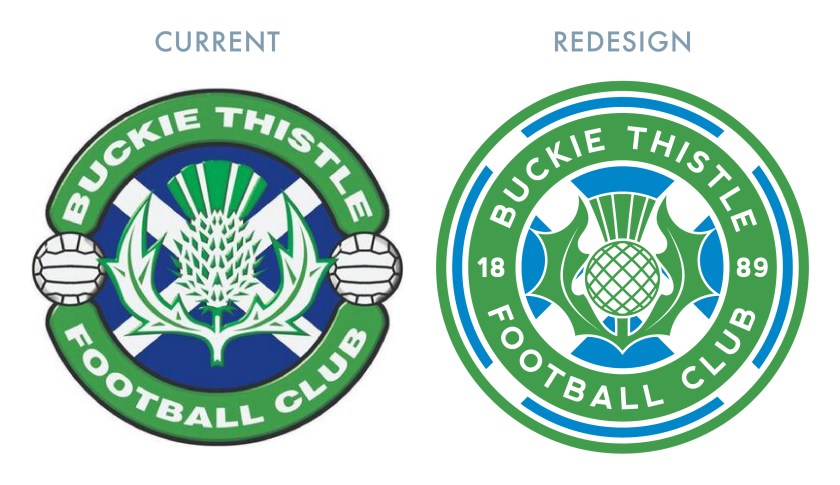


 Brora Rangers Football Club was established in the village of Brora, Sutherland in 1879. In 1933, the club became members of the Scottish Football Association and in 1962, they began to compete in the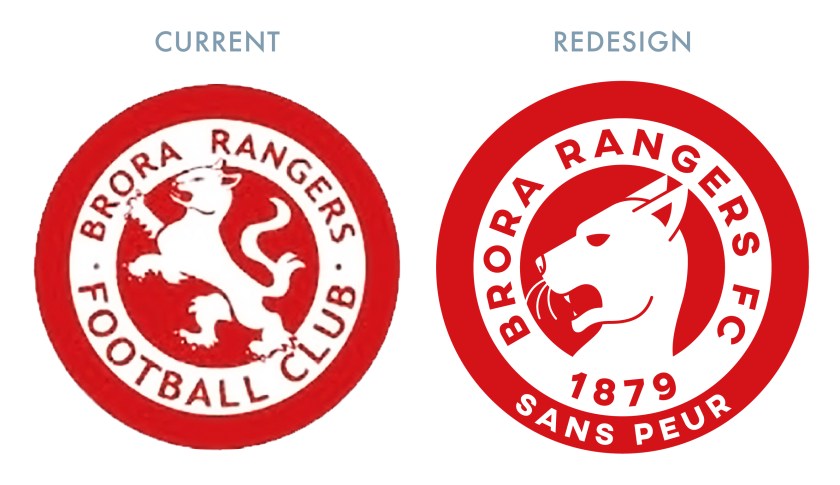
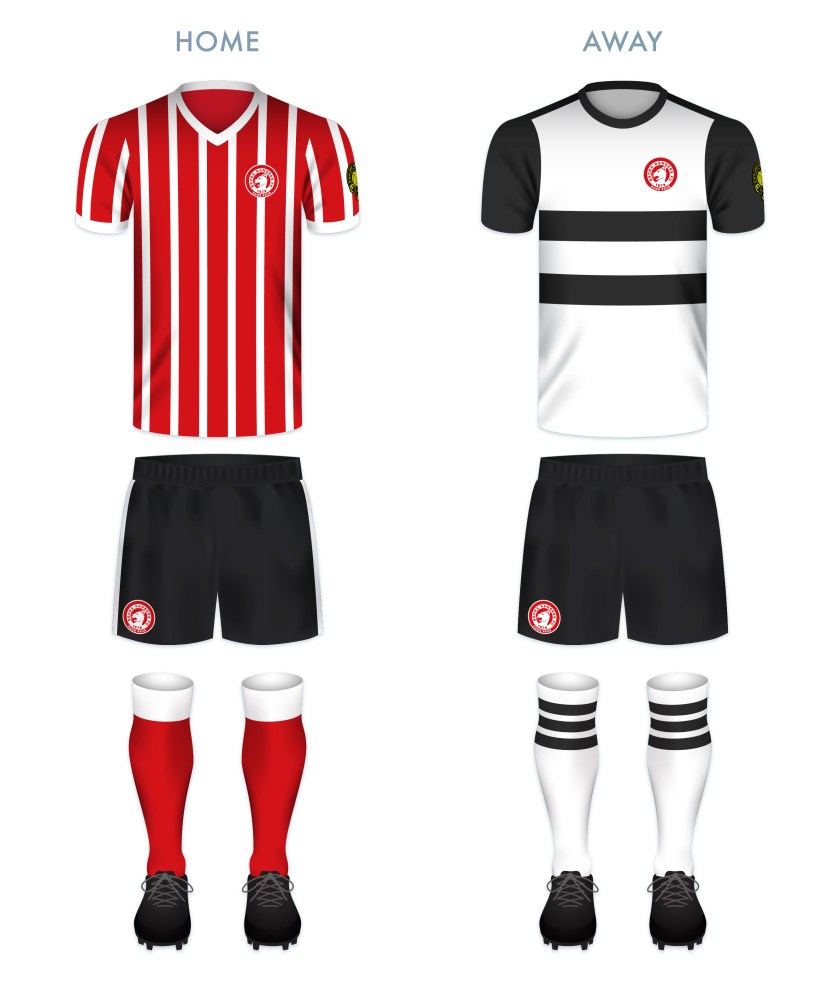
 I first began redesigning Scottish football badges in 2013 as a personal challenge. In 2018, I set myself the task of tweaking or completely redesigning my initial rebrandings, and completing badge and strip redesigns for the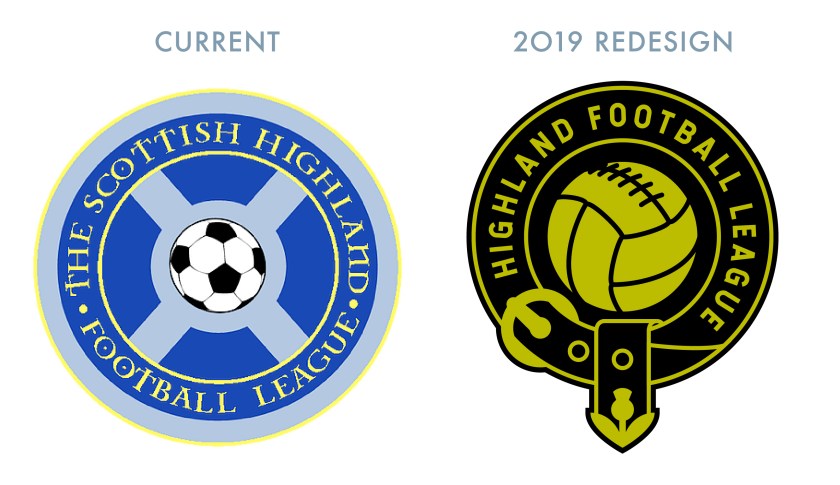

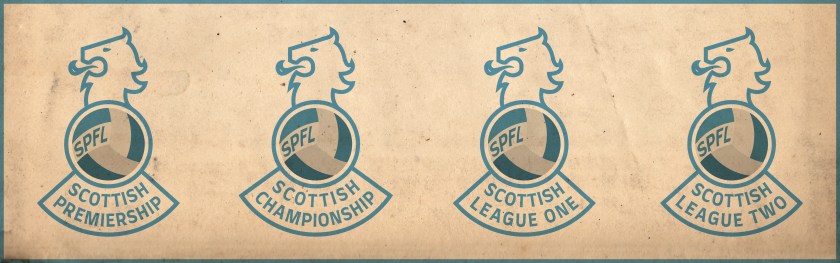
 I first began redesigning Scottish football badges in 2013 as a personal challenge. Eventually, I lost a bit of steam, but have found myself reembarking on the endeavour as of late. In 2018, I set myself the task of tweaking or completely redesigning my initial rebrandings, particularly those which I have found uninspiring or too similar to current badges. I have also expanded beyond my original redesigns (the 2013/14 top tier and a smattering of lower division clubs) to include the


 ellliottt