
 Kelty Hearts Football Club was established as an amateur side in 1975. After the 1978/79 season, five of the club’s players were signed by Halbeath Juniors, prompting the amateurs to become a junior side in order to remain competitive. In June 1980, the club was accepted into the Scottish Junior Football Association, where they competed for the better part of the next three decades.
During their time as a junior side, the Hearts reached the Scottish Junior Cup final twice, in 1999 and in 2007, though finished as runners up on both occasions. By the 2010s, the club was looking more dominant in the East Region Super League, winning the league in 2015 and 2017. After their second league victory, Kelty Hearts applied for admission into the Scottish Football Association, which was granted in December 2017.
The club entered the East of Scotland Football League in 2018 and finished at the top of the table that same season. As EoSFL champions, the Hearts played Threave Rovers for a chance at gaining another promotion. Over two legs, the Hearts dominated the Rovers, amassing a comprehensive 10-0 aggregate score to seal their entry into the Lowland Football League.
Kelty’s success continued in the Lowland League, placing third in their inaugural season (behind East Kilbride and BSC Glasgow, in first and second place, respectively). They topped the table in both of the curtailed (as a result of the COVID-19 pandemic) 2019-20 and 2020-21 seasons. Because of the pandemic, neither the Highland nor Lowland League champions were given the chance to compete for promotion into the SPFL in the 2019-20 season. Despite having only played 13 matches in the 2020-21 season, Kelty were given the opportunity to play Brora Rangers, the Highland League champions, who they defeated 6-1 over two legs. Kelty then faced SPFL League Two bottom side, Brechin City. With their 3-1 victory over Brechin over two legs, Kelty gained promotion to the SPFL for the first time in their history and will compete in League Two for the 2021-22 season.
The current Kelty Hearts badge is quite a sight to behold. I imagine, judging from the design, that this badge has been used since the 1970s. While I admire its uniqueness, with the text set on straight lines within a circle, there is very little design coherence. All four linear elements — the heart, the club name, the date and football and the ‘F.C.’ banner — utilise completely different styles. In order to bring them into some sort of unity, I decided to incorporate each element within a new circular badge.

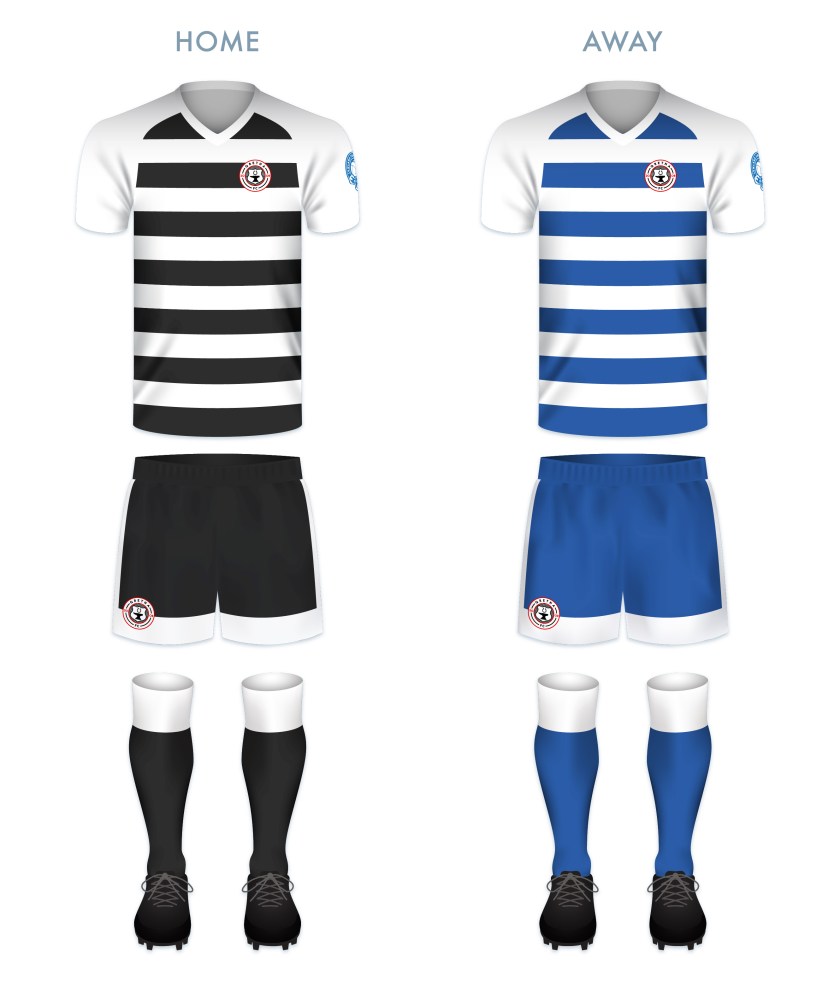
Both the home and away kits make use of the traditional Kelty Hearts colours and have been inspired by 1970s kit styles.

 The original Gretna Football Club was established in 1946, competing in the Dumfries and District Junior League. Due to the town’s proximity to England, in 1947, the club began to compete in the Carlisle and District League. Gretna continued to play in English leagues until gaining admittance into the Scottish Football League in 2002 (replacing the original
 Gala Fairydean Rovers Football Club was established in the Borders town of Galashiels in 1894. Thirteen years later, in 1907, the club split into Gala Fairydean and Gala Rovers, with the Rovers acting as the reserve side for Fairydean. With the outbreak of the First World War, both sides ceased. In 1919, Fairydean alone resumed competition, becoming a founding member of the East of Scotland Football League four years later. It would not be until 1947 that the Gala Rovers name resurfaced, this time, as an amateur side.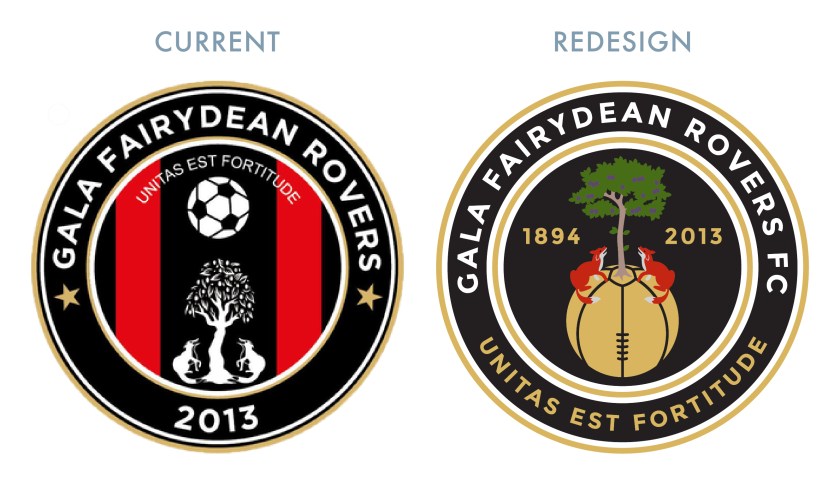


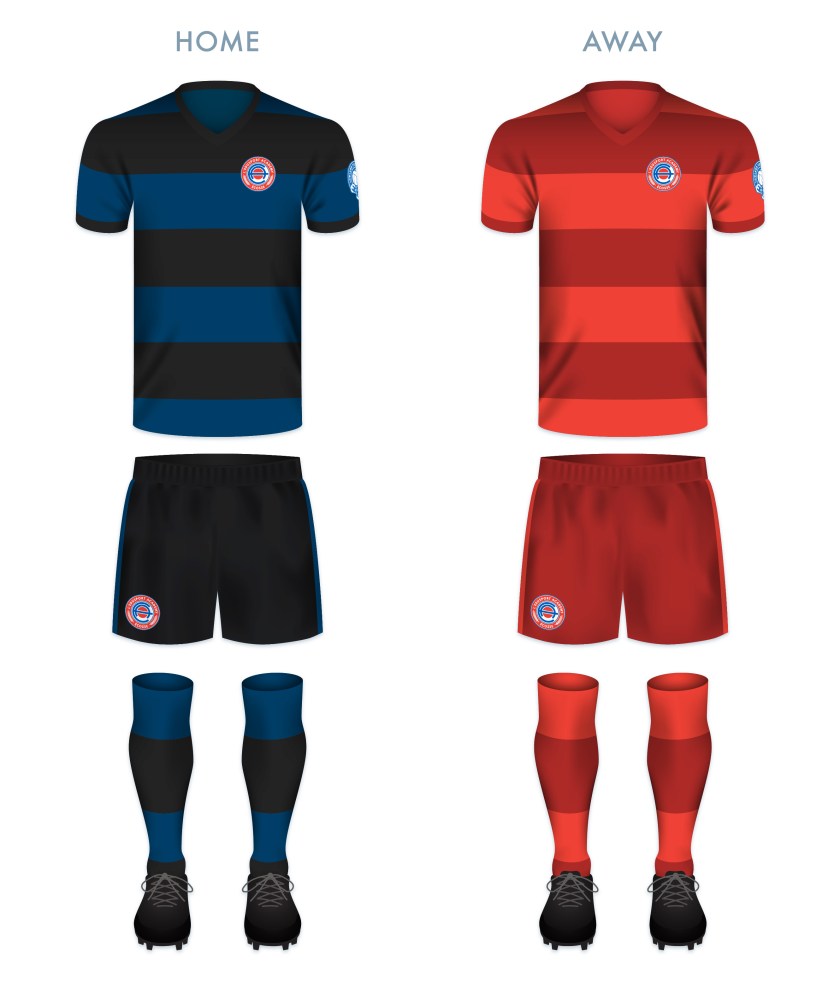
 Edusport Academy was established as a residential football academy in 2011 with the aim of developing young French players and giving them the opportunity to improve their English language skills. The purpose behind refining these skills was to give the young footballers an edge in entering into the professional game in Britain.
 Edinburgh University Association Football Club was constituted formally in 1878 and has been a member of the Scottish Football Association since the same year.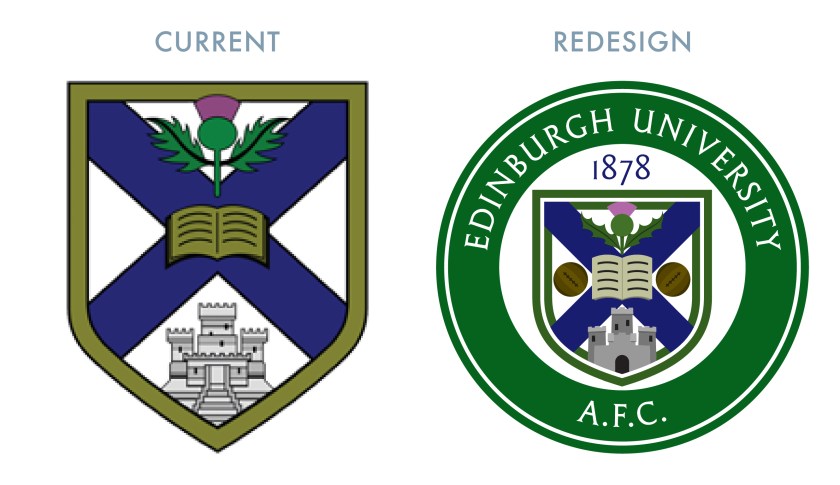

 As with a number of other Scottish football clubs, the origins of East Stirlingshire Football Club can be traced back to cricket. In 1880, a local cricket club in the Bainsford area of Falkirk, the Bainsford Blue Bonnets (styled as ‘Bainsford Bluebonnets’ by some sources), formed a football side called Bainsford Britannia. Britannia had existed as part of the cricket club for a year, when, in 1881, the football club broke away and adopted the name ‘East Stirlingshire’ (after a previous occupant of their home ground, East Stirlingshire Cricket Club). The name East Stirlingshire refers to the historic county of Stirlingshire, of which the town of Falkirk was a part until 1975.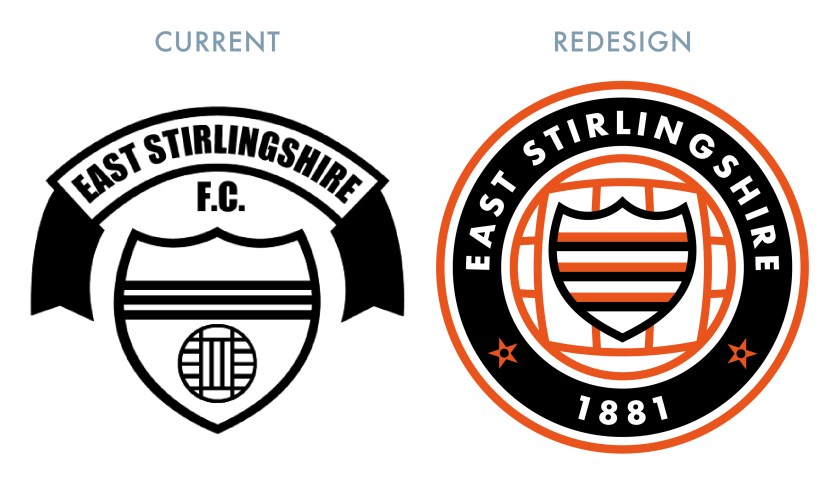

 The original East Kilbride Football Club was established in 1871, making it one of the earliest association football clubs in Scotland, after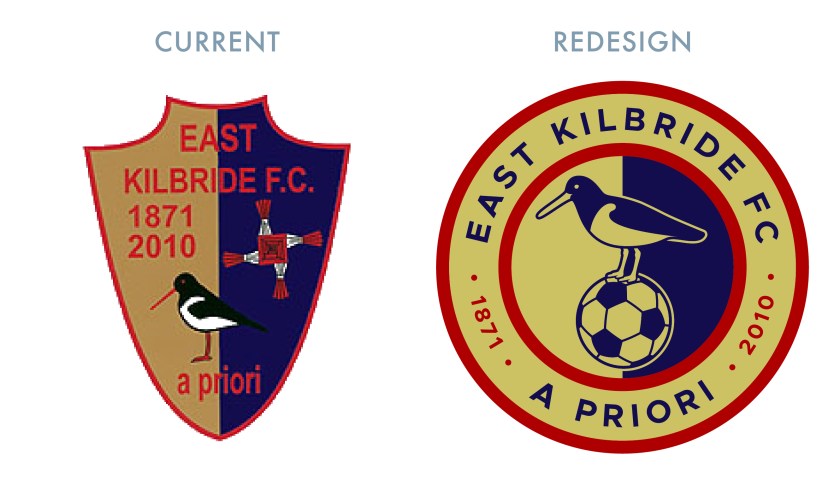

 The name Dalbeattie Star Football Club was used as early as 1900 for a team in the Kirkcudbrightshire town which played a number of local friendlies, but it was not until 1905 that Dalbeattie Star began to play competitive fixtures. In 1906, it was decided that the club would compete as a senior side and in August 1907, Dalbeattie Star were admitted into the SFA.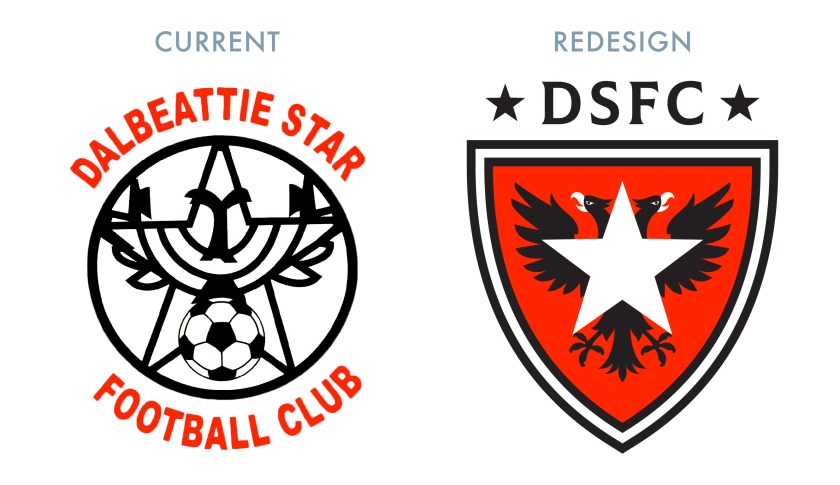
 Cumbernauld Colts Football Club was established as a youth football club (hence, the use of ‘Colts’) in 1969.


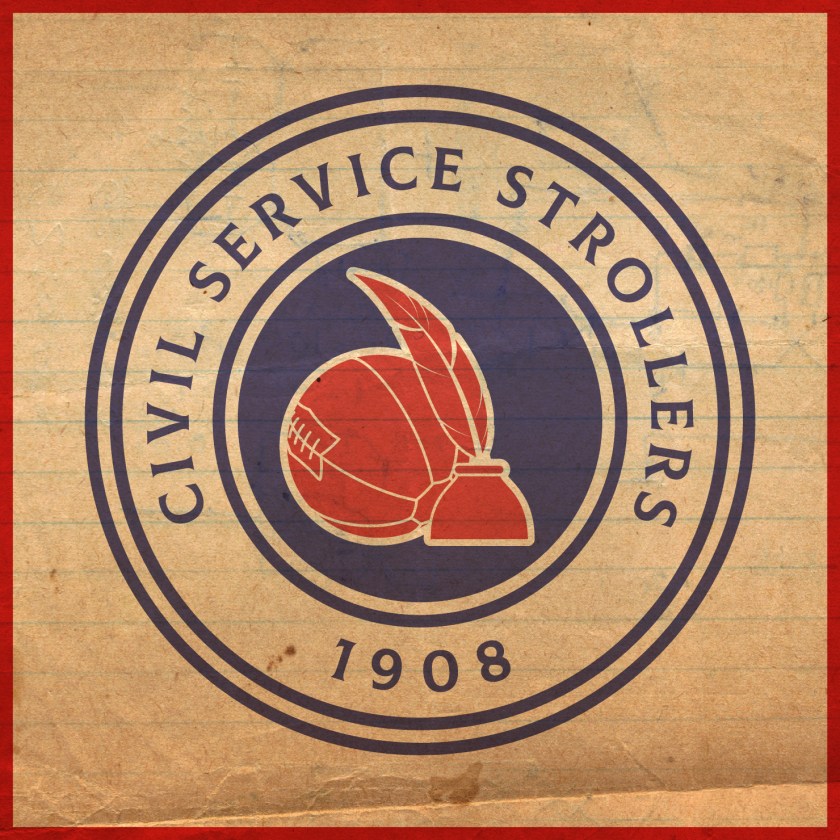
 Civil Service Strollers Football Club was established as Edinburgh Civil Service Football Club in 1908. The club was based at Stenhouse Stadium until moving to Pinkhill Stadium in Corstorphine in the 1920s. In 1957, the club moved to the Edinburgh Area Civil Service Sports Association in Muirhouse, where they continue to play today.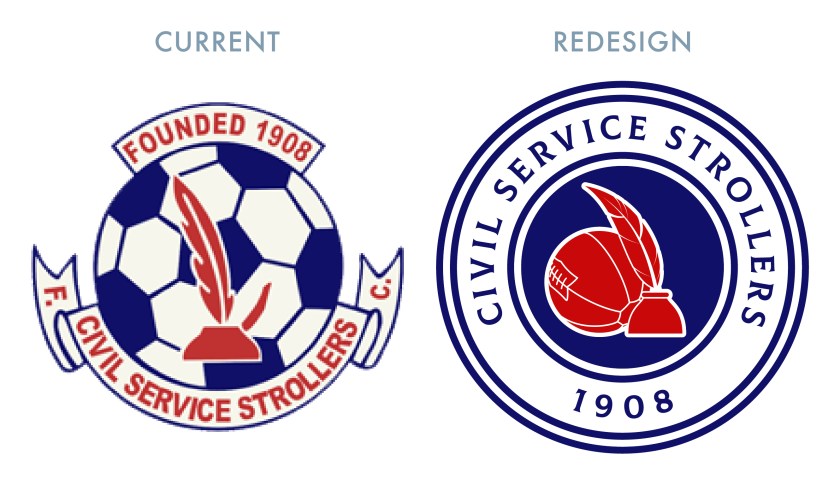

 ellliottt