
 Gala Fairydean Rovers Football Club was established in the Borders town of Galashiels in 1894. Thirteen years later, in 1907, the club split into Gala Fairydean and Gala Rovers, with the Rovers acting as the reserve side for Fairydean. With the outbreak of the First World War, both sides ceased. In 1919, Fairydean alone resumed competition, becoming a founding member of the East of Scotland Football League four years later. It would not be until 1947 that the Gala Rovers name resurfaced, this time, as an amateur side.
Fairydean experienced relative success in the EoSFL, with their most fruitful period taking place in the 1960s. During this time, the club claimed six league championships (1960/61, 1961/62, 1963/64, 1964/65, 1965/66 and 1968/69). Fairydean went on to win the EoSFL championship twice more, in 1988/89 and 1990/91.
Over the coming years, Fairydean applied unsuccessfully to the Scottish Football League on four ocassions. Eventually, in 2013, Fairydean and Rovers merged, forming the modern incarnation of Gala Fairydean Rovers. That same year, the new club was granted membership in the new Lowland League.
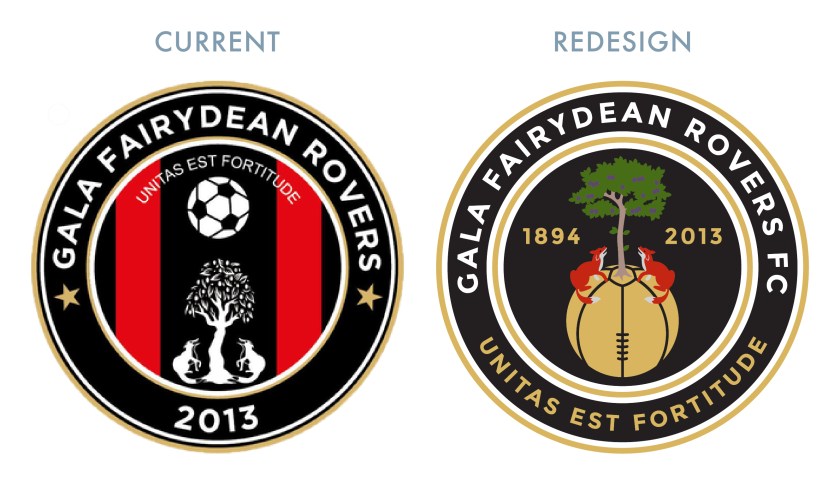
At some point during their time as Gala Fairydean, the club began to use a badge which featured the coat of arms of the Burgh of Galashiels. This coat of arms includes two foxes seated at the base of a plum tree, looking upward and a version of this image can be found in the current badge. The current badge also includes a hovering football, the Latin motto, UNITAS EST FORTITUDE (‘unity is strength’) and two red stripes over a black field, representing, in my best estimate, the traditional home kit of Gala Fairydean.
For my redesign, I decided that I wanted to retain the elements from the coat of arms and the Latin motto (which I find especially apt given Gala Fairydean Rovers’ history), but I was not convinced with the way that they are presented in the current badge. I opted to tie the foxes, the plum tree and the football together, with the former resting atop a redesigned, Victorian-styled football in gold. As I don’t feel as if the current badge’s foxes much resemble foxes, I went with a more ‘maximalist’ colour scheme. I also chose to include both the current club’s date of formation as well as the original Gala Fairydean Rovers’ date of formation. The Latin motto has been moved to the outer circle in gold.
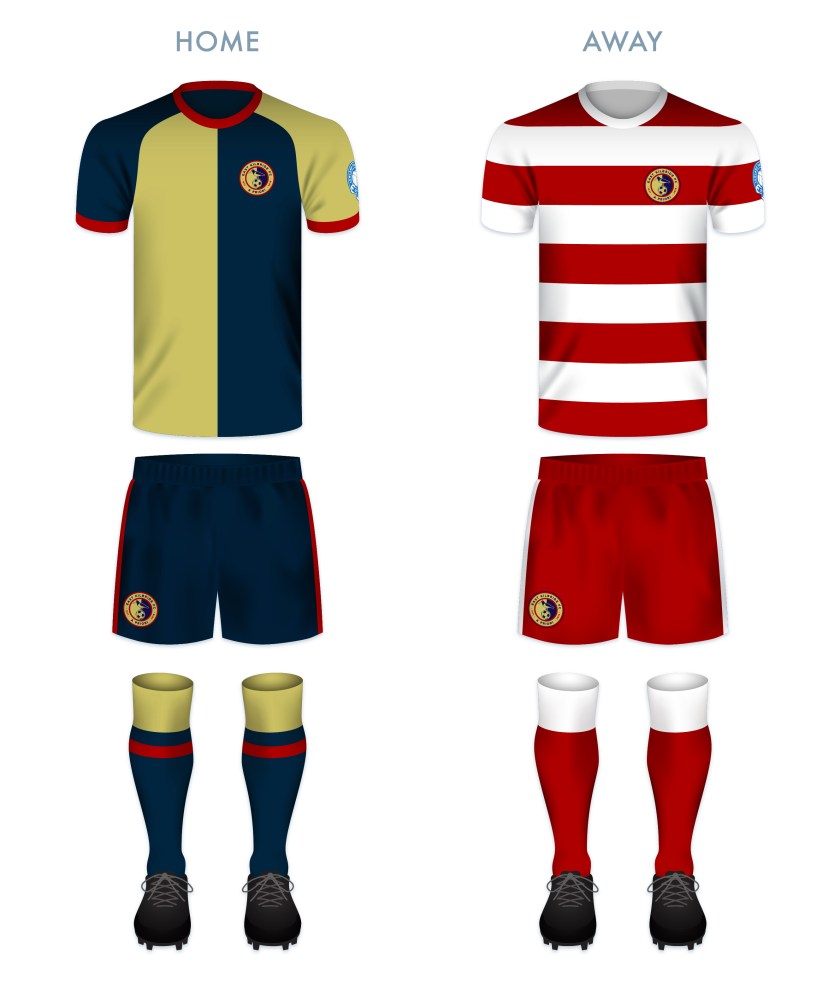
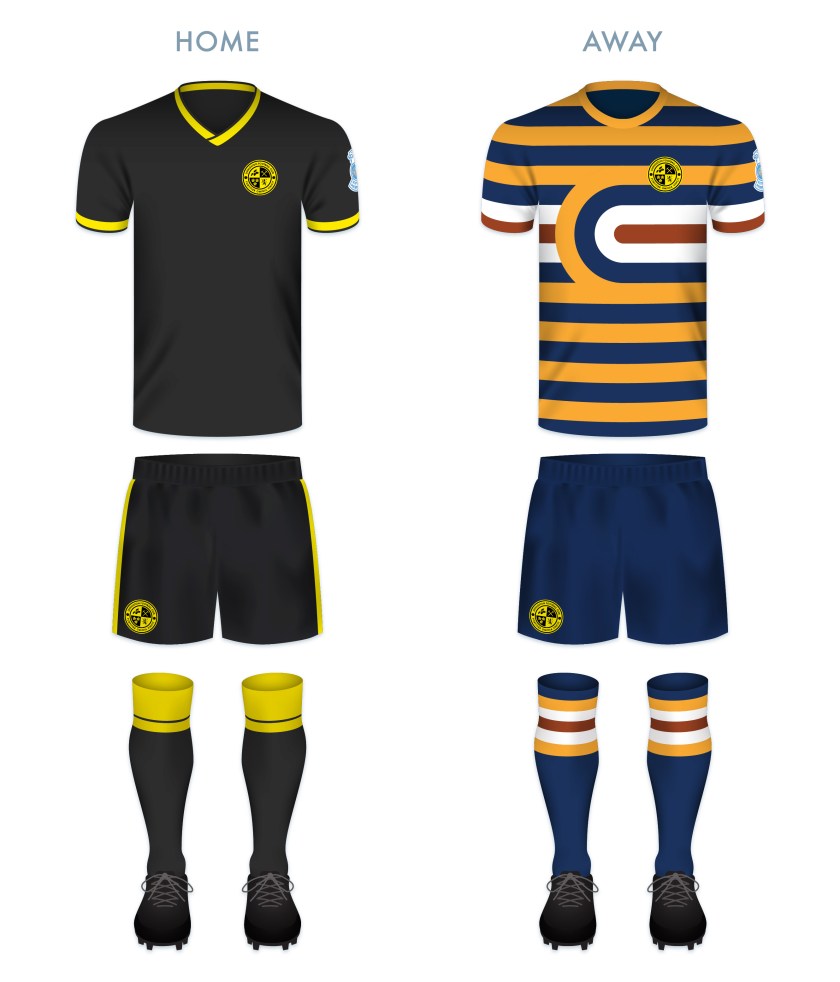
For the kit redesigns, I opted to go with some version of the current kits, bringing back the home kit’s red and black vertical stripes (which are absent from the club’s kit at present).


 The original East Kilbride Football Club was established in 1871, making it one of the earliest association football clubs in Scotland, after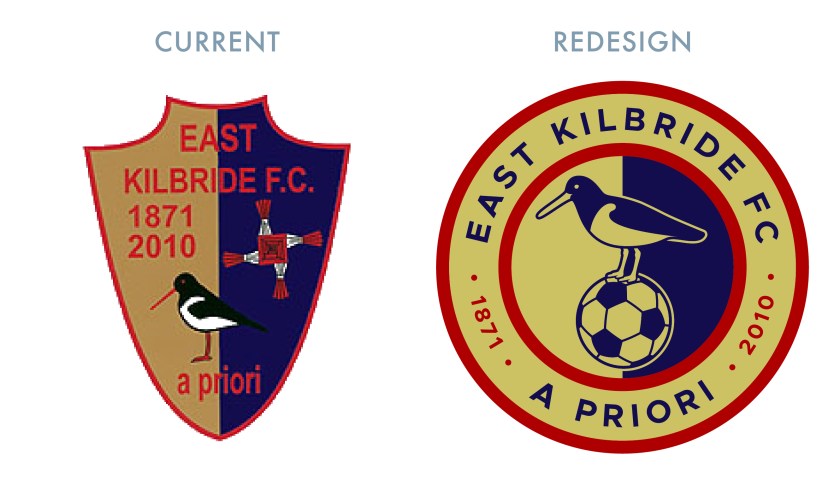
 Lossiemouth Football Club was established in 1945 and joined the

 Queen’s Park Football Club was established in 1867, making it the oldest football club in Scotland. It can be argued that no single club has had such an influence on the game of football in Britain—and in turn, the world—than Queen’s Park. They invented the passing game (as opposed to the tactic of a ‘rolling-maul’ like that used in rugby, the primary tactic employed by all other football clubs of this early era), as well as the crossbar on goals, the half-time interval and free kicks.


 Elgin City Football Club was established when two Elgin-based clubs, Rovers FC (1887) and Vale of Lossie FC (1888) united in 1893. For more than a century, the club competed in the
 Berwick Rangers Football Club was formed in 1884 by a group of railway clerks from Newcastle, England who played a match against a team of millworkers from Dunbar, Scotland.


 The history of Livingston Football Club is one of the most tumultuous in all of Scottish football.

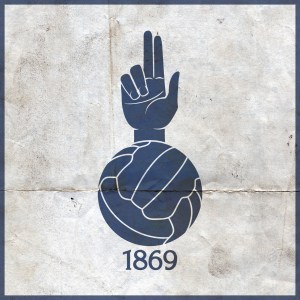 Kilmarnock Football Club was formed in 1869, making it one of the oldest football clubs in the world. Before this time, Kilmarnock was an established cricket club, playing according to rugby football code in the cricket off-season. This rugby football code history is reflected in the naming of the club’s ground, Rugby Park.
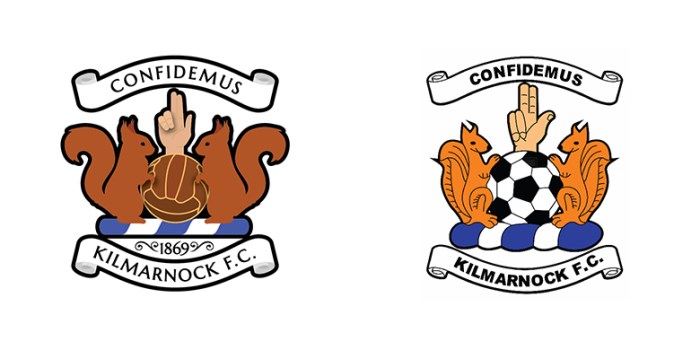 I was never quite satisfied with the redesign above. I have long appreciated the content of the current Kilmarnock badge, but have found the execution to be lacking. Ultimately, with my redesign here, I decided to go for something far more minimalistic, calling back to the original badge used from 1873 to 1887.


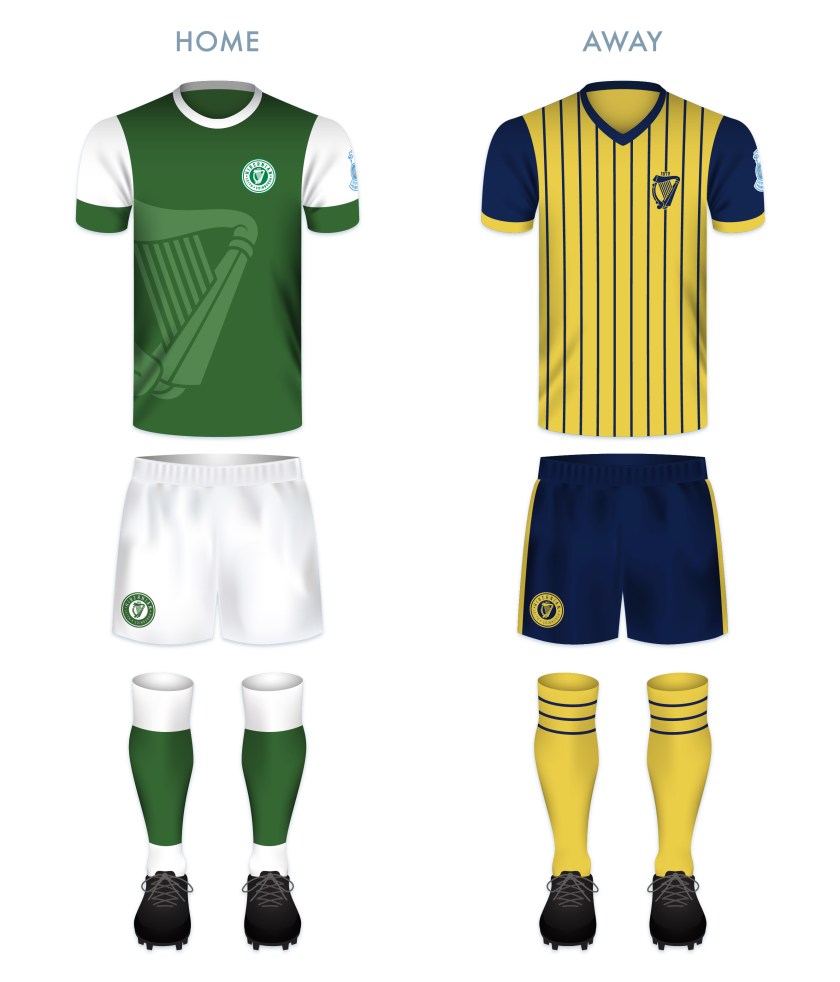
 During the challenging years of the Great Famine in the nineteenth century, many Irish emigrated to Scotland, with most settling in and around Glasgow. Smaller groups of Irish immigrants settled in the east, especially in Dundee and Edinburgh. A particularly concentrated Irish population settled in the Cowgate area of Edinburgh and it was there that in 1875, Irish-born priest Canon Edward Joseph Hannon of St Patrick’s Church was encouraged by Michael Whelahan to establish a football club in order to promote a life of temperance and religious adherence among the young Irish Catholic male population in Edinburgh. Hibernian Football Club was thus formed, with Whelahan acting as the club’s first captain and Canon Hannon acting as the club’s first manager.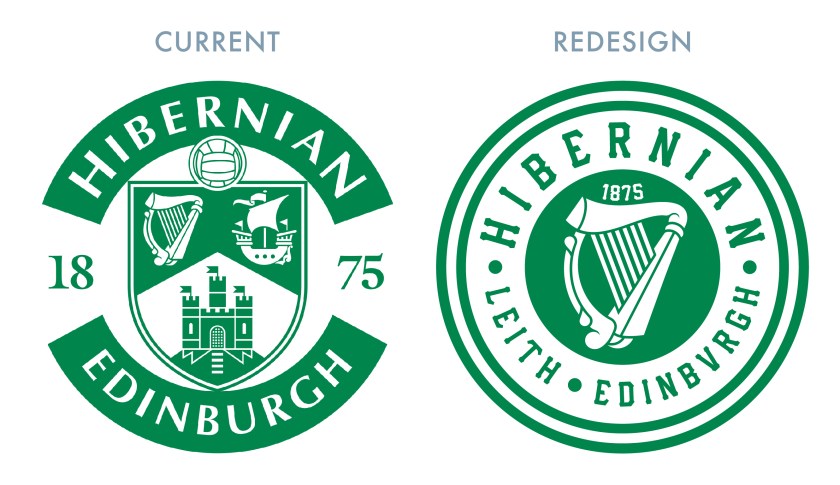

 ellliottt