
 Stranraer Football Club was established in 1870, making it the third-oldest club in Scotland, after Queen’s Park, (1867) and Kilmarnock (1869).
Due to Stranraer’s relatively remote location, fixtures in these early years were often played away from the town, in other parts of Wigtownshire, in Kirkcudbrightshire and even as far north as Ayrshire. Finally, in 1907, a permanent home was found in the town and Stair Park came to be. By the 1955/56 season, Stranraer began competing as full members of the Scottish Football League.
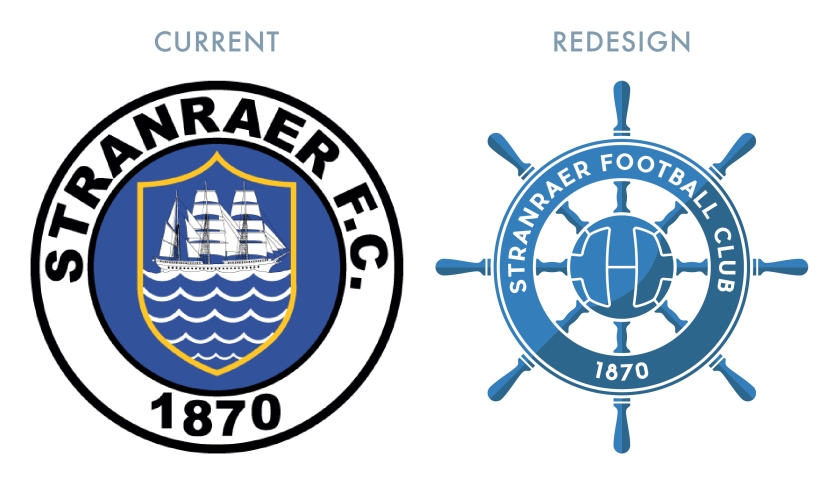
Stranraer first used a badge on their kit in the mid-1950s. This badge consisted of a red shield enclosing the club’s initials in white. This badge was used until 1961, when it was replaced with another red and white shield, this time, with the club’s initials above a ship at sea, the ship taken from the town’s coat of arms. Some variation of this badge remained until 1988, when a shield featuring only a ship at sea was enclosed by a ring with the club’s name and year of founding. The current badge in an updated version of this 1988 badge.
In redesigning Stranraer’s badge, I considered the two other clubs which feature a ship in full sail on their current badge: Greenock Morton (1874) and Clyde (1877). The ship on Clyde’s badge, from what I can tell, came into being in the mid-1930s. Morton’s badge did not feature a ship until 1978. Given the length of time that Clyde’s badge has been in use and given that I did not want my Stranraer badge redesign to be too similar to either the current badge or the Stranraer coat of arms, I decided to include a ship in my redesign of Clyde’s badge alone.
For Stranraer, I settled on a ship’s wheel, as it is distinct among all football badges, it is a timeless symbol (which ties both to the club’s age and to Stranraer’s significance as a port town) and it lends itself to a round badge. I have gone out on a limb so as to include the wheel’s handles beyond the bounds of the badge ring. A t-panelled football sits at the centre of the badge and I have added a second tone of blue to give the badge an extra bit of ‘pop’.
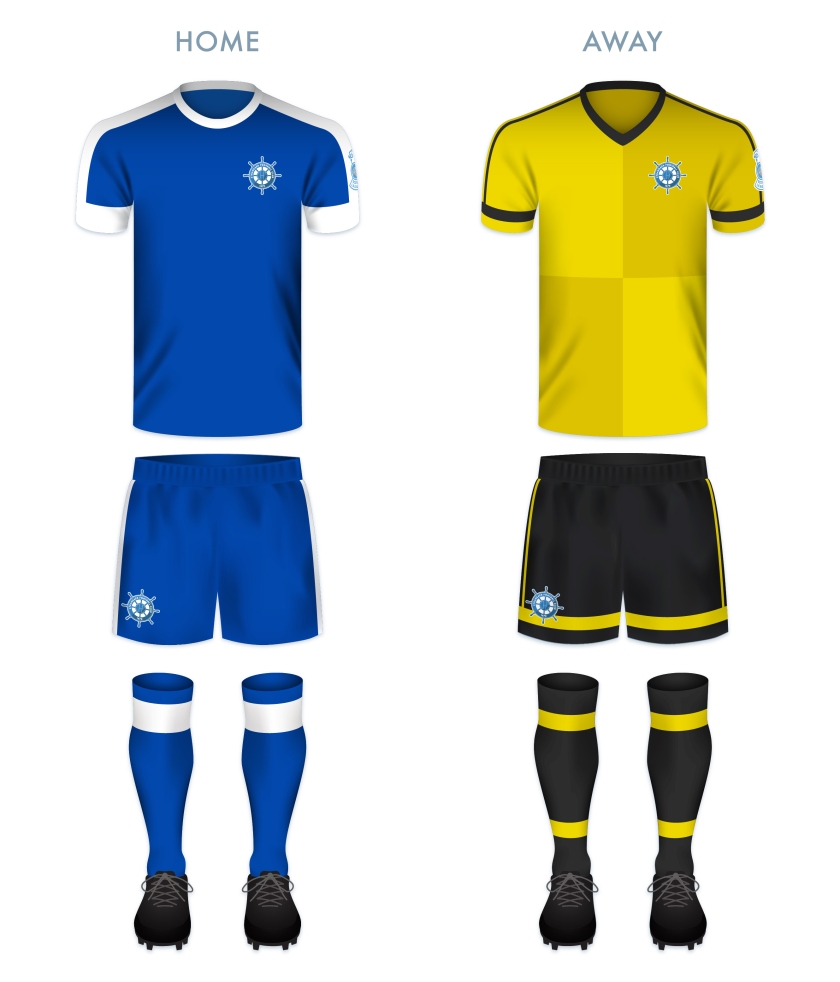
In redesigning the home kit, I first experimented with a wave pattern, but determined that, along with the ship’s wheel badge, this would be over the top. Instead, I have used the traditional Stranraer blue shirt with white accents, drawing particular inspiration from the very tasteful 2008/09 home shirt. The away shirt is bright yellow, with a mustard harlequin pattern, inspired in part by the 1996/97 home kit.
As ever, I am indebted to Dave at Historical Football Kits for some of the historical information used above.
 Stenhousemuir Football Club was established in 1884 after breaking away from local junior side Heather Rangers Football Club. By 1890, the club was playing their home matches at Ochilview Park, where they have played ever since. In 2009, Stenhousemuir became the first football club in Scotland to become a Community Interest Company (CIC).
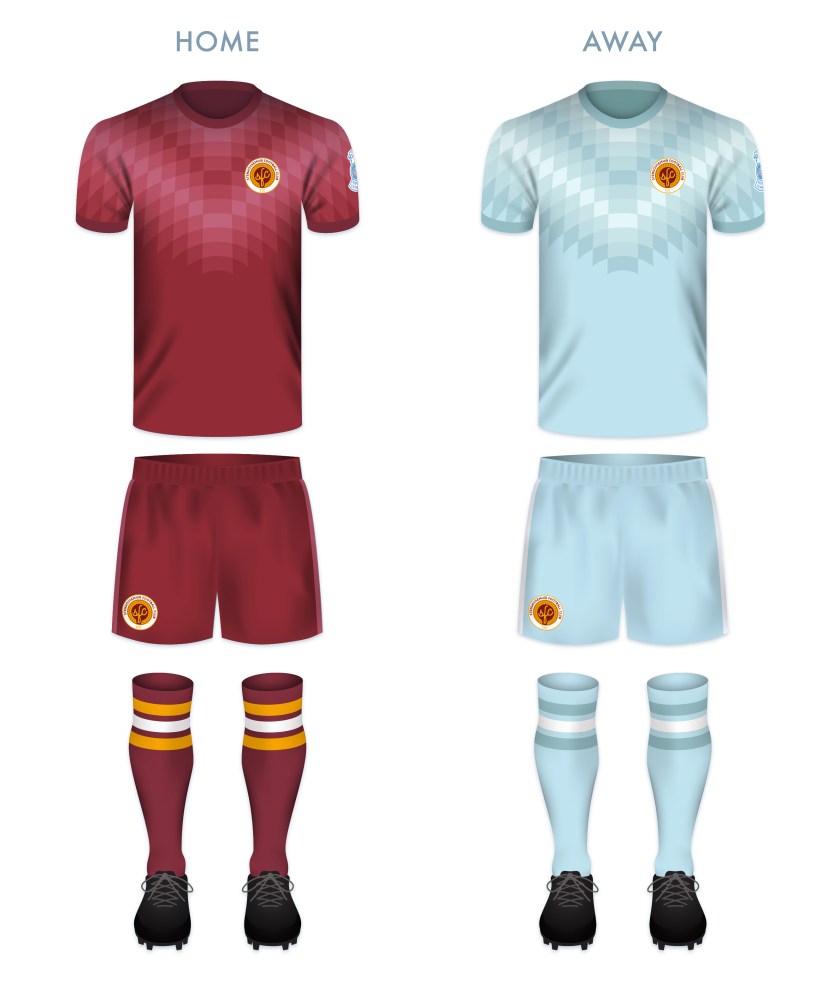

 Raith Rovers Football Club was established in 1883. The club draws its name, Raith, from a vague historical association with the region of Fife from Kirkcaldy (where the club is based) to Lochgelly.


 Established in 1879, Montrose Football Club were founding members of the Forfarshire Football Association in 1883. It would be another 40 years before Montrose would join the ranks of the Scottish Football League. Since that time, the club has been been hacking away in the lower leagues of Scottish football with little to show for it apart from local cup victories (they are ten-time winners of the
  I was quite sold on my 2014 redesign, but I thought that I ought to challenge myself further in this round by tackling the badge from another angle. Using the same rose motif, I constructed a round badge, with the rose superimposed over a football. I was aiming for clean and basic with this design.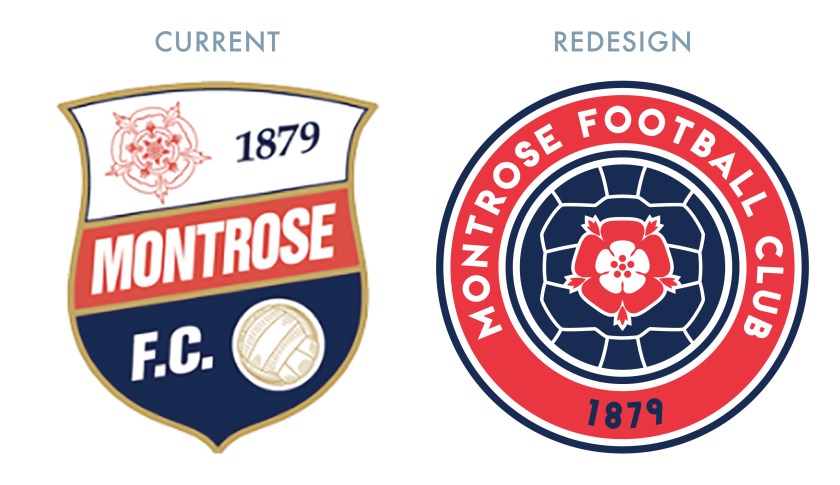


 Forfar Athletic Football Club was established when the now-defunct Angus Athletic Football Club (1883-1885) second team of the broke away from their mother club in 1885. This young team, dubbed ‘the Loons’ (East Angus Scots for ‘young men’) proved their meddle early on, defeating the established Dundonian club, Our Boys, 1-0 in their first match on 16 May 1885.


 The history of football in the conurbation of Levenmouth, East Fife dates from as early as 1879, when junior side Cameron Bridge Football Club was formed. A number of other junior clubs were formed in the late nineteenth century, most notably, Leven Thistle (in the late 1880s), Methil Rovers (1893) and Buckhaven United (1890-91, and then again in 1897). In 1901, Methil Rovers folded and the following year, Leven Thistle, who had changed home ground numerous times, settled in their final home, Town Hall Park, Methil.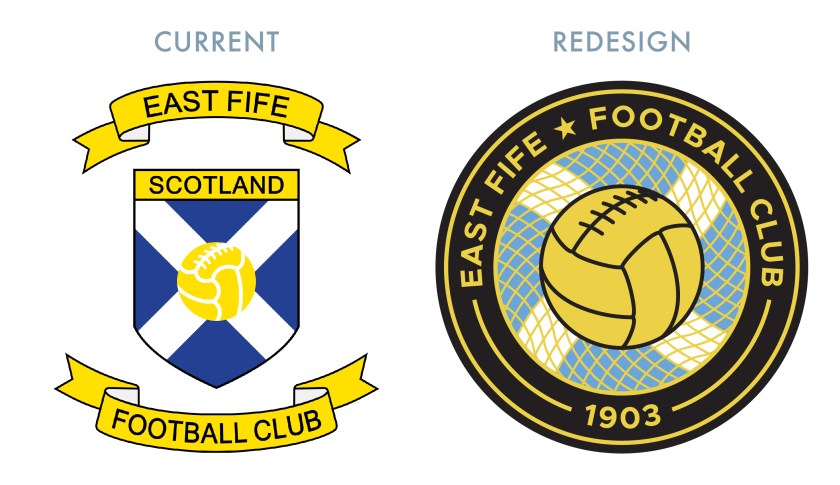
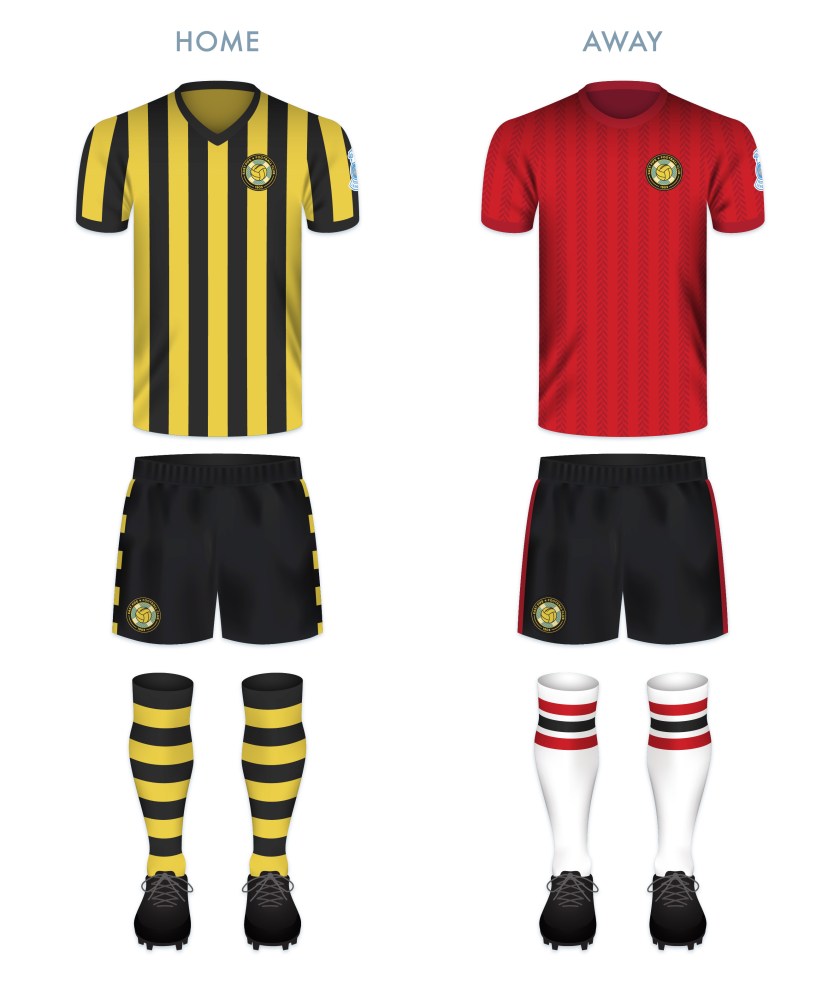

 In 1910, the two rival football clubs in Ayr, Ayr FC and Ayr Parkhouse FC, determined that their town was too small to both support two senior teams and for those teams to rival the leading Scottish clubs. The result of this realisation was the formation of Ayr United Football Club. (Historically, Ayr Football Club had already formed as an amalgamation of several clubs, the earliest of which was Ayr Eglinton, formed in 1875.)


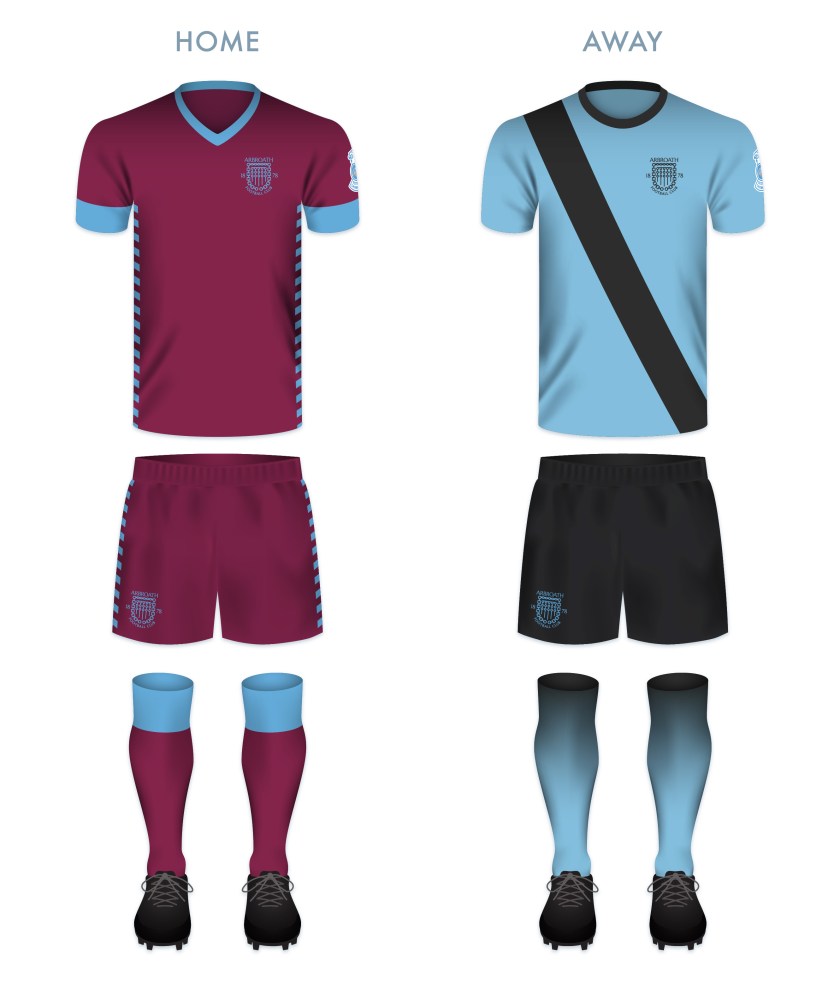
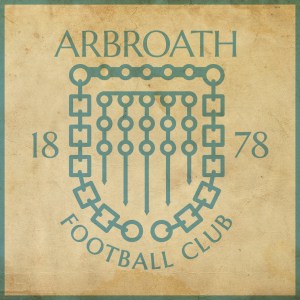 Arbroath Football Cub was established in 1878 and as early as 1885, their shirts featured a badge consisting of a golden portcullis sewn into a large shield, representing the entrance to the ruined Arbroath Abbey (famous, in part, for its association with the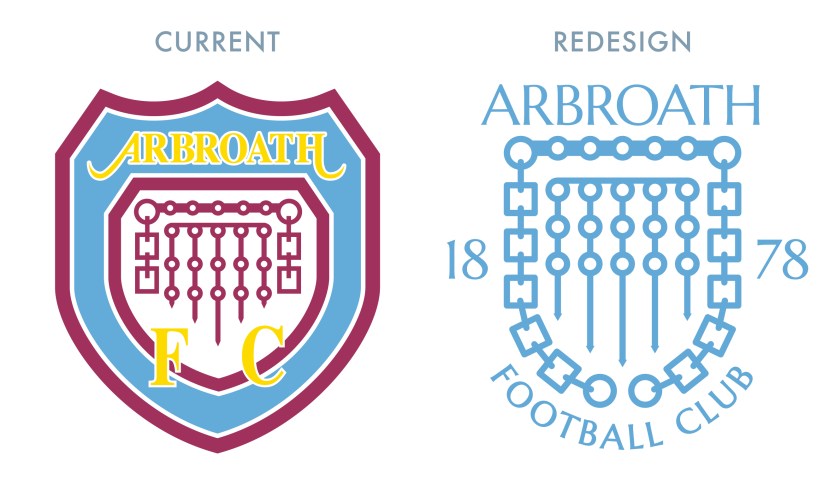

 Alloa Athletic Football Club was established as Clackmannan County Football Club in 1878. The following season, the club changed its name to the Alloa Association Football Club. The local press misinterpreted ‘AAFC’ as Alloa Athletic Football Club, which became the club’s official name from 1883. That same year, the club was admitted to the Scottish Football Association.


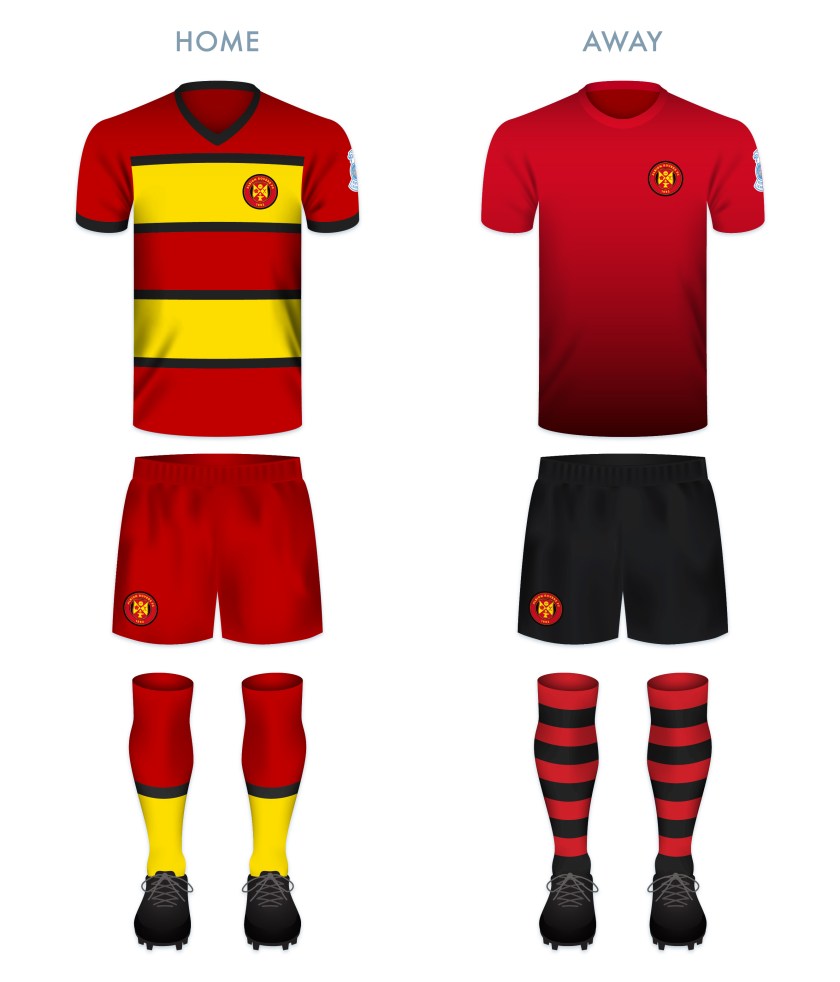
 In 1882, two Coatbridge-based football clubs, Albion FC and Rovers FC, merged to form Albion Rovers Football Club. In 1903, these ‘Wee Rovers’ joined the Scottish Football League, competing in the Second Division. During the First World War, the Second Division was suspended and the Rovers would not return to the SFL until 1919. With that season came the club’s greatest achievement.

 ellliottt