ellliottt

design & illustration

Menu

Skip to content
  • HOME
  • ABOUT
  • GRAPHIC
    • ALL GRAPHIC DESIGN
    • AUTOMOTIVUS
    • REBRAND: SPFL
      • Premiership
        • Aberdeen
        • Celtic
        • Dundee United
        • Heart of Midlothian
        • Hibernian
        • Kilmarnock
        • Livingston
        • Motherwell
        • Rangers
        • Ross County
        • St Johnstone
        • St Mirren
      • Championship
        • Arbroath
        • Ayr United
        • Cove Rangers
        • Dundee
        • Greenock Morton
        • Hamilton Academical
        • Inverness CT
        • Partick Thistle
        • Queen’s Park
        • Raith Rovers
      • League One
        • Airdrieonians
        • Alloa Athletic
        • Clyde
        • Dunfermline Athletic
        • FC Edinburgh
        • Falkirk
        • Kelty Hearts
        • Montrose
        • Peterhead
        • Queen of the South
      • League Two
        • Albion Rovers
        • Annan Athletic
        • Bonnyrigg Rose
        • Dumbarton
        • East Fife
        • Elgin City
        • Forfar Athletic
        • Stenhousemuir
        • Stirling Albion
        • Stranraer
    • REBRAND: SHFL
      • Brechin City
      • Brora Rangers
      • Buckie Thistle
      • Clachnacuddin
      • Deveronvale
      • Formartine United
      • Forres Mechanics
      • Fraserburgh
      • Huntly
      • Inverurie Loco Works
      • Keith
      • Lossiemouth
      • Nairn County
      • Rothes
      • Strathspey Thistle
      • Turriff United
      • Wick Academy
    • REBRAND: SLFL
      • Berwick Rangers
      • Bo’ness United
      • Broomhill
      • Caledonian Braves
      • Civil Service Strollers
      • Cowdenbeath
      • Cumbernauld Colts
      • Dalbeattie Star
      • East Kilbride
      • East Stirlingshire
      • Edinburgh University
      • Gala Fairydean Rovers
      • Gretna 2008
      • Spartans
      • Tranent Juniors
      • University of Stirling
  • 2D
  • 3D
    • ALL 3D
    • INSTALLATION
  • PHOTO
  • SHOP

brand

ReBrand: Montrose FC

graphic

MoFC badge new-01Established in 1879, Montrose Football Club were founding members of the Forfarshire Football Association in 1883. It would be another 40 years before Montrose would join the ranks of the Scottish Football League. Since that time, the club has been been hacking away in the lower leagues of Scottish football with little to show for it apart from local cup victories (they are ten-time winners of the Forfarshire Cup) and a handful of appearances in the later stages of the Scottish Cup and Scottish League Cup.

Despite a history of many disappointments, the 2017/18 season was strong for Montrose, with the club finishing at the top of the Scottish League Two table, thus gaining promotion to League One (Montrose’s first departure from the bottom tier since the 1995/96 season). This is all the more significant due to the fact that only a few seasons earlier, in 2014/15, Montrose narrowly avoided losing their place in the Scottish Professional Football League by defeating the Highland Football League champions, Brora Rangers in a play-off.

Except for different versions of the club’s initials, the current badge, introduced in 1990, is the only badge that Montrose has ever used. This features a rose (from the folk etymology of Montrose, ‘Mount of Roses’), a football, the club name and the date of the club’s founding.

I first attempted to redesign the Montrose badge in 2014. For this initial redesign, I drew inspiration from a badge that was used for only one season (1973/74), featuring an ‘M’ flanked by an ‘F’ and a ‘C’. In this initial redesign, the diagonal strokes on the ‘M’ meet well below the baseline. In addition to the very deep crotch on the ‘M’, I decided to add the rose and the date of the club’s founding to create a stronger sense of centrality. This initial redesign, on the left below, was published on 3 November 2014:

Montrose FC oldI was quite sold on my 2014 redesign, but I thought that I ought to challenge myself further in this round by tackling the badge from another angle. Using the same rose motif, I constructed a round badge, with the rose superimposed over a football. I was aiming for clean and basic with this design.
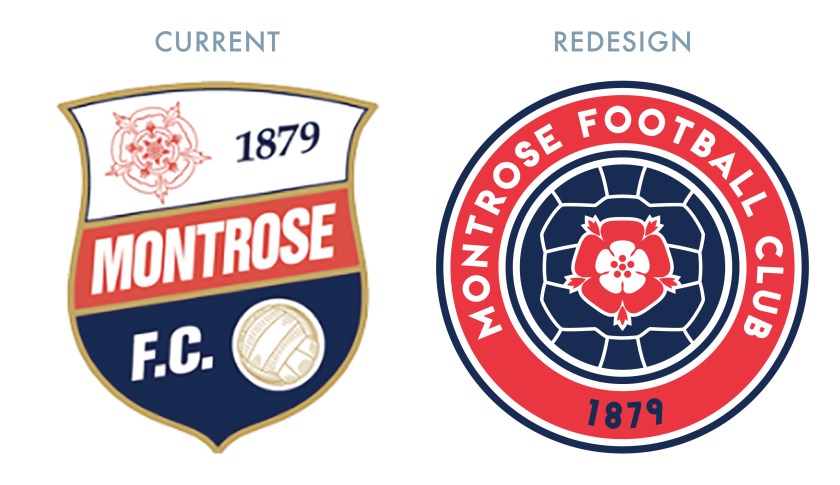
MoFC badge-01

The home kit is inspired by Montrose kits from 1959 to 1970. The away strip makes use of the colour scheme of the badge, dominated by red. The shorts for both kits feature only the central badge image of the rose superimposed over the football.

MoFC kit-01

MoFC badge new-01

As ever, I am indebted to Dave at Historical Football Kits for some of the historical information used above.

15 May 201824 February 2020 E Tagged Angus, badge, brand, branding, crest, Europe, football, Gable Endies, Ladbrokes League 1, Ladbrokes League One, logo, Montrose, Montrose FC, Montrose Football Club, rebrand, redesign, rose, Scotland, Scottish League 1, Scottish League One, Scottish Professional Football League, SPFL, SPFL League 1, SPFL League One, sport, The Gable Endies, UK, United Kingdom Leave a comment

ReBrand: Forfar Athletic FC

graphic

FAFC badge new-01Forfar Athletic Football Club was established when the now-defunct Angus Athletic Football Club (1883-1885) second team of the broke away from their mother club in 1885. This young team, dubbed ‘the Loons’ (East Angus Scots for ‘young men’) proved their meddle early on, defeating the established Dundonian club, Our Boys, 1-0 in their first match on 16 May 1885.

Since joining the Scottish Football League for the 1921/22 season, the Loons have competed in the professional game in Scotland, but have yet to reach the top tier. Their best Scottish League Cup and Scottish Cup performances came in the 1977/78 and 1981/82 seasons, respectively. In both competitions, the Loons reached the semi-finals, where they lost to Rangers on both occasions. The first was a 5-2 loss in the 1977/78 League Cup, which Rangers would go on to win. In the 1981/82 Scottish Cup, Forfar Athletic forced a replay against Rangers after a 0-0 draw. Unfortunately for the Loons, the replay resulted in a 3-1 loss and the club would go away empty-handed once again.

The Loons’ 1960/61 shirt featured a badge consisting of the four heraldic symbols of the former royal burgh of Forfar within a shield: a Scots fir tree, a bull’s head, a stag’s head and a depiction of the former Castle of Forfar with three towers. A round badge featuring these symbols without a shield came into regular use in 1980. Some version of this badge has been used ever since, with the current badge, in use since 2007, placing the heraldic symbols within a shield once again.

For my redesign, I considered working with the current badge, but decided that, as these symbols are so far removed from the people of Forfar (the castle being destroyed in 1313), I would go another route. This began with a sketch of a highly-stylised, round monogram. Eventually, I placed the monogram within a ring. The outer ring contains two jute plant flowers, a reference to the contribution of the jute industry to the growth of the town in the nineteenth and twentieth centuries. The textile theme is recalled once again by the knot that borders the badge.

FAFC badge-01

For the home strip, I went with the Loons’ classic light blue colour scheme. This particular rendering is inspired by the kits used between 1983 and 1986. The away strip is inspired by an odd move for the club. Between 1955 and 1967, Forfar Athletic departed from their traditional blues in favour of a green home strip. My design draws mostly from the kit used from August to December 1967, but with vertical stripes composed of a diamond pattern.

FAFC kit-01

FAFC badge new-01

Thank you to Forfar Athletic supporter David Carnegie and to Dave at Historical Football Kits for some of the historical information used above.

14 May 201824 February 2020 E Tagged Angus, Angus Athletic, Angus Athletic FC, Angus Athletic Football Club, badge, brand, branding, Europe, football, Forfar, Forfar Athletic, Forfar Athletic FC, Forfar Athletic Football Club, Forfarshire, jute, Ladbrokes League 1, Ladbrokes League One, logo, Loons, monogram, Our Boys, Our Boys FC, Our Boys Football Club, rebrand, redesign, Scotland, Scottish League 1, Scottish League One, Scottish Professional Football League, Sky Blues, SPFL, SPFL League 1, SPFL League One, sport, texture, The Loons, The Sky Blues, UK, United Kingdom Leave a comment

ReBrand: East Fife FC

graphic

EFFC badge new-01The history of football in the conurbation of Levenmouth, East Fife dates from as early as 1879, when junior side Cameron Bridge Football Club was formed. A number of other junior clubs were formed in the late nineteenth century, most notably, Leven Thistle (in the late 1880s), Methil Rovers (1893) and Buckhaven United (1890-91, and then again in 1897). In 1901, Methil Rovers folded and the following year, Leven Thistle, who had changed home ground numerous times, settled in their final home, Town Hall Park, Methil.
As a result of local demand for a senior football club in Levenmouth, East Fife Football Club was established in early 1903. This new club purchased Leven Thistle’s Town Hall Park and renamed it Bayview Park. Soon after, Leven Thistle decided to close up shop. Buckhaven United continued to compete as a junior side until 1912.

After applying for entry into the Scottish Football League on a number of occasions, East Fife joined the reformed Scottish Second Division in 1921 with the incorporation of their Central Football League (which the club had first joined in 1909) into the SFL.

East Fife holds a special place in the history of Scottish football. The Fifers have appeared in three Scottish Cup finals (1926/27, 1937/38, 1949/50), reigning victorious against Kilmarnock in the final replay before a crowd of 92,716 at Hampden Park on 27 April 1938. Until Hibernian defeated Rangers in the 2015/16 Scottish Cup final, East Fife was the only non-top tier club to have ever achieved the honour. It’s also worth noting that East Fife has also won the Scottish League Cup three times (1947/48, 1949/50, 1953/54), a first among all Scottish clubs.

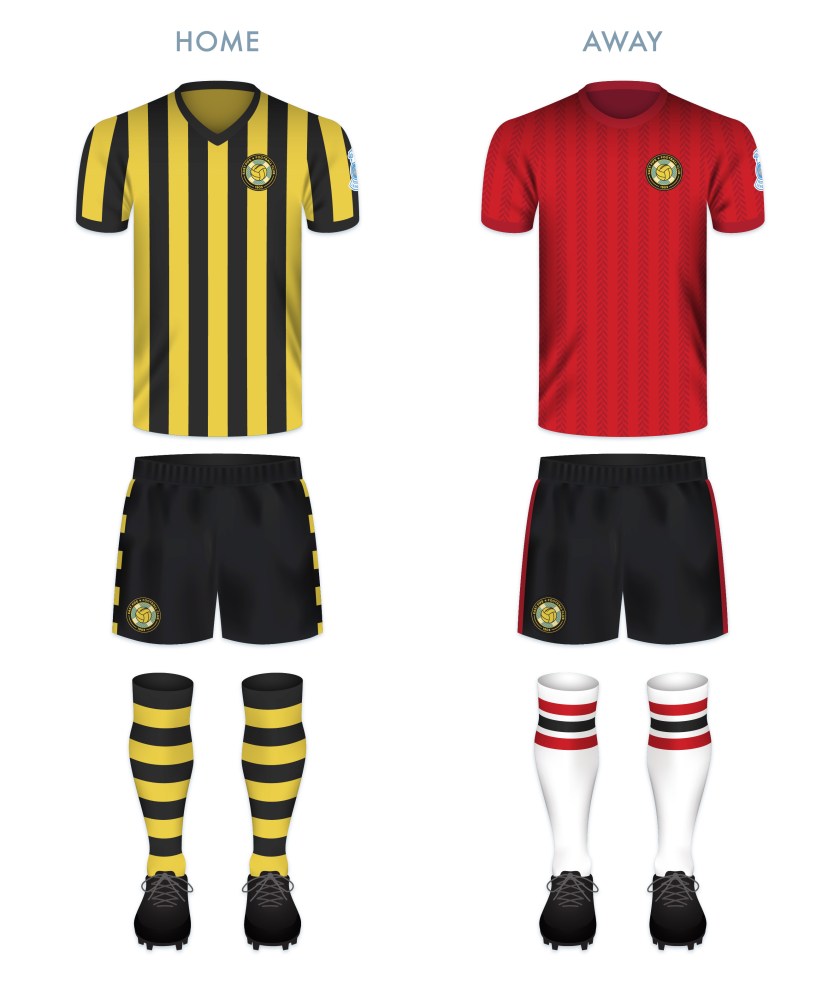
The club’s first kit consisted of a shirt of green and white hoops, similar to those first adopted by Celtic that same year. In 1911, the green and white was swapped for black and gold, which has remained the club’s primary colour scheme ever since.

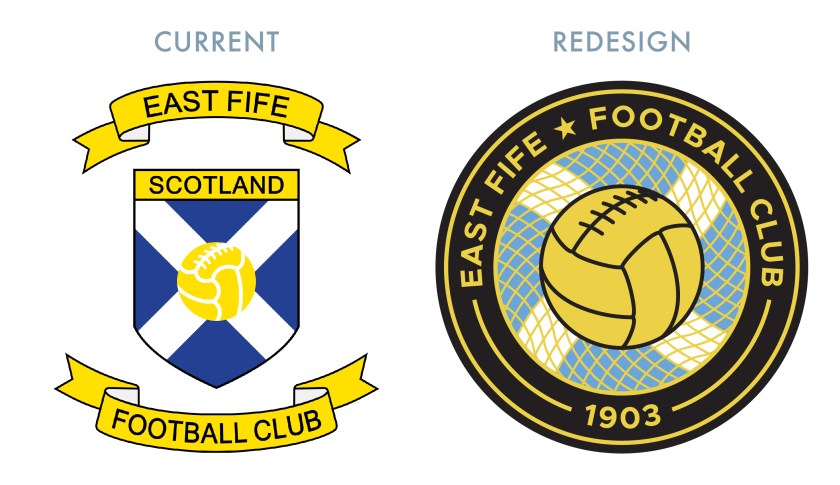
The Fifers first began using a badge on their kit in 1950. This original badge consisted of a shield, divided into thirds. The top portion of the shield featured the club’s initials, while the middle featured a Saltire and the bottom featured a thistle. This badge was used until 1970, when it was replaced by the club’s initials alone. Some variation of the initials remained until 1991, when the first version of the current badge was introduced. Like the 1950 badge, the current badge features a Saltire, with the addition of a superimposed football.

With my redesign, I decided to move away from the above monogram, as well as the current shield, in favour of a round badge. I included the Saltire in my latest redesign as it is the only consistent feature among East Fife’s historical badges. (The omission of a Saltire within a shield also avoids a potential confrontation with the Court of the Lord Lyon.) The Saltire is enclosed in a circle, behind a gold fishing net, a reference to the prevalent fishing industry in East Fife. The historic burgh seals of every settlement on the coast in East Fife feature either the Firth of Forth, fishing boats, fishing nets or fish (or a combination of several of these), including the burgh seal of Buckhaven, Methil and Innerleven, the locale of East Fife FC. The fishing net also acts as a goal net, receiving a football. Lastly, I placed a star in the outer ring, commemorating East Fife’s 1937/38 Scottish Cup victory.

EFFC badge-01

For the home kit, I went with the club’s traditional black and gold vertical stripes with black shorts. I also included black and gold hooped socks, last worn in 1939. For the away shirt, I employed red with dark red herringbone stripes.

EFFC kit-01

EFFC badge new-01

As ever, I am indebted to Dave at Historical Football Kits for some of the historical information used above.

13 May 201824 February 2020 E Tagged badge, brand, branding, East Fife, East Fife FC, East Fife Football Club, Europe, Fife, Fifers, football, Kingdom of Fife, Ladbrokes League 1, Ladbrokes League One, logo, Methil, monogram, rebrand, redesign, Saltire, Scotland, Scottish Cup, Scottish League 1, Scottish League Cup, Scottish League One, Scottish Professional Football League, SPFL, SPFL League 1, SPFL League One, sport, texture, The Fife, The Fifers, UK, United Kingdom Leave a comment

ReBrand: Alloa Athletic FC

graphic

AAFC badge new-01Alloa Athletic Football Club was established as Clackmannan County Football Club in 1878. The following season, the club changed its name to the Alloa Association Football Club. The local press misinterpreted ‘AAFC’ as Alloa Athletic Football Club, which became the club’s official name from 1883. That same year, the club was admitted to the Scottish Football Association.

In these early decades, Alloa competed in the now-defunct Scottish Football Union and then the Central Football League. After the First World War, in 1921, the Central Football League was absorbed into the Scottish Football League as the Second Division. That season, Alloa won the title, gaining promotion to the top flight for the first time. This spell was short-lived, as the club was relegated after only one season. Alloa returned to the top flight in the 1938/39 season, but with the outbreak of the Second World War, regular league football was put on hold and Alloa would not return to the top tier.

Alloa’s first shirt, from its Clackmannan County days, consisted of black and orange hoops. From 1898 until 1972, the black and orange (or gold) hoops became the club’s standard and they gained the nickname ‘the Wasps’. (The hoops disappeared for a couple of decades, apparently as a cost-saving measure.) Alloa’s kit first featured a badge in 1985. This badge consisted of a more-or-less anatomically accurate rendering of a wasp within a shield. Some version of this badge remained until the current badge was adopted in 2010.

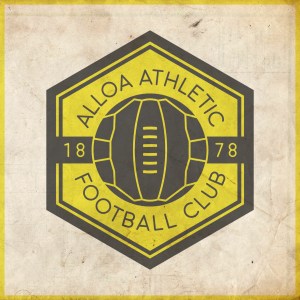
Due to the state of the club’s current badge—in my opinion, far and away the most absurd badge in all of Scottish professional football—I have had my sights set on redesigning Alloa’s badge from several years. Ignoring the illustrative style (which I consider to be farcical, at best), I have difficulty connecting the sleeveless, muscular wasp (with only two limbs, neither of which are legs) with a football club. I toyed with utilising a more identifiably wasp-like illustration, similar to those used by the club from 1985 until 2010, but ultimately, I found the use of the wasp altogether unsatisfactory.

In searching for an alternative, the hexagonal honeycomb concept came to mind. Wolverhampton Wanderers have used a hexagonal badge since 2002 (adapted from the shape of their minimalistic wolf’s head, first used in 1979), though their badge, which sees the hexagon set at 30°, played no influence in my redesign.

The football at the centre of my redesigned badge is of nineteenth-century design, though its sharp angles are made to emphasise the modernistic feel of the new badge. The black band running through the centre of the badge, which bears the year of the club’s founding, echoes the hoop design of the traditional Alloa home shirt.

AAFC badge-01

For the home kit redesign, I went with the classic black and gold hoops, complete with a 1970s-styled collar (an admitted anachronism given that this type of collar was used during the ‘cost-saving-no-hoops’ kits of the 1970s). Clean lines throughout emphasise the modern element of the kit. The away kit a variation of the current away kit, with an inadvertent Boca Juniors feel.

AAFC kit-01

AAFC badge new-01

As ever, I am indebted to Dave at Historical Football Kits for some of the historical information used above.

11 May 20189 June 2021 E Tagged Alloa, Alloa AFC, Alloa Association FC, Alloa Association Football Club, Alloa Athletic, Alloa Athletic FC, Alloa Athletic Football Club, badge, brand, Championship Division, Clackmannan County, Clackmannan County FC, Clackmannan County Football Club, Clackmannanshire, crest, Europe, football, logo, rebrand, redesign, Scotland, Scottish Professional Football League, SPFL, SPFL League 1, SPFL League One, sport, texture, The Wasps, UK, Wasps Leave a comment

ReBrand: Airdrieonians FC

graphic

AirFC badge new-01The original Airdrieonians Football Club began its life as Excelsior Football Club in 1878. In 1881, the club’s name was changed to Airdrieonians and it continued as such until its demise in 2002.
Throughout the 1920s, this original Airdrieonians FC proved to be a competitive side within Scottish football. The club finished second in the league on four consecutive occasions from the 1922/23 season until the 1925/26 season (behind Rangers for the first three and Celtic for the fourth) and defeated Hibernian 2-0 in the 1923/24 Scottish Cup final. But after this era, Airdrieonians never again rose to such great heights.

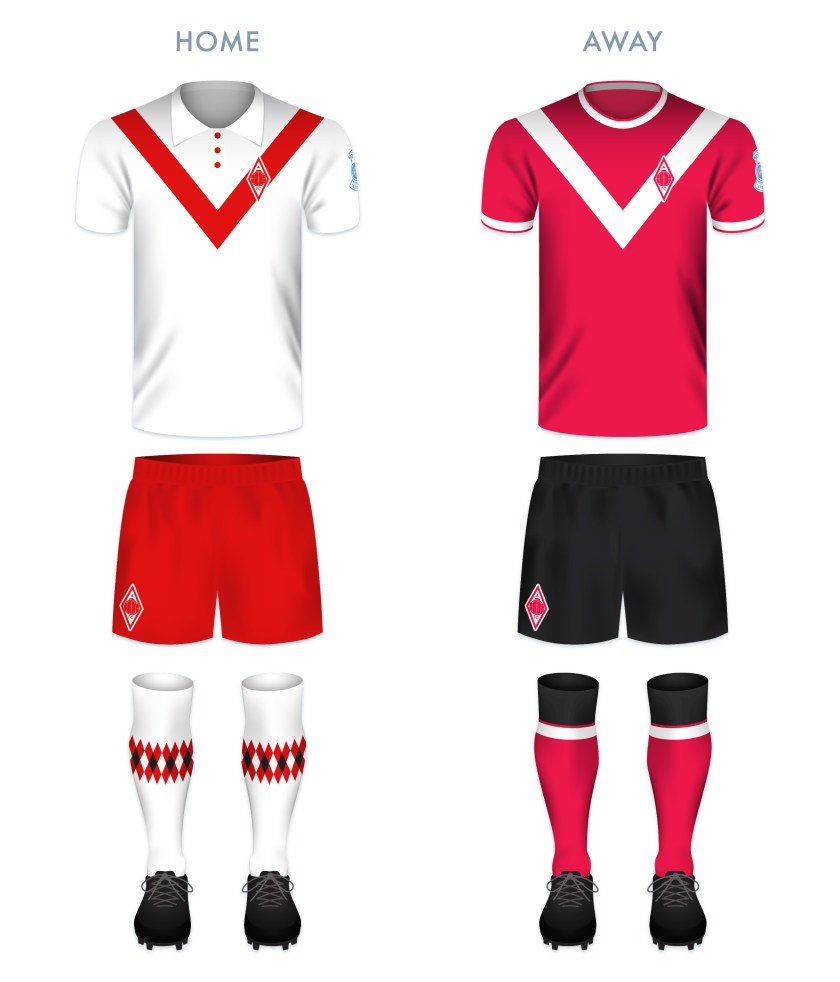
In 1912, Airdrieonians adopted its distinctive shirt designs – a white field featuring a red ‘diamond’ (seen as a ‘V’ on both the front and backs of the club’s shirts). As a result of this design, which the club used throughout the remainder of its existence, Airdrieonians became known as ‘the Diamonds’.

After this original club folded, a new Airdrie club, called Airdrie United, was formed. Technically speaking, Airdrie United’s admittance into the Scottish Football League was the result of the organisation’s buyout and subsequent renaming of the original Clydebank FC. Airdrie United then became, for all intents and purposes, the new Airdrieonians, using the same home ground (Excelsior Stadium) and wearing the same diamond motif on its white shirts. This club became known as Airdrie in 2012 and then revived the Airdrieonians name in 2013.

As far as badges go, recently, the club has been the subject of a rather widely-publicised campaign. The Airdrieonians badge, first used by the original AFC in 1974 and then adopted by the new AFC when it revived the name in 2013, featured a shield, within which were the club’s initials and two lions passant, one above and one below the initials. In March 2015, the Court of the Lord Lyon informed the club that this badge did not comply with an ancient Scottish law forbidding the use of lettering within an heraldic device, such as a shield (a legal challenge that has proven or could prove problematic with a number of other clubs). In response, the club adopted an altered badge, omitting the shield though all but implying it by including a red chevron shape where the base of the shield once was. This chevron was included so as to mirror the ‘diamond’ that had adorned the AFC kits for more than a century.

For my redesign, I considered the heraldic images in the current badge, but took minor issue with the current badge’s use of the chevron shape. It has long been the conviction of Airdrieonians supporters that the ‘V’ on the front of the shirt is, in fact, neither a ‘V’ nor a chevron, but one half of a diamond. Being that the club’s nickname is ‘the Diamonds’, I wanted to emphasise that shape. When elongated horizontally, the diamond would bear too much resemblance to the Umbro logo. A vertically-elongated diamond badge is used by the German club Borussia Mönchengladbach, but I thought that I might be able to produce a very different badge within the same shape.

I illustrated a nineteenth-century football to occupy the middle of the badge and built the simple ‘AFC’ lettering around it, which can be seen below. I include no founding date as the current club has only existed since 2002. But for those who see the current Airdrieonians FC as a continuation of the original club, I believe that both the retro football and the diamond shape call back to that heritage sufficiently.

AirFC badge-01

While I made a clear departure from the 1974 badge, I see the ‘Airdrie Diamond’ as the classic and essential AFC kit and for my kit redesigns, I only added my own personal touch, including the argyle-patterned socks.

AirFC kit-01

AirFC badge new-01

As ever, I am indebted to Dave at Historical Football Kits for some of the historical information used above.

6 May 201824 February 2020 E Tagged Airdrie, Airdrie FC, Airdrie Football Club, Airdrie United, Airdrie United FC, Airdrie United Football Club, Airdrieonians, Airdrieonians FC, Airdrieonians Football Club, badge, brand, Clydebank, Clydebank FC, Clydebank Football Club, Court of the Lord Lyon, crest, design, Europe, Excelsior, Excelsior FC, Excelsior Football Club, Excelsior Stadium, football, Ladbrokes League 1, Ladbrokes League One, League 1, League One, logo, Lord Lyon, Lord Lyon King of Arms, North Lanarkshire, rebrand, redesign, Scotland, Scottish Professional Football League, SPFL, SPFL League 1, SPFL League One, sport, texture, UK, United Kingdom Leave a comment

ReBrand: St Mirren FC

graphic

SMFC badge new-01St Mirren Football Club was established in 1877. Similarly to Kilmarnock in 1869, Heart of Midlothian in 1874 (potentially), St Johnstone in 1884 and Dunfermline Athletic in 1885, St Mirren FC was formed when members of St Mirren Cricket Club took a notion to play football in the winter months to keep up fitness levels. So highly were St Mirren regarded even in these early years that the club were invited to become founding members of the Scottish Football League in 1890.
By 1908, St Mirren reached the first of their six Scottish Cup finals, but their opponents, Celtic, proved too strong for the Buddies. St Mirren had another shot at glory against Celtic in the 1925/26 final, which would be their first of three Scottish Cup victories (the others being 1958/59 and 1986/87). More recently, the Buddies reached their first Scottish League Cup final on 17 March 2013, defeating Hearts 3-2 at Hampden Park.

Unfortunately for St Mirren, the high of their 2012/13 Scottish League Cup would be followed by the low of their relegation to the second tier at the end of the 2014/15 season. After three seasons in the Scottish Championship, the Buddies returned to the top tier for the 2018/19 season.

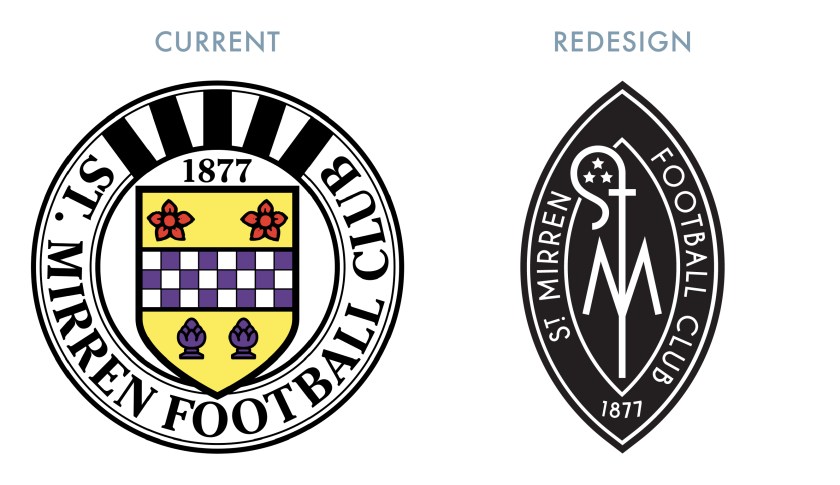
The St Mirren kit first included a badge—consisting of the Paisley coat of arms and a banner reading ‘St Mirren FC’—during the Second World War. A badge was not used consistently until the 1950s. Slight variations of this badge were used on and off throughout the sixties and seventies. From 1981 until 1984, a new badge was used, which reduced the size of the Paisley coat of arms inside a black and white striped shield. Supporters were not keen on this badge, and so the club reused the earlier coat of arms badge.

In 1995, the coat of arms was first placed inside a circle, though the inclusion of the traditional mural crown brought a legal challenge from the Court of the Lord Lyon, as a 1672 law requires that all coats of arms in Scotland must be registered. The club bypassed this challenge the following season by creating a more figurative mural crown of black and white stripes for which the Saints are known, present in the current badge.

While I do not find the current St Mirren badge particularly weak, there is a displeasing heaviness to the design. We’ve got this busy coat of arms (with an intrusive and thick black border), surrounded by a clunky typeface and the heavy black and white stripes of the mural crown. These stripes, in particular, create an aesthetic incoherence.

For my redesign, I began by sketching a crosier (a hooked staff carried by an abbot or bishop as a symbol of pastoral office). Most depictions of Paisley’s coat of arms feature an abbot holding a crosier, as Paisley’s patron saint, Mirren (or St Mirin) is considered the founder of the community that occupied the site of what would become the Abbey of St James and St Mirren, now known as Paisley Abbey. Most heraldic depictions of abbots include the head of the crosier closed in on itself, like a spiral, indicating the abbot’s pastoral care for the ‘inward’ community of the monastery. The head of a bishop’s crosier, on the other hand, is depicted as terminating outward.

In my sketching, I realised that an outward-pointing crosier can be designed to look very much like an ‘S’. I chose to abandon the heraldic convention for the sake of the design in order to make the minimalistic monogram of the redesign. The ‘S’ and ‘T’, for ‘Saint’, are part of the crosier, with an ‘M’ passing through the middle. I have also included three stars within the crosier head to commemorate St Mirren’s three Scottish Cup victories. The crosier monogram is enclosed by a vesica piscis (Latin for ‘bladder of a dish’), calling back to aureolas (a diminutive of the Latin aurea—meaning ‘golden’—to signify the sacredness of a figure) in Christian art as well as to medieval seals and emblems.

SMFC badge-01

The kit colour schemes are based on traditional St Mirren kits, with the black and white vertical stripes for the home kit and the red featuring in the way kit.

SMFC kit-01

SMFC badge new-01

As ever, I am indebted to Dave at Historical Football Kits for some of the historical information used above.

4 May 201824 February 2020 E Tagged badge, brand, Buddies, Court of the Lord Lyon, crest, Europe, football, Ladbrokes Premiership, logo, Lord Lyon, Lord Lyon King of Arms, monogram, Paisley, rebrand, redesign, Renfrewshire, Saints, Scotland, Scottish Championship, Scottish Premiership, Scottish Professional Football League, SPFL, SPFL Premiership, sport, St Mirren, St Mirren FC, St Mirren Football Club, texture, The Buddies, The Saints, UK, United Kingdom 1 Comment

ReBrand: Queen of the South FC

graphic

QSFC badge new-01Queen of the South Football Club was established in 1919. This new club was result of a union between three pre-existing clubs: Maxwelltown Volunteers FC (formed in 1896 and renamed 5th King’s Own Scottish Borderers in 1908), Dumfries FC (formed in 1897) and the Arrol-Johnston Motor Company works team. The name, ‘Queen of the South’, was taken from a local poet, David Dunbar, who, while standing for Parliament in the 1857 general election, called the town of Dumfries the ‘Queen of the South’ in one of his addresses.
After participating in various non-professional leagues for several seasons, ‘the Doonhamers’, as they are known (‘doonhamer’ being a colloquial term for natives of Dumfries, many of whom, in the nineteenth century, worked in Glasgow and referred to Dumfries as doon hame, Scots for ‘down home’), joined the newly-created Third Division of the Scottish Football League in the 1923/24 season.

The Doonhamers gained promotion from the bottom tier after their second season in the SFL. Promotion to the top tier came at the close of the 1932/33 season. In their first season in the top tier, Queen of the South finished fourth in the table with 45 points, behind Celtic (47), Motherwell (62) and Rangers (66). This finish remains the club’s finest performance in the top tier.

Although the Doonhamers have yet to win any senior cups, they reached the semi-finals of the Scottish Cup in 1949/50 and the Scottish League Cup in 1950/51 and 1960/61. In 2007/08, the club reached the Scottish Cup final, losing narrowly 2-3 to Rangers.

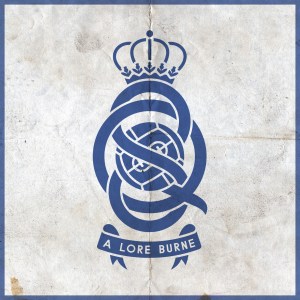
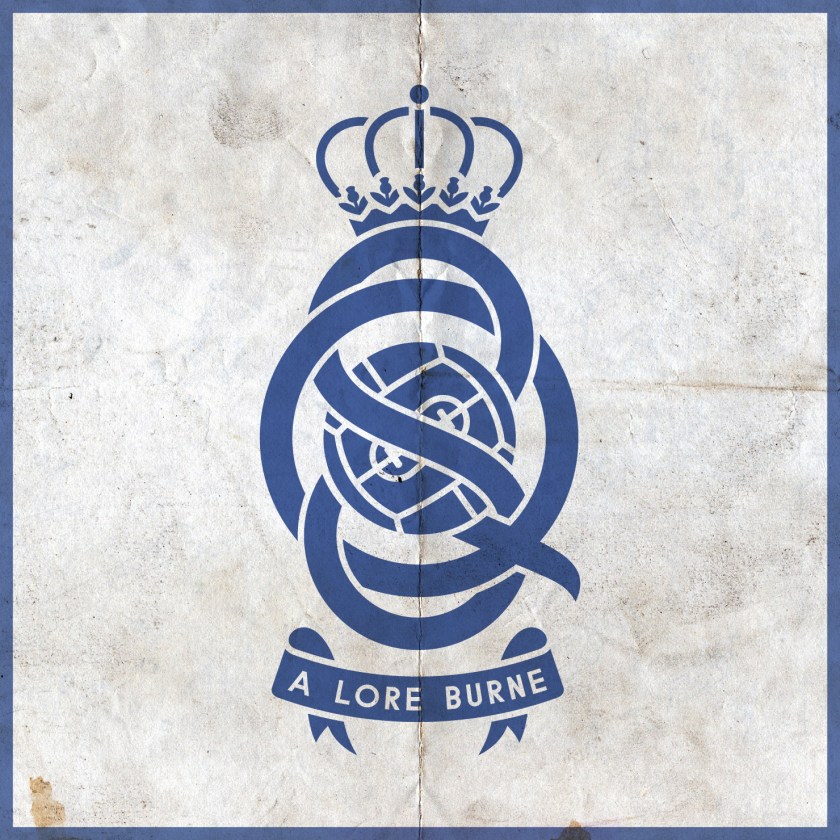
Queen of the South first featured a badge on their kit in 1947. This badge, found at the centre of the current badge, is strong, bearing a handsome monogram and the Dumfries motto, in Scots, A lore burne, referring to the Loreburn (or ‘muddy stream’), a stream that ran through a marsh near the town. In times of attack, this motto served as a rallying cry to the town. What I find less attractive in the current badge is the outer circle, bearing the club’s name and leaving a lot of negative space. Additionally, the current badge’s use of text within a shield is a violation of an ancient Scottish heraldic law.

When redesigning the Queen of the South badge, I struggled to come up with something that I found satisfying. I explored various heraldic motifs before settling on an updated ‘QS’ monogram bearing a ‘queen’s’ crown and featuring a football and the Dumfries motto in a banner.

QSFC badge-01

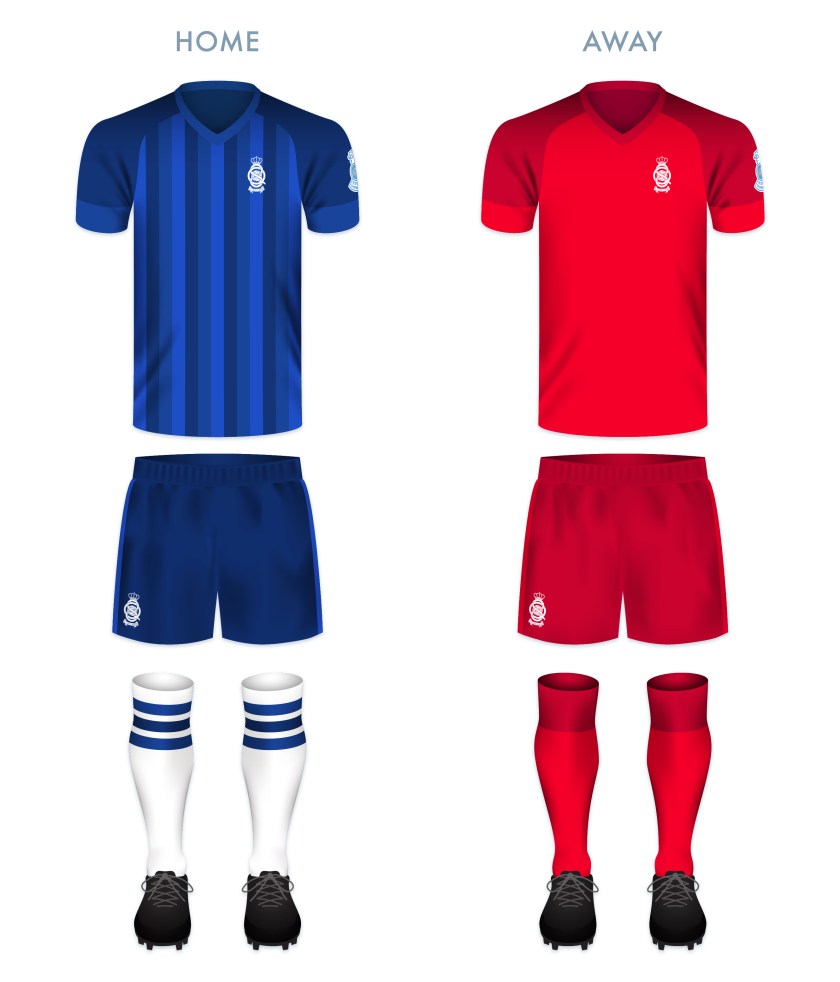
The kits make use of the Doonhamers’ traditional colours of blue (home) and red (away). The home strip is inspired in part by Bayern Munich’s handsome third kit from the 2013/14 season.

QSFC kit-01

QSFC badge new-01

As ever, I am indebted to Dave at Historical Football Kits for some of the historical information used above.

3 May 201824 February 2020 E Tagged 5th King's Own Scottish Borderers, 5th King's Own Scottish Borderers FC, 5th King's Own Scottish Borderers Football Club, 5th KOSB, 5th KOSB FC, 5th KOSB Football Club, A Lore Burne, Archangel Michael, Arrol-Johnston, Arrol-Johnston FC, Arrol-Johnston Football Club, badge, Bible, Book of Revelation, brand, Championship Division, County of Dumfries, crest, Dumfries, Dumfries and Galloway, Dumfries FC, Dumfries Football Club, Dumfrieshire, Dumfriesshire, Europe, football, Ladbrokes Championship, logo, Maxwelltown Volunteers, Maxwelltown Volunteers FC, Maxwelltown Volunteers Football Club, Michael, New Testament, Queen of the South, Queen of the South FC, Queen of the South Football Club, Queens, rebrand, redesign, Revelation, Revelation of St John, Saint Michael, Saint Michael the Archangel, Scotland, Scots, Scottish Championship, Scottish Professional Football League, SPFL, SPFL Championship, sport, St Michael, St Michael the Archangel, Taxiarch Archangel Michael, texture, UK, United Kingdom Leave a comment

ReBrand: Livingston FC

graphic

LFC badge new-01The history of Livingston Football Club is one of the most tumultuous in all of Scottish football.
The club began its life in 1943, as the works team of Ferranti, who had set up a factory at Crewe Toll, Edinburgh for the manufacturing of gyro gunsights for Spitfire aircraft during the Second World War. The original club name was Ferranti Thistle FC. They played under that name until 1974, when the club gained admittance into the Scottish Football League.

Because their home ground, the former City Park, did not meet the SFL’s requirements, and because of controversy arising from a team bearing the name of a commercial company, Ferranti Thistle moved to the Commonwealth Stadium (later called Meadowbank) and changed their name to Meadowbank Thistle FC. The team struggled in the lower divisions for many years and in 1995, they relocated to Livingston, changing their name to Livingston FC in the process.

After this move to West Lothian, Livingston FC began to show promise. By 2001, the club had gained promotion into the top tier and in this first campaign, the Livi finished third in the table, which meant that they qualified for the UEFA Cup (now the Europa League). Livingston would meet further success when they defeated Hibernian in the final of the 2003/04 Scottish League Cup on 14 March 2004. But Livingston’s victory was bittersweet, as the club had entered administration on 3 February, eventually emerging in May 2005. That same month, Livingston avoided relegation narrowly. Ultimately, their stay in the top tier was ended when they finished the 2005/06 season at the bottom of the table.

In 2009, Livingston entered into administration for a second time and were in danger of outright liquidation. As a result of breaching rules on insolvency, the SFL took the decision to demote Livingston to the Third Division (the bottom tier). In the two subsequent seasons, Livingston won consecutive promotions, reaching the First Division in 2011.

In 2013, the SFL was replaced by the Scottish Professional Football League, and the First Division was renamed the Scottish Championship. At the end of the 2015/16 season, Livingston were relegated to League One (the third tier). But their stay in League One lasted only one season, with the club gaining promotion back to the Championship in 2017. In the 2017/18 season, Livingston secured second place in the Championship table. This gave them the opportunity to gain promotion to the top tier for the first time since 2006 via playoff, which they achieved in a 3-1 victory over Partick Thistle over two legs.

When redesigning Livingston’s badge and kit, I kept this challenging history very much in my mind. Because of the abundance of thistles among Scottish football club badges, I opted to omit the thistle image from the new badge (and save it for clubs with ‘thistle’ in their names, like Partick Thistle and Inverness Caledonian Thistle).

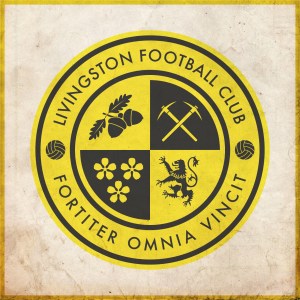
Being that the club has been based in Livingston since 1995, I wanted to capitalise on that local identity. The acorns represent West Lothian (whose coat of arms features an ‘oak tree fructed’) and the three cinqfoils are taken from the Livingston family coat of arms. The crossed pickaxes represent Livingston’s historical shale mining industry.

The Latin in the outer ring, Fortiter Omnia Vincit (‘Bravely Conquers All’) is the club motto, which was included in the club’s badge from 1995 until 1999. I feel this motto is especially appropriate given Livingston’s unlikely survival over the years. The lion rampant has featured in the Livingston badge since 1999 and I believe it is fitting for a Scottish club and accompanying the motto above.

LFC badge-01 2

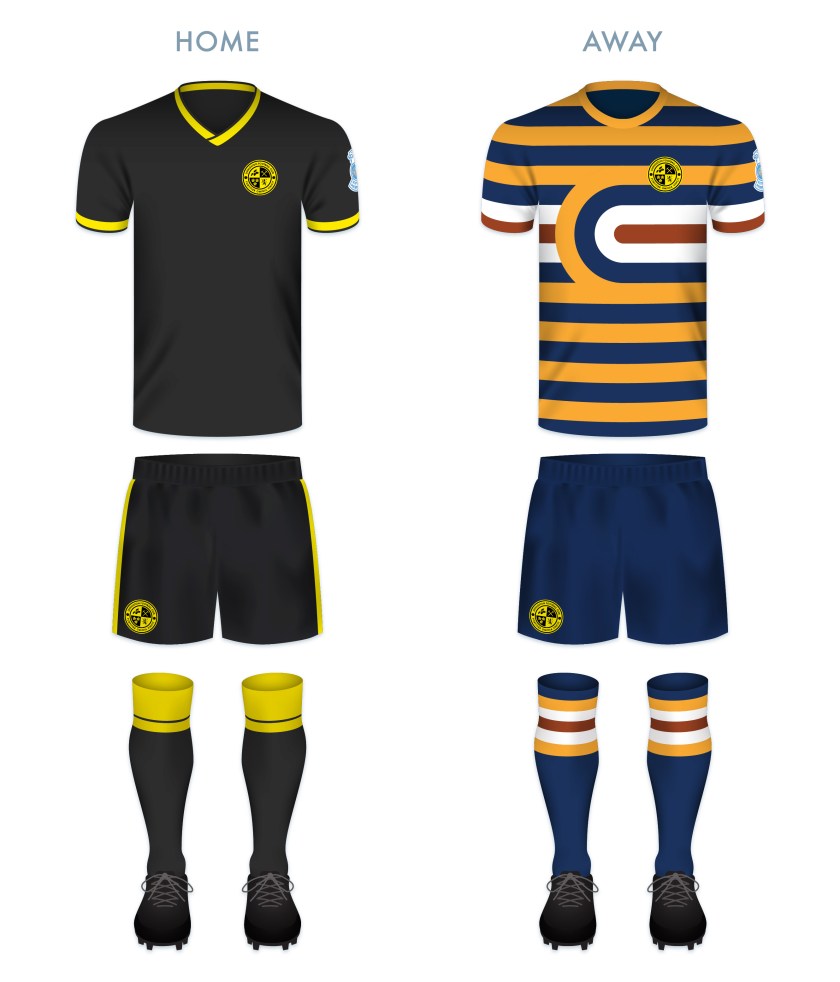
For the home kit, I went with a black body and gold details, a colour scheme used numerous times since the club’s 1995 move. The away strip is more adventurous, calling back to the Ferranti works team who manufactured gyro gunsights for Spitfire. The scheme is based on the Types A.1 and C.1 roundels used on Spitfires during the Second World War.

LFC kit-01

LFC badge new-01

As ever, I am indebted to Dave at Historical Football Kits for some of the historical information used above.

2 May 201824 February 2020 E Tagged badge, brand, crest, Edinburgh, Europe, Ferranti, Ferranti Thistle, football, Ladbrokes Premiership, Latin, lion, Livingston, Livingston FC, Livingston Football Club, logo, Lothians, Meadowbank, Meadowbank Thistle, rebrand, redesign, Scotland, Scottish Premiership, Scottish Professional Football League, SPFL, SPFL Premiership, Spitfire, sport, Supermarine Spitfire, texture, Thistle, UK, United Kingdom, West Lothian Leave a comment

ReBrand: Inverness CT FC

graphic

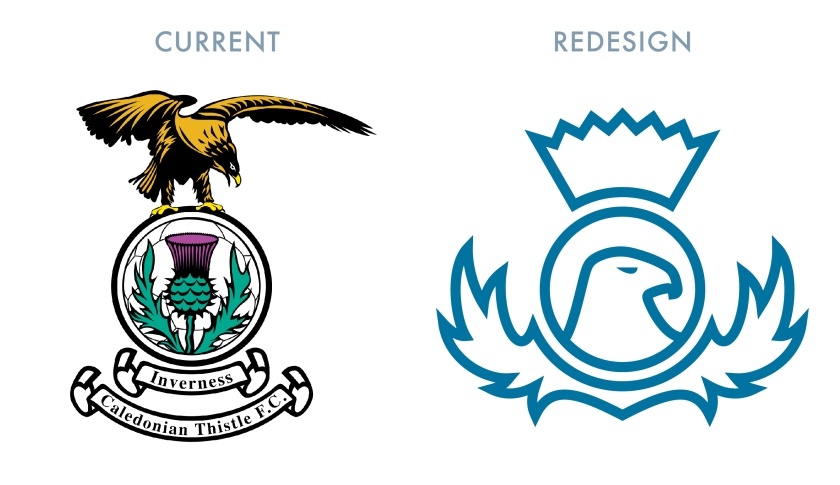
ICTFC badge new-01Caledonian Thistle Football Club was the result of a 1994 union between two historic Invernessian football clubs – Inverness Thistle and Caledonian, both established in 1885. In 1996, Inverness District Council requested that ‘Inverness’ be added to the club’s name. Instead of going the easy route with Inverness United FC or something of that ilk, we have the monstrosity that is ICTFC. More on that later.
Caley began life in the lowest tier of the Scottish Football League alongside Highland rivals Ross County. Over the coming years, the club would work its way up the SFL ranks, gaining prominence through their notable Scottish Cup victories over Celtic in the third round of the 1999/2000 competition as well as in the quarter-finals of the 2002/03 competition. In the 2003/04 season, Caley finished at the top of the second tier table, gaining promotion to what was then called the Scottish Premier League. The club was relegated back to the second tier after five seasons, before returning to the top for the 2010/11 season.

The 2014/15 season proved to be Caley’s finest, finishing in the third spot of the Premiership table and defeating St Mirren, Partick Thistle, Raith Rovers, Celtic and, finally, Falkirk on their road to lifting the Scottish Cup. But the good times did not last forever. At the end of the 2016/17 season, the Highland Jags found themselves relegated to the Scottish Championship, where they continue to compete today.

Inverness Caledonian Thistle Football Club. ICTFC. If the name is a mouthful, the current badge is an eyeful. In this badge, we find a thistle (the symbol of Inverness Thistle), a golden eagle (the symbol of Caledonian) and a football. It’s not so much the presence of these symbols that make this badge challenging, but that there are at least two very distinctive illustrative styles employed in their depictions. Further insult is added to injury with a very poorly designed banner bearing the club’s name.

Over the years, I have attempted several redesigns of Caley’s badge. Among all Scottish football badges, I found this to be one of the most difficult. In each attempt, I sought to employ all of the information included in the current badge and each attempt yielded a slight improvement. Still, I found my redesigns difficult to stomach.

Eventually, I realised that in my desire to capture so much in a badge, I failed in Mies’ insistence that ‘less is more’. Therefore, I have attempted yet another redesign of this behemoth of a badge. In this redesign, minimalism has been my aim. No words. No dates. Only simple lines depicting the head of a golden eagle and a thistle.

ICTFC badge-01

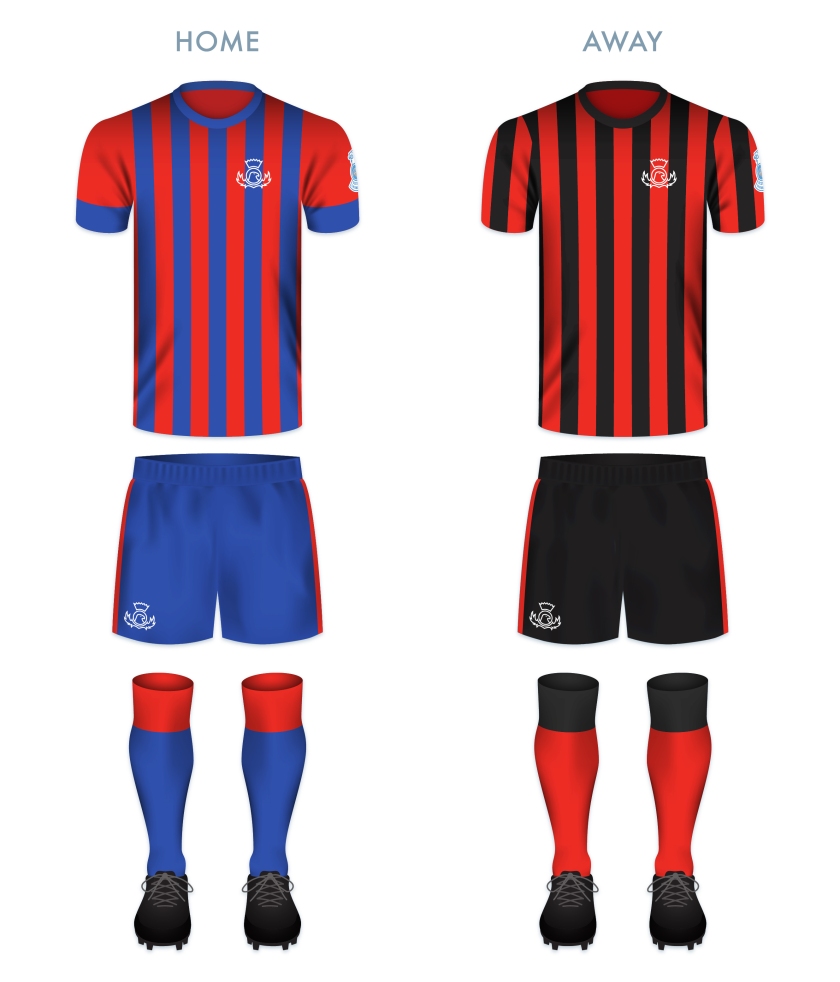
For the home shirt, I decided to go with Caley’s blue and red stripes, which have featured on most of the club’s kits since the union in 1994. The away shirt is inspired by the former Inverness Thistle’s home strips, with the black and red vertical stripes in near constant use in from 1894 until the union.

ICTFC kit-01

ICTFC badge new-01

As ever, I am indebted to Dave at Historical Football Kits for some of the historical information used above.

30 April 201824 February 2020 E Tagged badge, brand, Caley, Caley Jags, Caley Thistle, Championship Division, crest, Europe, football, ICT, Inverness, Inverness Caledonian Thistle FC, Inverness Caledonian Thistle Football Club, Inverness CT, Inverness CT Football Club, Ladbrokes Championship, logo, Pride of the Highlands, rebrand, redesign, Scotland, Scottish Championship, Scottish Professional Football League, SPFL, SPFL Championship, sport, texture, The Caley Jags, The Pride of the Highlands, UK, United Kingdom 1 Comment

ReBrand: Greenock Morton FC

graphic

GMFC badge new-01Greenock Morton Football Club was established as Morton Football Club in 1874, making them the sixth oldest football club in Scotland. The precise origin of the name ‘Morton’ is unclear, though it may have been taken from ‘Morton Terrace’, a row of houses where some of the players stayed beside of the club’s original playing field.
Following the formation of the Scottish Football League in 1890, the original Second Division was formed in 1893, with Morton as one of the founding members. In the 1899/1900 season, Morton finished second, one point behind Partick Thistle. The following season, both clubs were admitted into the top tier, with Thistle finishing last and Morton coming in fourth with 21 points, behind Hibernian (25), Celtic (29) and Rangers (35).

Over the coming decade, Morton would remain in the bottom half of the table, but in the 1910s, the club began to show more promise. In the 1913/14 and 1914/15 seasons, Morton came in fourth, and by 1915/16, they finished third. Morton’s finest top tier performance came in the 1916/17 season, when the club finished in the second spot. Four years later, the club’s highest honour came when they won the 1921/22 Scottish Cup with a 1-0 victory over Rangers at Hampden Park.

In the 1926/27 season, Morton finished second-bottom and, alongside last place Dundee United, returned to the second tier for the first time since the 1899/1900 season. Over the coming decades, Morton would experience more promotions (10) and relegations (10) to and from the top tier than any other side in Scottish football, with their most recent spell in top flight football ending with relegation at the end of the 1987/88 season.

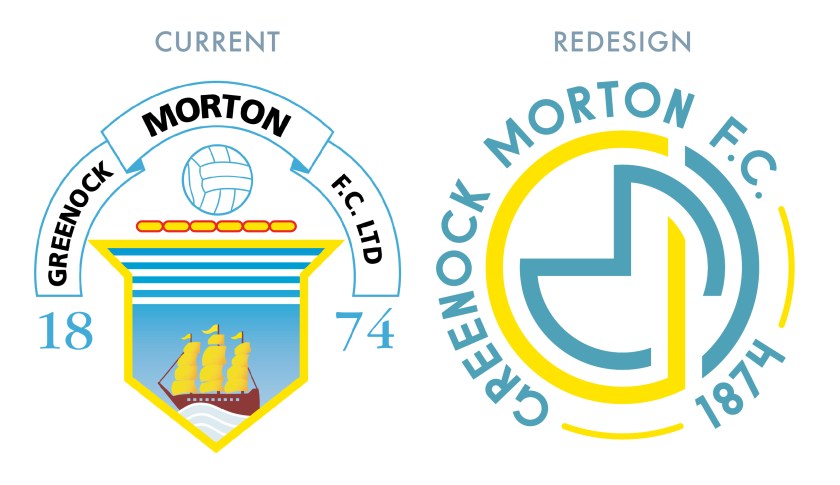
The current badge, derived from the Greenock coat of arms, is strong and some variation of it has been used since 1978. Before this, from 1964, a simpler badge, bearing the club’s name and three stars, was used on occasion.

In reworking such a strong badge, I did not want to design something that would appear too similar to other badges. I considered the other clubs which feature a ship in full sail on their badge: Stranraer, formed in 1870 and one of the oldest clubs in Scotland, and Clyde, formed in 1877. The ship on Stranraer’s badge was adopted in 1961, while the ship on Clyde’s badge, from what I can tell, came into being in the mid-1930s. If I wanted to defer either to the age of the club or longevity of the use of a ship in a club’s badge, Stranraer and Clyde, respectively, beat out Morton. The shipbuilding industry is tied very closely to Clyde’s name and it is possible that the presence of a ship on their badge predates the next earliest badge design by more than two decades, so I have gone with a ship in that redesign. It is possible that I have overthought this.

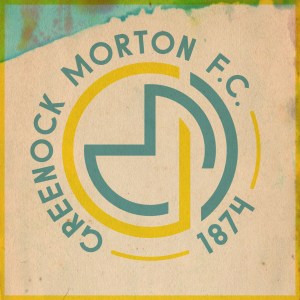
For Morton, I considered using the Free French Memorial on Lyle Hill in Greenock (which honours the fallen sailors of Free French Naval Forces who were based at Greenock from 1940 to 1945), or the James Watt Dock Crane (named after the 19th-century Greenock-born inventor). Ultimately, I departed from local symbolism entirely and adopted the main colours of the current Morton badge to form a modern ‘GM’ monogram (round so as to suggest a football).

GMFC badge-01

For the home shirt, I went with the traditional blue and white hoops, which have featured on the vast majority of Morton’s home shirts from their earliest days (an aborted departure from which caused great unrest among Morton supporters in 2016). For the away shirt, the body is yellow (used commonly among many Morton away strips), with a seafoam green for the collar and sleeves.

GMFC kit-01

GMFC badge new-01

GMFC badge new 02-01.jpg

As ever, I am indebted to Dave at Historical Football Kits for some of the historical information used above.


30 April 201824 February 2020 E Tagged badge, brand, Championship Division, Clyde, Clyde FC, Clyde Football Club, crane, crest, Europe, football, Free French Memorial, Greenock, Greenock Morton, Greenock Morton FC, Greenock Morton Football Club, Inverclyde, James Watt Dock Crane, Ladbrokes Championship, logo, Lyle Hill, monogram, Morton, Morton FC, Morton Football Club, Pride of the Clide, rebrand, redesign, River Clyde, Scotland, Scottish Championship, Scottish Professional Football League, ship, SPFL, SPFL Championship, sport, Stranraer, Stranraer FC, Stranraer Football Club, texture, The Ton, Ton, UK Leave a comment

Posts navigation

← Previous
Next →
Widgets
Create a website or blog at WordPress.com
Privacy & Cookies: This site uses cookies. By continuing to use this website, you agree to their use.
To find out more, including how to control cookies, see here: Cookie Policy
  • Subscribe Subscribed
    • ellliottt
    • Join 53 other subscribers
    • Already have a WordPress.com account? Log in now.
    • ellliottt
    • Subscribe Subscribed
    • Sign up
    • Log in
    • Report this content
    • View site in Reader
    • Manage subscriptions
    • Collapse this bar
 

Loading Comments...