
 Queen of the South Football Club was established in 1919. This new club was result of a union between three pre-existing clubs: Maxwelltown Volunteers FC (formed in 1896 and renamed 5th King’s Own Scottish Borderers in 1908), Dumfries FC (formed in 1897) and the Arrol-Johnston Motor Company works team. The name, ‘Queen of the South’, was taken from a local poet, David Dunbar, who, while standing for Parliament in the 1857 general election, called the town of Dumfries the ‘Queen of the South’ in one of his addresses.
After participating in various non-professional leagues for several seasons, ‘the Doonhamers’, as they are known (‘doonhamer’ being a colloquial term for natives of Dumfries, many of whom, in the nineteenth century, worked in Glasgow and referred to Dumfries as doon hame, Scots for ‘down home’), joined the newly-created Third Division of the Scottish Football League in the 1923/24 season.
The Doonhamers gained promotion from the bottom tier after their second season in the SFL. Promotion to the top tier came at the close of the 1932/33 season. In their first season in the top tier, Queen of the South finished fourth in the table with 45 points, behind Celtic (47), Motherwell (62) and Rangers (66). This finish remains the club’s finest performance in the top tier.
Although the Doonhamers have yet to win any senior cups, they reached the semi-finals of the Scottish Cup in 1949/50 and the Scottish League Cup in 1950/51 and 1960/61. In 2007/08, the club reached the Scottish Cup final, losing narrowly 2-3 to Rangers.
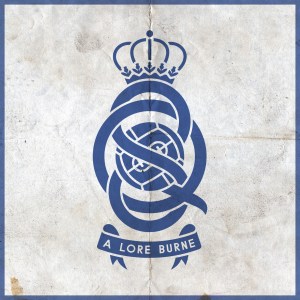
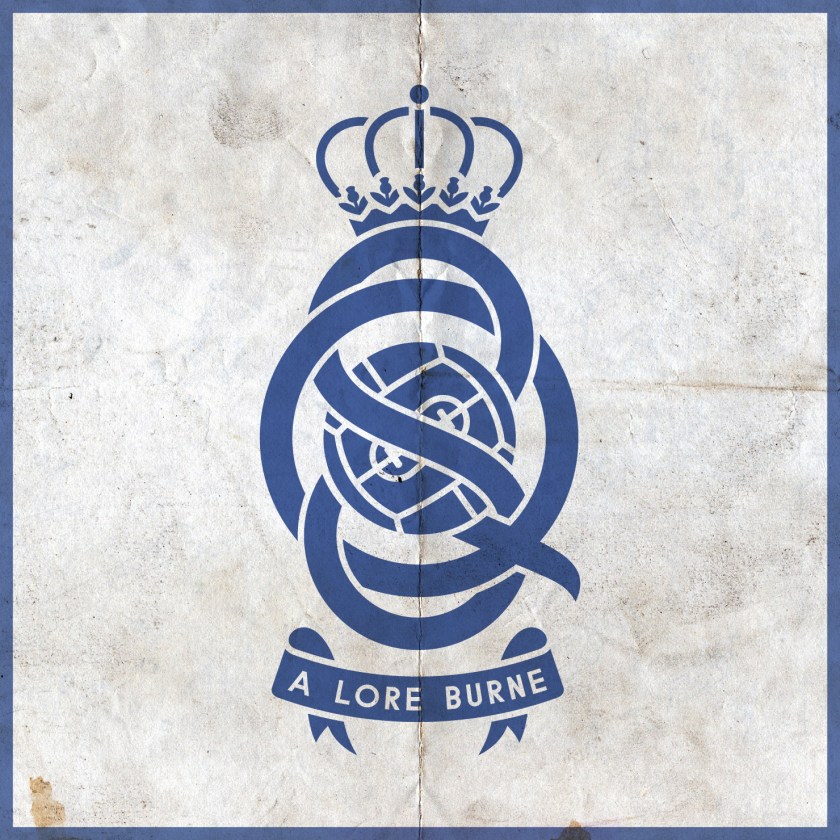
Queen of the South first featured a badge on their kit in 1947. This badge, found at the centre of the current badge, is strong, bearing a handsome monogram and the Dumfries motto, in Scots, A lore burne, referring to the Loreburn (or ‘muddy stream’), a stream that ran through a marsh near the town. In times of attack, this motto served as a rallying cry to the town. What I find less attractive in the current badge is the outer circle, bearing the club’s name and leaving a lot of negative space. Additionally, the current badge’s use of text within a shield is a violation of an ancient Scottish heraldic law.
When redesigning the Queen of the South badge, I struggled to come up with something that I found satisfying. I explored various heraldic motifs before settling on an updated ‘QS’ monogram bearing a ‘queen’s’ crown and featuring a football and the Dumfries motto in a banner.

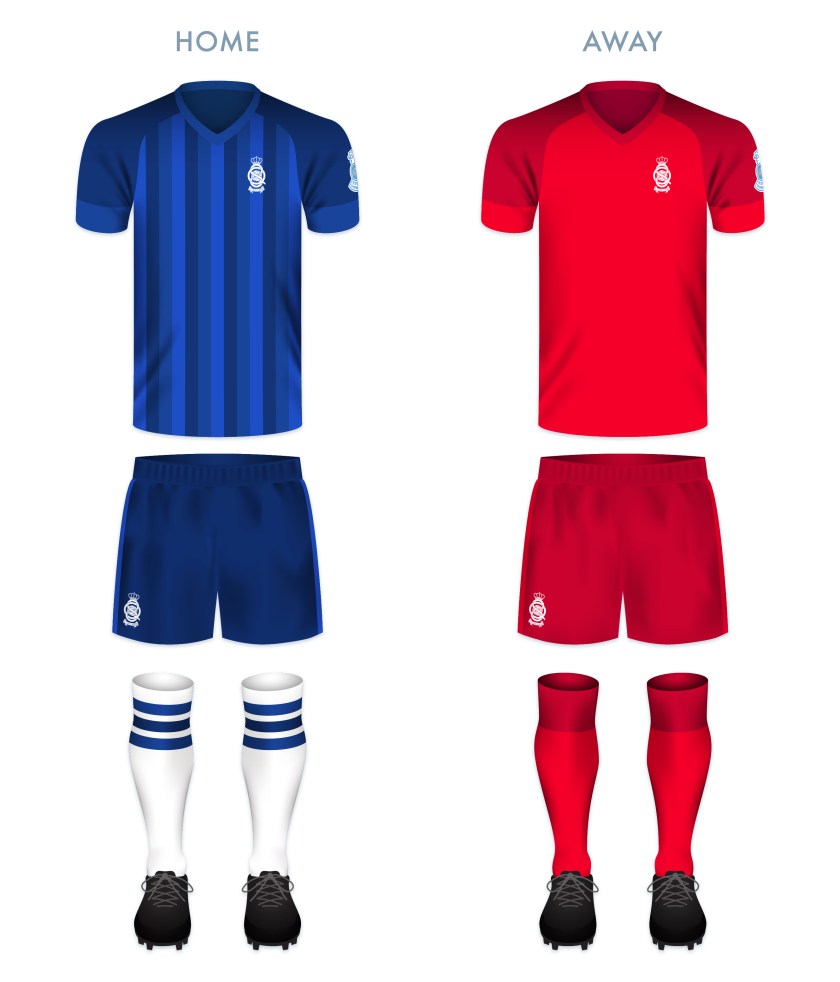
The kits make use of the Doonhamers’ traditional colours of blue (home) and red (away). The home strip is inspired in part by Bayern Munich’s handsome third kit from the 2013/14 season.
As ever, I am indebted to Dave at Historical Football Kits for some of the historical information used above.
 The history of Livingston Football Club is one of the most tumultuous in all of Scottish football.
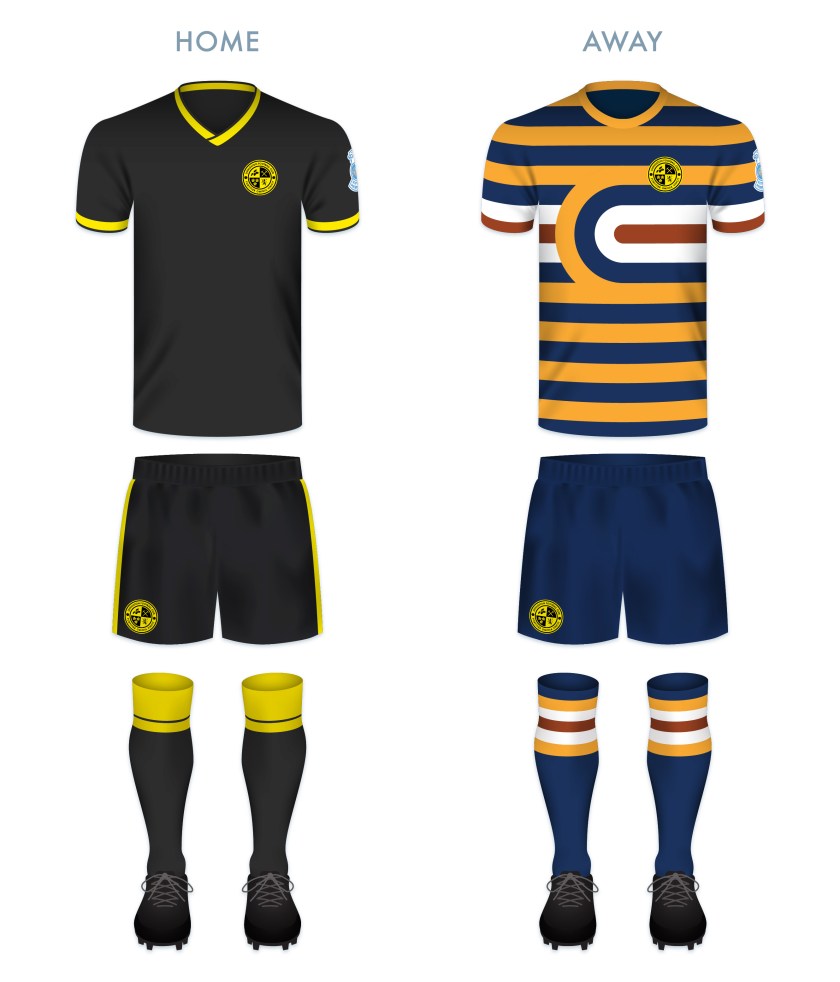

 Caledonian Thistle Football Club was the result of a 1994 union between two historic Invernessian football clubs – Inverness Thistle and Caledonian, both established in 1885. In 1996, Inverness District Council requested that ‘Inverness’ be added to the club’s name. Instead of going the easy route with Inverness United FC or something of that ilk, we have the monstrosity that is ICTFC. More on that later.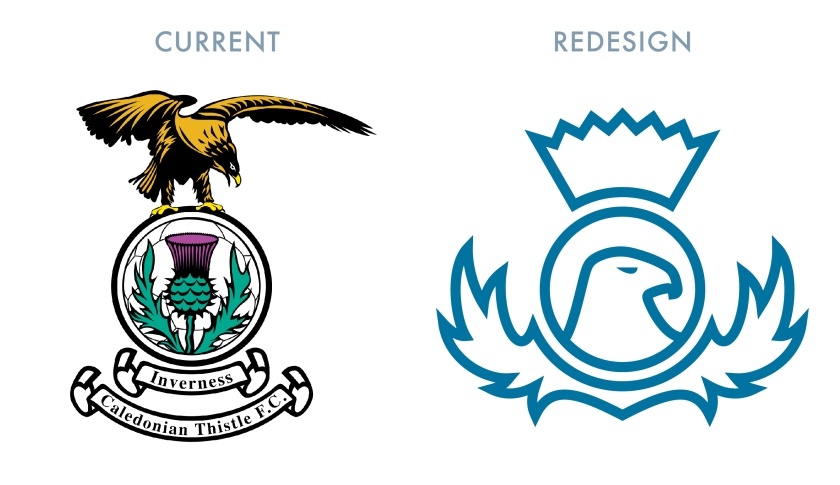
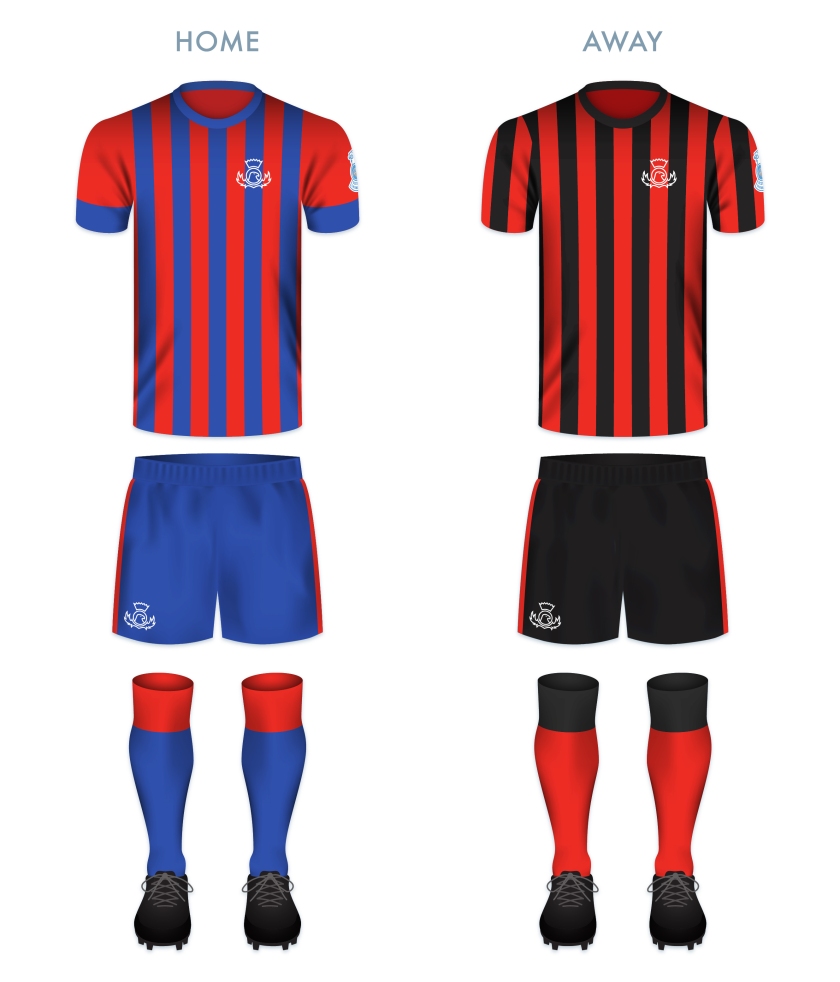

 Greenock Morton Football Club was established as Morton Football Club in 1874, making them the sixth oldest football club in Scotland. The precise origin of the name ‘Morton’ is unclear, though it may have been taken from ‘Morton Terrace’, a row of houses where some of the players stayed beside of the club’s original playing field.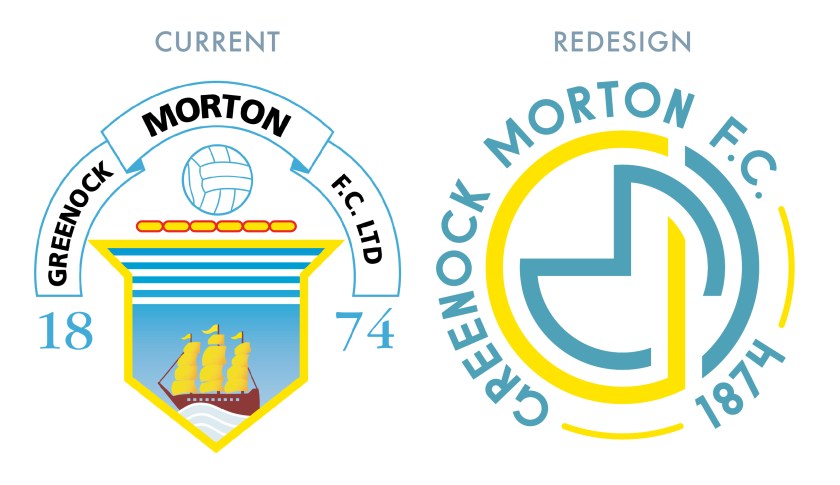


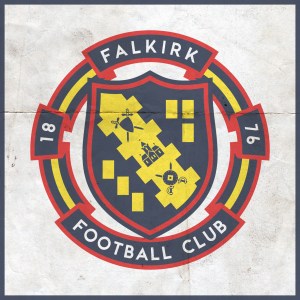 Falkirk Football Club was established in 1876 and joined the Scottish Football Association two years later. During these early years, ‘the Bairns’ (a [primarily] eastern Scots word meaning ‘children’ and for natives of Falkirk, in general) competed in the early rounds of the Scottish Cup and played matches as part of the Stirlingshire Football Association.
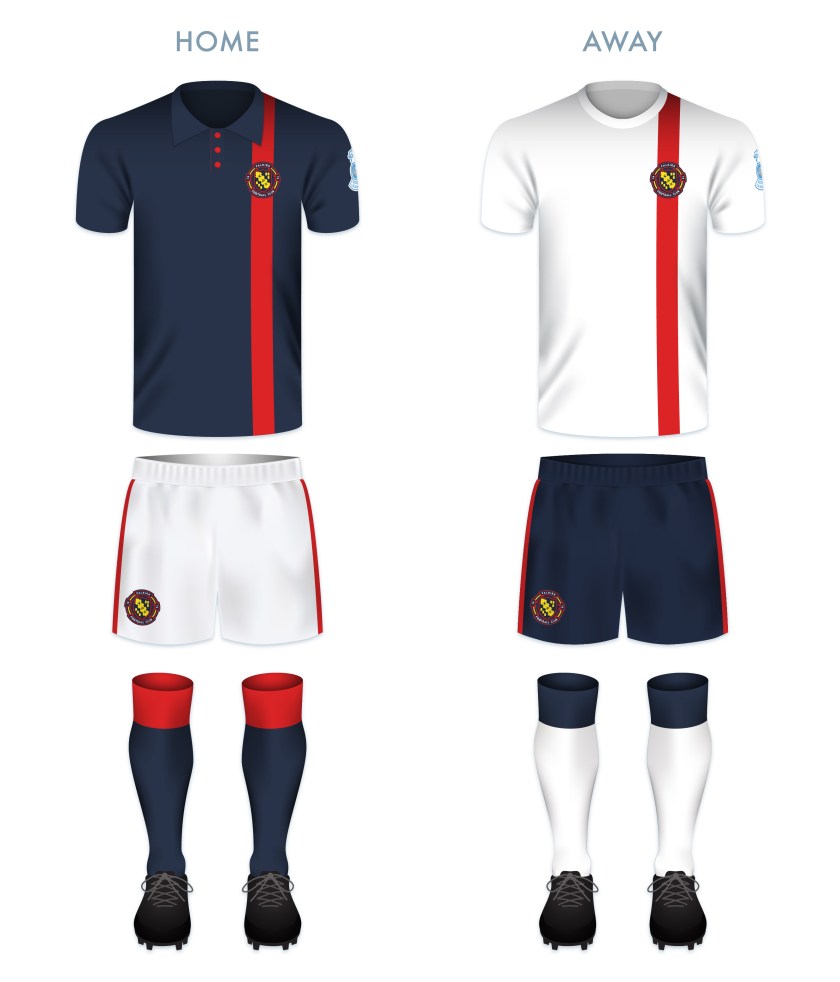

 The history of association football in Scotland is tied inextricably to cricket. Along with clubs such as

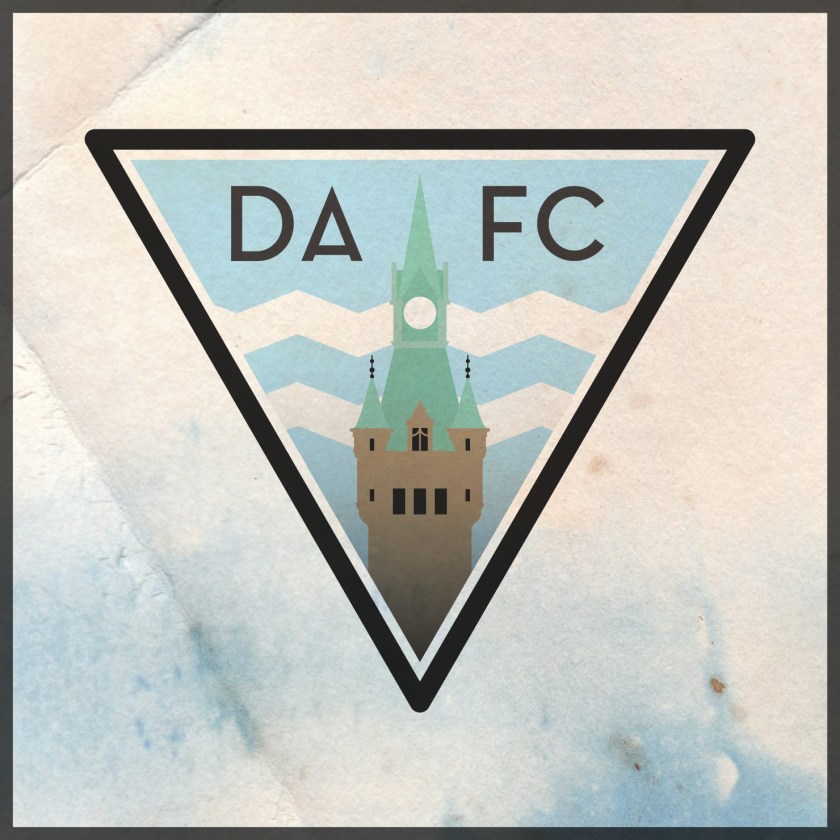
 It is recorded that by the middle of the nineteenth century, nearly 20% of Dundee’s population were Irish-born immigrants. As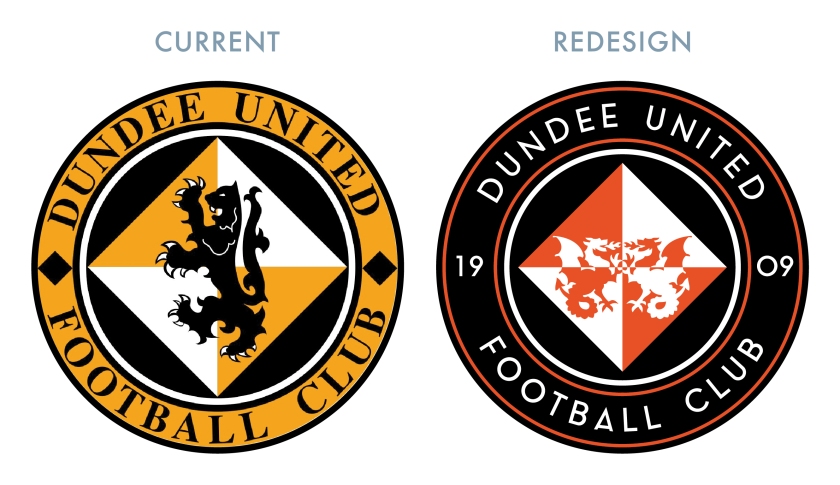
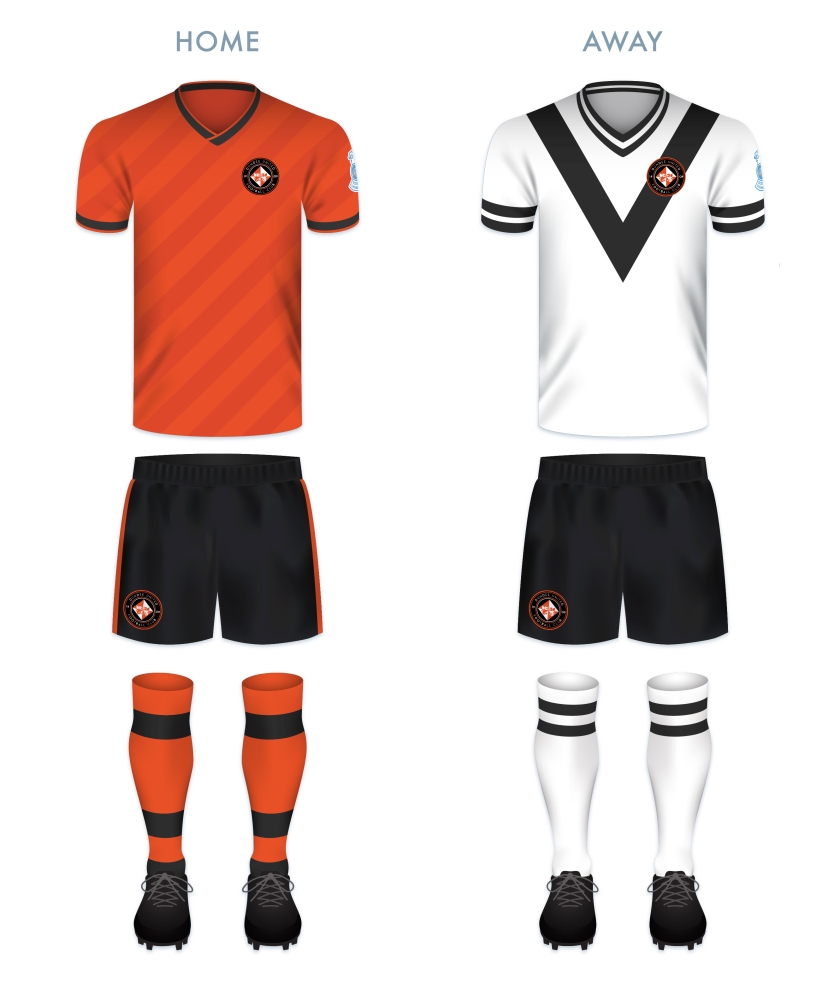
 Dumbarton Football Club was established in 1872, making it the fourth oldest association football club in Scotland, after


 The 2017/18 season was unpleasant for Brechin City Football Club. They finished at the bottom of the

 Dingwall-based Ross County Football Club were formed in 1929. Although the club was not admitted into the Scottish Football League until 1994, County has a long history of faring well against league sides in early rounds of the Scottish Cup while members of the Highland Football League. Since entering the SFL (and later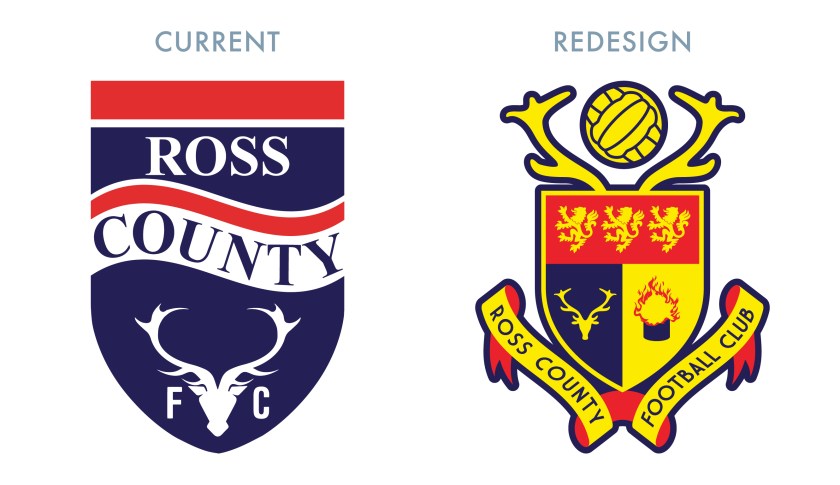


 ellliottt