ellliottt

design & illustration

Menu

Skip to content
  • HOME
  • ABOUT
  • GRAPHIC
    • ALL GRAPHIC DESIGN
    • AUTOMOTIVUS
    • REBRAND: SPFL
      • Premiership
        • Aberdeen
        • Celtic
        • Dundee United
        • Heart of Midlothian
        • Hibernian
        • Kilmarnock
        • Livingston
        • Motherwell
        • Rangers
        • Ross County
        • St Johnstone
        • St Mirren
      • Championship
        • Arbroath
        • Ayr United
        • Cove Rangers
        • Dundee
        • Greenock Morton
        • Hamilton Academical
        • Inverness CT
        • Partick Thistle
        • Queen’s Park
        • Raith Rovers
      • League One
        • Airdrieonians
        • Alloa Athletic
        • Clyde
        • Dunfermline Athletic
        • FC Edinburgh
        • Falkirk
        • Kelty Hearts
        • Montrose
        • Peterhead
        • Queen of the South
      • League Two
        • Albion Rovers
        • Annan Athletic
        • Bonnyrigg Rose
        • Dumbarton
        • East Fife
        • Elgin City
        • Forfar Athletic
        • Stenhousemuir
        • Stirling Albion
        • Stranraer
    • REBRAND: SHFL
      • Brechin City
      • Brora Rangers
      • Buckie Thistle
      • Clachnacuddin
      • Deveronvale
      • Formartine United
      • Forres Mechanics
      • Fraserburgh
      • Huntly
      • Inverurie Loco Works
      • Keith
      • Lossiemouth
      • Nairn County
      • Rothes
      • Strathspey Thistle
      • Turriff United
      • Wick Academy
    • REBRAND: SLFL
      • Berwick Rangers
      • Bo’ness United
      • Broomhill
      • Caledonian Braves
      • Civil Service Strollers
      • Cowdenbeath
      • Cumbernauld Colts
      • Dalbeattie Star
      • East Kilbride
      • East Stirlingshire
      • Edinburgh University
      • Gala Fairydean Rovers
      • Gretna 2008
      • Spartans
      • Tranent Juniors
      • University of Stirling
  • 2D
  • 3D
    • ALL 3D
    • INSTALLATION
  • PHOTO
  • SHOP

badge

ReBrand: Elgin City FC

graphic

ElgCFC badge new-01Elgin City Football Club was established when two Elgin-based clubs, Rovers FC (1887) and Vale of Lossie FC (1888) united in 1893. For more than a century, the club competed in the Highland Football League, amassing a number of regional honours.

In the 1967/68 Scottish Cup, Elgin City defeated Albion Rovers, Tarff Rovers, Forfar Athletic and Arbroath to teach the quarter-final. Their opponents, Greenock Morton proved too strong for the Highland League outfit and Elgin City left the tournament after a 2-1 loss. No other Highland League club, before or since, has progressed as far in the Scottish Cup.

In 2000, the Scottish Premier League (the top tier in Scottish football at the time) expanded from 10 to 12 clubs, opening the door for the admittance of two new clubs into the bottom tier of the Scottish Football League. Elgin City, along with fellow Highland Leaguers Peterhead, were successful in their application and have competed in the SFL (and subsequent Scottish Professional Football League) ever since.

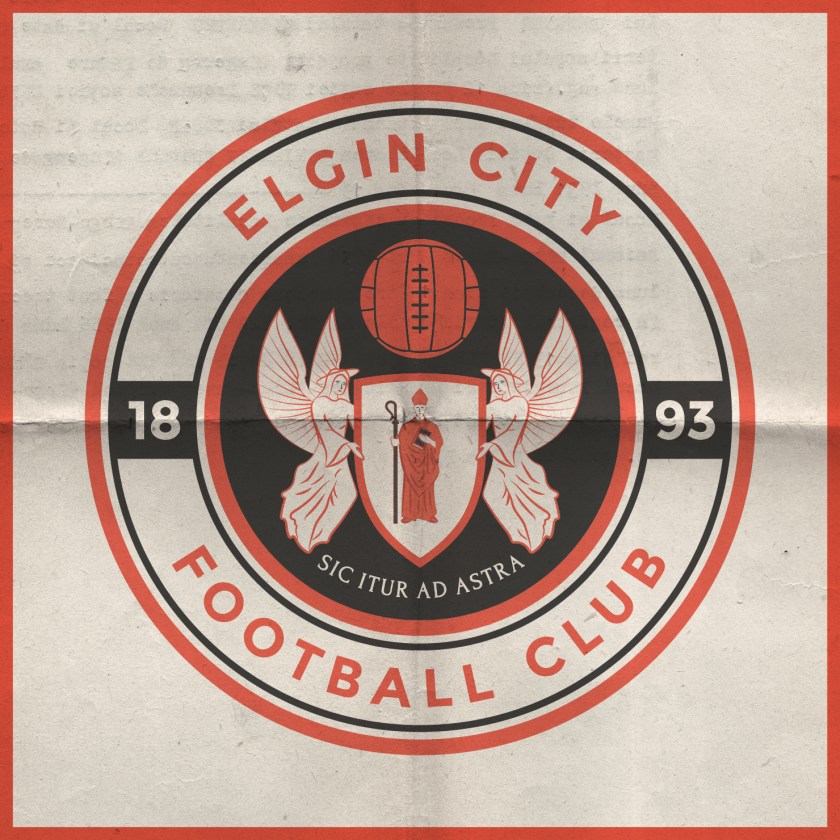
Throughout the vast majority of the club’s history, Elgin City’s home shirt has consisted of black and white vertical stripes. It was not until 1990 that the kit featured a badge, which is still used today. This badge, a rendering of the coat of arms of the city and royal burgh of Elgin, features the patron saint of Elgin, St Giles, supported by two angels and bears the motto, Sic itur ad astra (Latin for ‘Thus one goes to the stars’ or ‘Such is the way to immortality’, from Virgil’s Aeneid, IX). The angels and motto refer to the legend that at his death, St Giles was brought by angels to heaven.

Despite the conceptual strength of the current badge, I find its execution lacking. While I admire the strength of a minimalist depiction of figures within a badge, I wanted to add more details so as to better resemble traditional depictions of the Elgin coat of arms and to create more depth.

As I wished to include the fine Latin motto, I did away with the shield (so as to avoid conflict with the ancient Scottish heraldic law forbidding the use of lettering within shields that are not approved by the Court of the Lord Lyon) as well as the stone compartment in which the motto was written in the original badge. I placed this redesign within a circular badge and added a football to occupy the negative space above the shield bearing St Giles. The dominant colours of the redesigned badge (red and white) are in line with the specified colours of the Elgin coat of arms, which are taken from the traditional colours of the Moray region.

ElgCFC badge-01

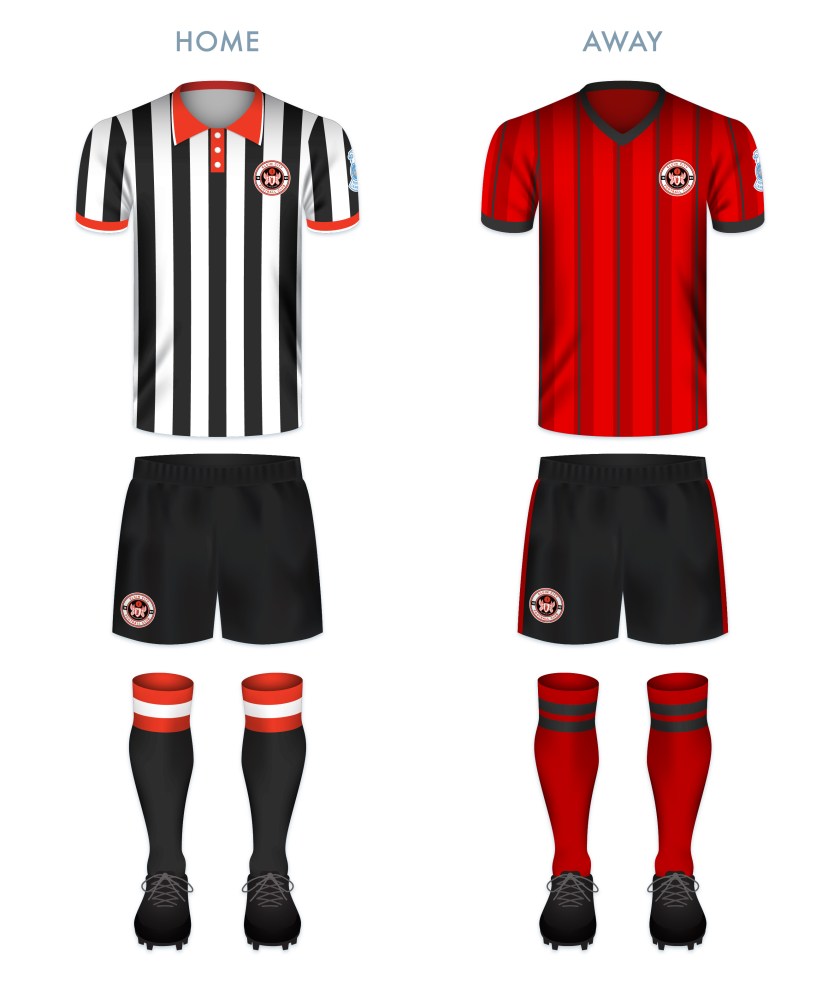
Both kit redesigns make use of traditional Elgin City colours. The home kit redesign is inspired primarily by the Elgin City kit used from 1991 to 1993.
ElgCFC kit-01

ElgCFC badge new-01

As ever, I am indebted to Dave at Historical Football Kits for some of the historical information used above.
4 June 201824 February 2020 E Tagged badge, Black & Whites, Black and Whites, brand, cathedral, city, coat of arms, crest, Elgin, Elgin Cathedral, Elgin City, Elgin City FC, Elgin City Football Club, emblem, football, Ladbrokes League 2, Latin, logo, Moray, Morayshire, Rovers, Rovers FC, Rovers Football Club, Scotland, Scottish League 2, Scottish League Two, Scottish Professional Football League, SPFL, SPFL League 2, SPFL League Two, sport, St Giles, The Black & Whites, The Black and Whites, UK, United Kingdom, Vale of Lossie, Vale of Lossie FC, Vale of Lossie Football Club Leave a comment

ReBrand: Edinburgh City FC

graphic

FCE badge newEdinburgh City Football Club was first formed in 1928 as an amateur side, akin to Queen’s Park. Although the club joined the Scottish Football League in 1931, they struggled throughout the fifteen subsequent seasons and reverted to junior status in 1946. By 1955, the lease at their playing ground (City Park) expired and the football club folded, continuing only as a social club.
In 1966, Postal United Football Club was established and adopted the Edinburgh City name in 1986. By the mid-1990s, this new incarnation of Edinburgh City FC became members of the Scottish Football Association. After competing in the East of Scotland Football League for a number of years, Edinburgh City, along with Gretna 2008, Preston Athletic, Spartans, the University of Stirling, Vale of Leithen and Whitehill Welfare, transferred to the new Lowland Football League for the 2013/14 season.

Edinburgh City were crowned Lowland League champions in the second year of the competition, giving them the opportunity to compete in the Scottish League Two play-off semi-final for a spot in the Scottish Professional Football League. Unfortunately, Edinburgh City lost to the Highland Football League champions, Brora Rangers over two legs. (Brora Rangers would go on to lose to last-place League Two side, Montrose 3-2 on aggregate.)

Edinburgh City would have better luck when they won the Lowland League again in the 2015/16 season. This time, the club faced Cove Rangers in the semi-final. After winning with a 4-1 aggregate score over two legs, Edinburgh City faced the last-place League Two side, East Stirlingshire. The first leg ended in a 1-1 draw. In the second leg, Edinburgh City took the spoils with a 0-1 victory, gaining promotion to the SPFL.

Edinburgh City performed well during its first few seasons in League Two and finished the 2021/22 season in fourth place. This enabled them to enter into the SPFL League One play-off, where they first faced Dumbarton. The Citizens advanced to the next round after having defeated Dumbarton 5-2 over two legs. Next came Annan Athletic, who Edinburgh City beat narrowly (3-2), securing their admittance into League One. After the end of that season, Edinburgh City’s name was changed Football Club of Edinburgh, or simply FC Edinburgh, before reverting back to Edinburgh City FC in June 2023.

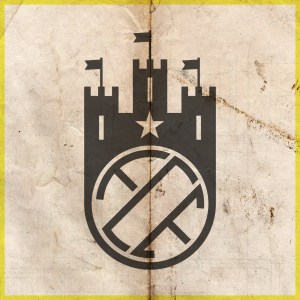
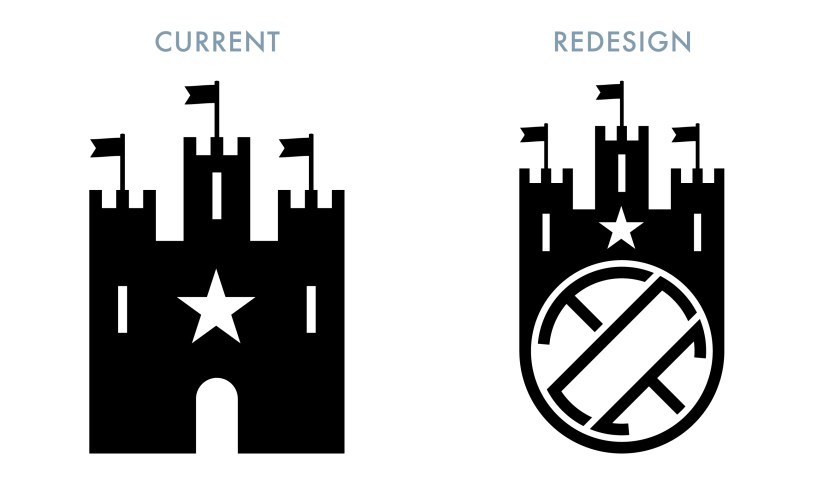
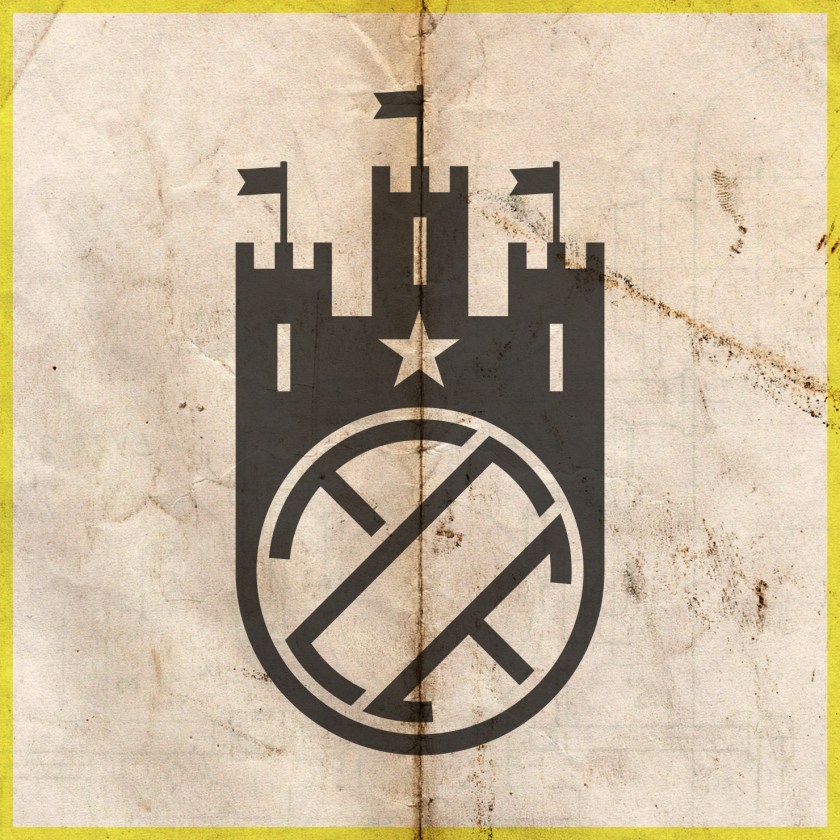
In their early years, the kit of the original Edinburgh City FC featured the coat of arms of Edinburgh. By 1938, the club used an ‘ECFC’ monogram as their badge. Upon the adoption of the Edinburgh City name by Postal United, a new badge, featuring a castle above the club’s initials was used. In 1998, a new club badge was launched, featuring the same castle from 1986, encircled by the club’s full name. For the 2018/19 season, an update on this badge was introduced which included a gold accent. With the most recent renaming of the club, a simple castle is used as the club’s badge.

For this redesign, I opted to include a varation on the stylised football ECFC monogram I had employed in an earlier design, topped with a version of the castle in current use:

FCE badge

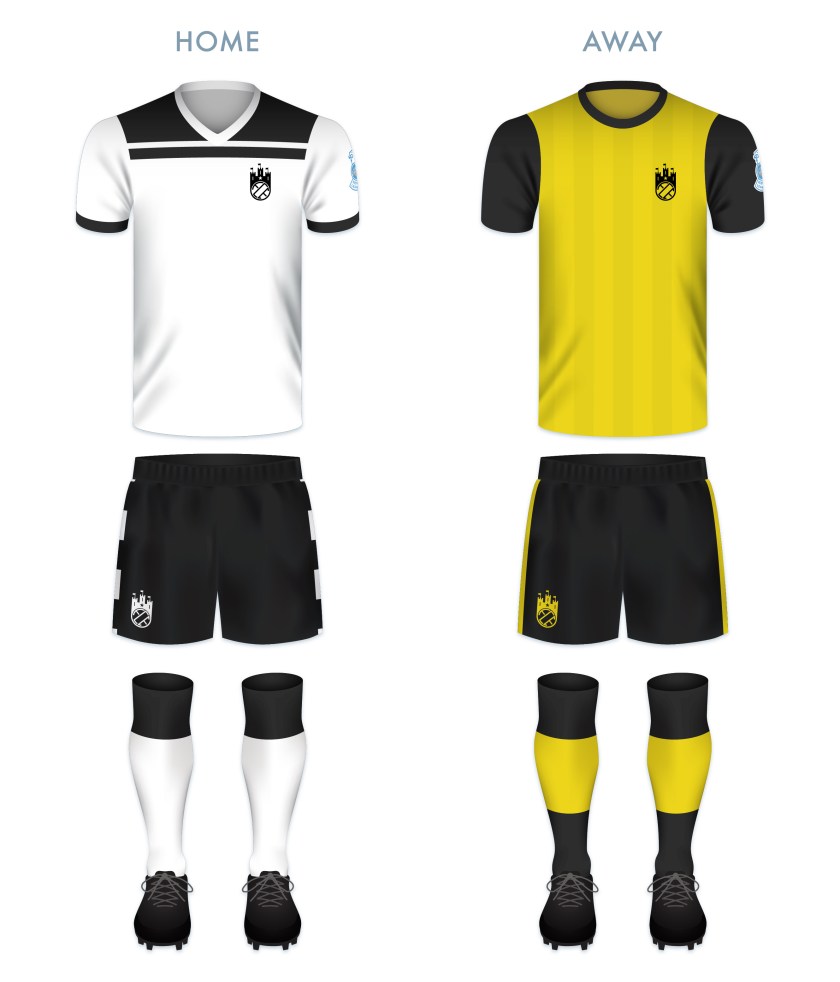
The redesigned home kit consists of a white top with black shorts, the traditional colour scheme since 1928. The top features black details in a scheme resembling Admiral strips from the early 1980s. The away kit is inspired primarily by the 2016/17 Edinburgh City away kit.

FCE kit

FCE badge new

As ever, I am indebted to Dave at Historical Football Kits for some of the historical information used above.

31 May 201822 August 2025 E Tagged badge, crest, Edinburgh, Edinburgh City, Edinburgh City FC, Edinburgh City Football Club, Europe, football, Ladbrokes League 2, logo, monogram, Postal United, Postal United FC, Postal United Football Club, rebrand, redesign, Scotland, Scottish Football Association, Scottish League 2, Scottish League Two, Scottish Professional Football League, SPFL, SPFL League 2, SPFL League Two, sport, UK, United Kingdom Leave a comment

ReBrand: Cowdenbeath FC

graphic

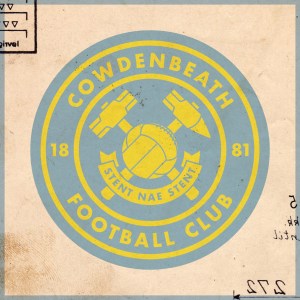
CowFC badge new-01The exact year that Cowdenbeath Football Club was established is unclear. The current club had its genesis in the union of two local clubs (Cowdenbeath Rangers and Cowdenbeath Thistle), which took place in 1881. It has been suggested by the club’s historian, David Allan, that the club retained the name ‘Cowdenbeath Rangers’ until 1882, when the club merged with a Raith Rovers FC (not to be confused with the current Raith Rovers). What is known with certainty is that the current club has been playing as Cowdenbeath FC since at least 1882.

Regardless of whether they were established in 1881 or 1882, Cowden is the oldest of the four surviving professional football clubs in Fife (which includes the aforementioned Raith Rovers, established in 1883, Dunfermline Athletic, established in 1885 and East Fife, established in 1903).

Cowden competed in the Fifeshire Football Association from its inaugural season in 1882/83, losing that first Fife Cup 4-1 to the original Dunfermline Football Club. Two years later, against the same Dunfermline, the club would win the first of its 25 Fife Cups with a scoreline of 4-0.

In 1905, Cowden were admitted into the Scottish Football League and, despite having not won any major honours, competed in Scottish league football until the end of the 2021/22 season. Cowden ended up at the bottom of the League Two table and lost their place to Bonnyrigg Rose over two legs. As a result, the clab was relegated to the Scottish Lowland League for the 2022/23 season.

The Cowdenbeath kit did not feature a badge until the 1984/85 season. This badge was based on a design that had been used in the club’s programmes since 1970. The current badge is a variation of this 1984 badge, with the notable addition of a winding wheel, pickaxes and shovels, which call back to the mining history of the town.

The aim for my badge redesign was to create something simple, clear and significant. I omitted the shield entirely, incorporating the badge within a roundel. I did away with the stereotypical Scottish symbolism of the thistles and lion rampant, as well as the two crosses (symbols which I believe may be associated with the club’s ancestors, Cowdenbeath Rangers, Cowdenbeath Thistle and the original Raith Rovers), the meanings of which seem to have been obscured over time.

At the centre of my redesigned badge are a crossed hammer and pickaxe, which reference the town’s mining history. A football is superimposed over these symbols and below is found a banner bearing the Cowdenbeath town motto, Stent nae stent (Scots for ‘Effort always effort’, the term ‘stent’ having a particular association with mining shifts). For the colours, I opted for a light blue and gold, which stands out from the blue of the traditional Cowdenbeath home shirt.

CowFC badge-01

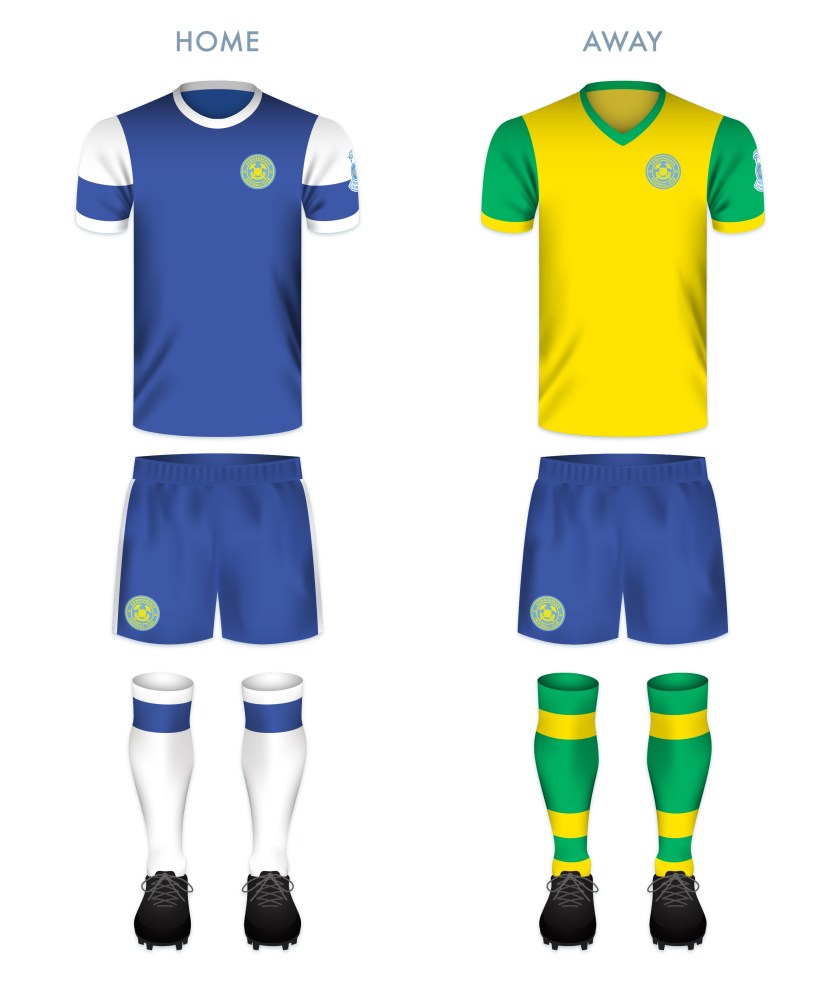
The home kit design was inspired primarily by the 1974/75 and 1981/82 home kits. The away kit—as a play on the club’s enigmatic nickname, ‘the Blue Brazil’—is based on Brazil kits from 1954 onward, as well as several historical Cowdenbeath away kits.

CowFC kit-01

CowFC badge new-01

As ever, I am indebted to Dave at Historical Football Kits for some of the historical information used above.

30 May 20181 August 2022 E Tagged badge, Beath, Blue Brazil, brand, branding, Brazil, Cowden, Cowdenbeath, Cowdenbeath FC, Cowdenbeath Football Club, Cowdenbeath Rangers, Cowdenbeath Rangers FC, Cowdenbeath Rangers Football Club, Cowdenbeath Thistle, Cowdenbeath Thistle FC, Cowdenbeath Thistle Football Club, Europe, Fife, football, Kingdom of Fife, Ladbrokes League 2, logo, Miners, Raith Rovers, Raith Rovers FC, Raith Rovers Football Club, rebrand, redesign, Scotland, Scots, Scottish League 2, Scottish League Two, Scottish Professional Football League, SPFL, SPFL League 2, SPFL League Two, sport, The Beath, The Blue Brazil, The Miners, UK, United Kingdom Leave a comment

ReBrand: Clyde FC

graphic

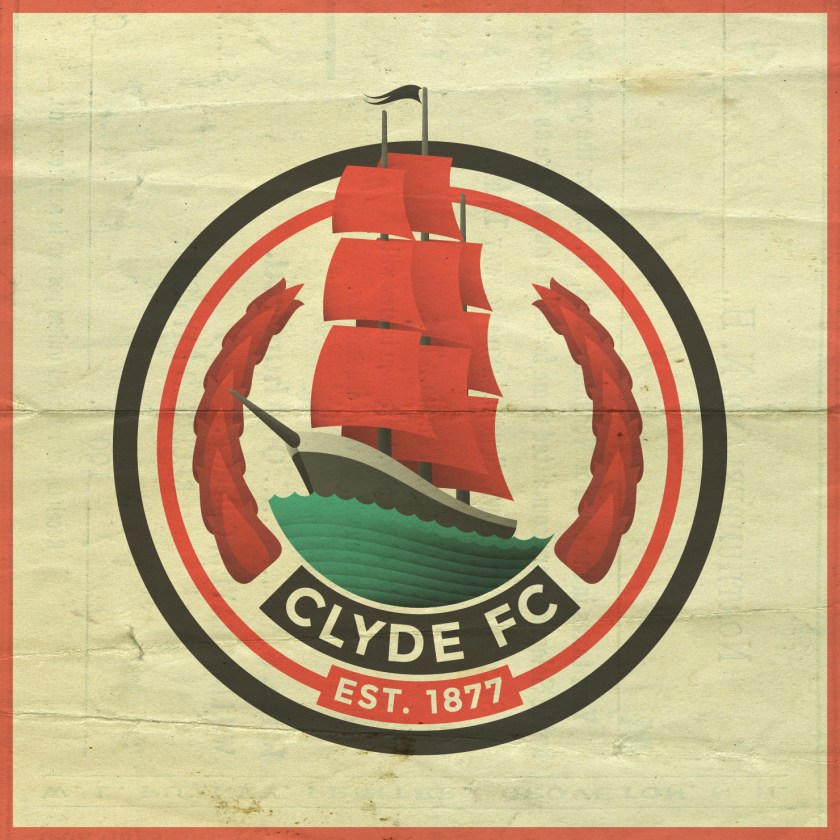
ClyFC badge new-01Clyde Football Club was established in 1877. The club’s first home ground was called Barrowfield Park, located near the Glasgow district of Bridgeton, on the northern bank of the River Clyde, from which the club took its name.

In 1891, Clyde joined the Scottish Football League and their first league match resulted in a dominant 10-3 victory over Vale of Leven. By 1898, the club had outgrown their home at Barrowfield and relocated to Shawfield in Rutherglen, where they would compete until 1986.

During the first half of the twentieth century, this modest club, nicknamed ‘the Bully Wee’, had become a formidable side within Scottish football. Clyde won the final of the Scottish Cup three occasions (1938/39, 1954/55 and 1957/58) in six appearances.

By the late 1960s, many urban areas in Glasgow were being cleared for new developments. Large swathes of the population in these areas were forced to relocate to more remote regions of the city. A significant number of Clyde’s supporters resided in Bridgeton, Dalmarnock, the Gorbals, Oatlands and Rutherglen, all of which experienced significant population reduction during this period. Clyde’s support dwindled and the club has bounced around the lower divisions ever since their last spell in the top tier, which ended in 1975.

In addition to bouncing around the lower tiers of Scottish football, Clyde has moved their home several times since leaving Shawfield in 1986. And although they are now based in Cumbernauld (where they have played since the middle of the 1994/95 season and some nine miles north of the River Clyde as the crow flies), they retain their original name.

At the end of the 2018/19 season, Clyde finished second in the League Two (the bottom tier of the Scottish Professional Football League) table, qualifying them for the League One play-offs alongside third-placed Edinburgh City and fourth-placed Annan Athletic. In the play-off semi-final, Stenhousemuir, who finished second-bottom in League One, were drawn against Annan, while Clyde faced Edinburgh City. After dispatching Edinburgh City with a 4-0 aggregate score over two legs, Clyde faced Annan in the two-leg play-off final. Annan came out ahead in the first leg with a 1-0 victory over Clyde, but the Bully Wee made up the difference with their 2-0 victory in the second leg, securing their promotion from the bottom tier.

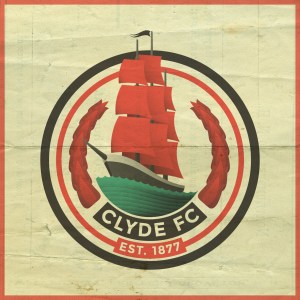
To celebrate their centenary in 1977, a version of the current Clyde badge came into regular use, though some version of it may have appeared as early as 1934. This badge features a ship in full sail encircled by a floral wreath. My redesign is an update of this badge. To commemorate their three Scottish Cup victories, I have included three sails for each of the ship’s three masts.

ClyFC badge-01

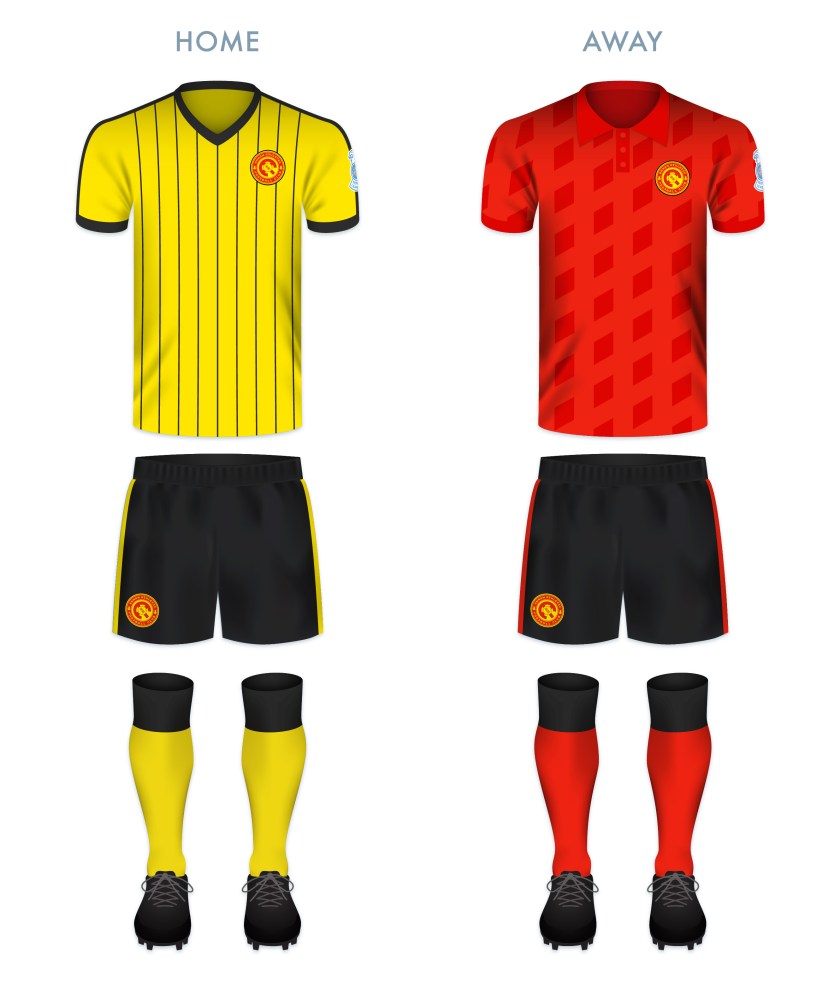
The redesigned home kit is inspired in part by the 2012/13 home kit. For the away kit, I decided to go with an all-red number (used as the third kit colour scheme as recently as the 2019/20 season), a reference to the left-wing political movement known as ‘Red Clydeside’, a major figure of which, James Maxton, served as an MP for the Bridgeton district for more than two decades.

ClyFC kit-01

ClyFC badge new-01

As ever, I am indebted to Dave at Historical Football Kits for some of the historical information used above.

23 May 201824 February 2020 E Tagged badge, brand, branding, Clyde FC, Clyde Football Club, Cumbernauld, East Kilbride, Europe, football, Glasgow, Hamilton, Ladbrokes League 1, Ladbrokes League One, logo, North Lanarkshire, rebrand, redesign, River Clyde, Scotland, Scottish Cup, Scottish League 1, Scottish League One, Scottish Professional Football League, South Lanarkshire, SPFL, SPFL League 1, SPFL League One, sport, UK, United Kingdom Leave a comment

ReBrand: Annan Athletic FC

graphic

AAFC badge new-01Annan Athletic Football Club was established as a junior side in 1942. Following the dissolution of the Dumfries and District Junior League in the early 1950s, Annan Athletic joined the Carlisle and District Football League.

In the 1977/78 season, Annan returned to Scottish football, competing in the South of Scotland Football League. During their spell in the SoSFL, Annan won the league on two occasions (1983/84 and 1986/87). By the 1987/88 season, Annan joined the East of Scotland Football League. They continued their non-professional success, winning the EoSFL four times (1989/90, 1999/2000, 2000/01 and 2006/07).

In 2008, the original Gretna FC folded, making way for the admission of another club into the Scottish Football League. Annan’s application was successful, beating out Cove Rangers, Spartans, Preston Athletic and Edinburgh City. Since joining the SFL, Annan have yet to gain promotion from the bottom tier, but showed promise in the 2015/16 Scottish Cup, advancing to the fifth round before being knocked out by Greenock Morton.

Annan first used a badge on their kits around 1978, and this original badge remains in use today. It features a torch being carried, within a shield, flanked by two thistles. Although Annan are known as ‘the Black and Golds’, the colours of the badge are based upon the colours of the coat of arms of the former royal burgh of Annan.

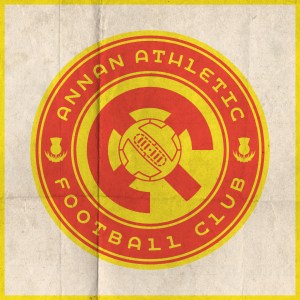
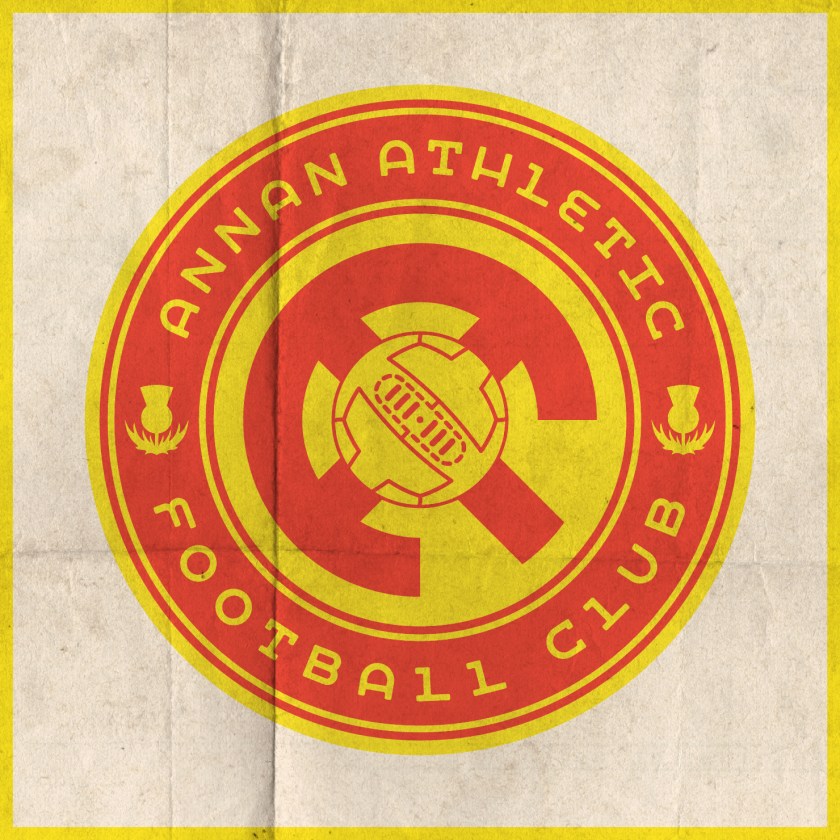
For my redesign, I opted to go the route of a round badge, with a monogram at its centre. The monogram consists of two ‘A’s, tilted at a 45° anti-clockwise angle so as to resemble the town of Annan’s coat of arms (which features a yellow shield bearing a red saltire). At a stretch, the monogram includes the full ‘AAFC’ initials. A t-panelled football is superimposed over the monogram. The club’s name and two thistles occupy the outer ring.

AAFC badge-01 2

AAFC monogram breakdown-01

Both of the redesigned kits take their colours from Annan’s traditional home and away kits. The home kit is inspired primarily by Annan’s handsome 1989/90 Umbro home kit.

AAFC kit-01

AAFC badge new-01

As ever, I am indebted to Dave at Historical Football Kits for some of the historical information used above.


19 May 201824 February 2020 E Tagged Annan, Annan Athletic, Annan Athletic FC, Annan Athletic Football Club, badge, Black and Golds, brand, crest, Dumfries and Galloway, Europe, football, Galabankies, Ladbrokes League 2, logo, monogram, rebrand, redesign, Scotland, Scottish League 2, Scottish League Two, Scottish Professional Football League, SPFL, SPFL League 2, SPFL League Two, sport, The Black and Golds, UK, United Kingdom Leave a comment

ReBrand: Stranraer FC

graphic

StrFC badge new-01Stranraer Football Club was established in 1870, making it the third-oldest club in Scotland, after Queen’s Park, (1867) and Kilmarnock (1869).
Due to Stranraer’s relatively remote location, fixtures in these early years were often played away from the town, in other parts of Wigtownshire, in Kirkcudbrightshire and even as far north as Ayrshire. Finally, in 1907, a permanent home was found in the town and Stair Park came to be. By the 1955/56 season, Stranraer began competing as full members of the Scottish Football League.

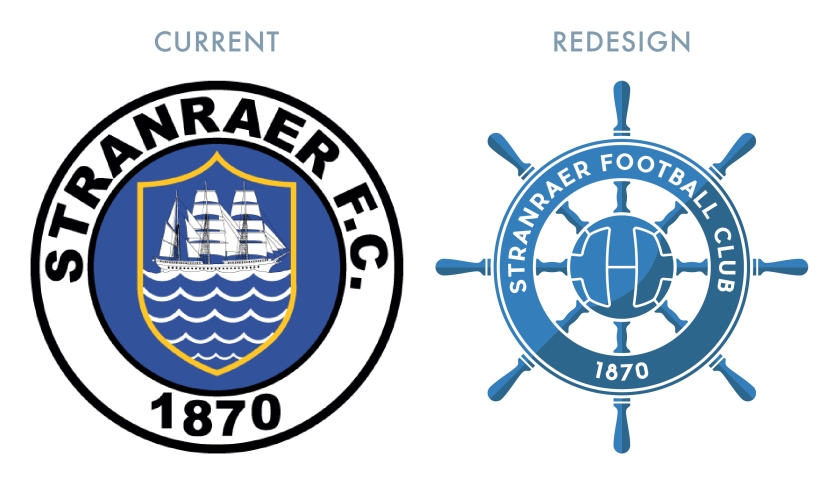
Stranraer first used a badge on their kit in the mid-1950s. This badge consisted of a red shield enclosing the club’s initials in white. This badge was used until 1961, when it was replaced with another red and white shield, this time, with the club’s initials above a ship at sea, the ship taken from the town’s coat of arms. Some variation of this badge remained until 1988, when a shield featuring only a ship at sea was enclosed by a ring with the club’s name and year of founding. The current badge in an updated version of this 1988 badge.

In redesigning Stranraer’s badge, I considered the two other clubs which feature a ship in full sail on their current badge: Greenock Morton (1874) and Clyde (1877). The ship on Clyde’s badge, from what I can tell, came into being in the mid-1930s. Morton’s badge did not feature a ship until 1978. Given the length of time that Clyde’s badge has been in use and given that I did not want my Stranraer badge redesign to be too similar to either the current badge or the Stranraer coat of arms, I decided to include a ship in my redesign of Clyde’s badge alone.

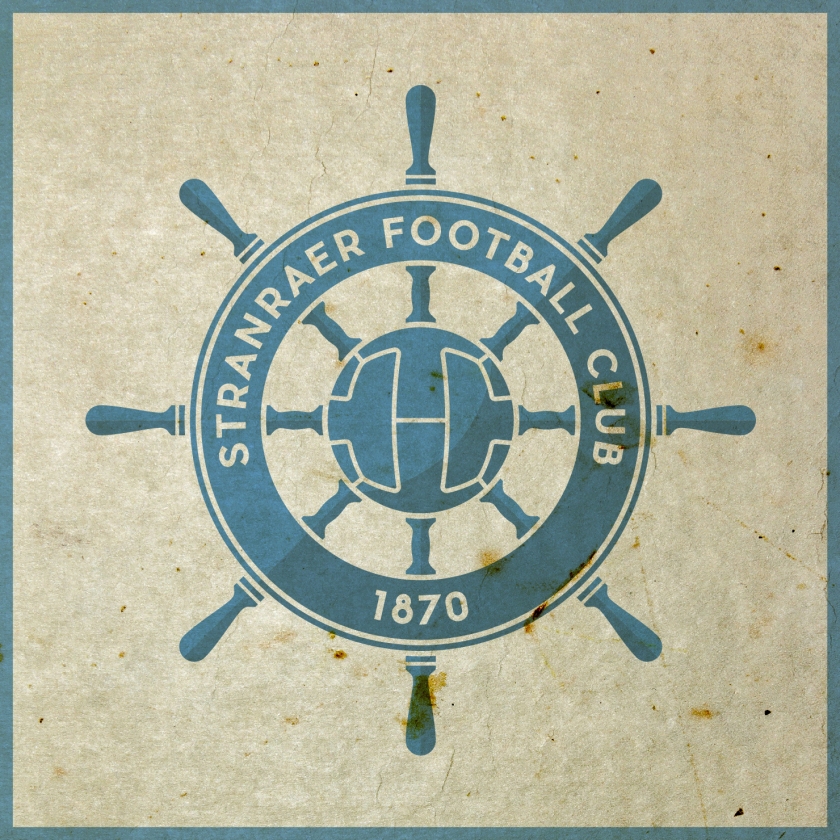
For Stranraer, I settled on a ship’s wheel, as it is distinct among all football badges, it is a timeless symbol (which ties both to the club’s age and to Stranraer’s significance as a port town) and it lends itself to a round badge. I have gone out on a limb so as to include the wheel’s handles beyond the bounds of the badge ring. A t-panelled football sits at the centre of the badge and I have added a second tone of blue to give the badge an extra bit of ‘pop’.

StrFC badge-01

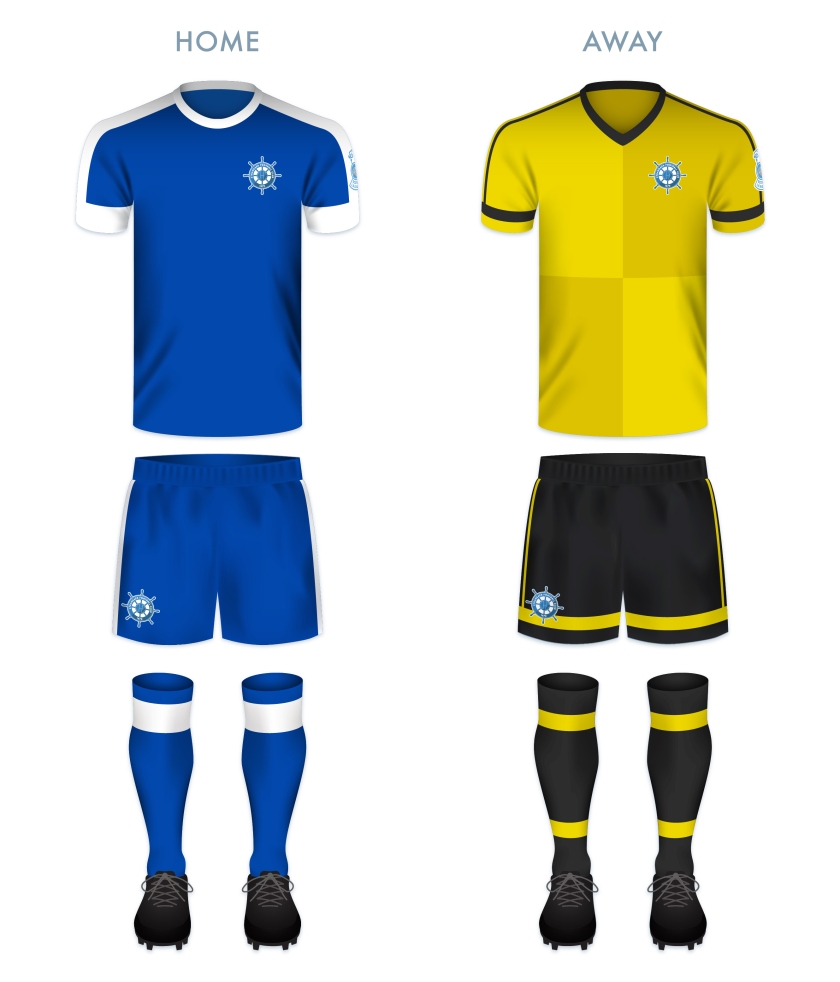
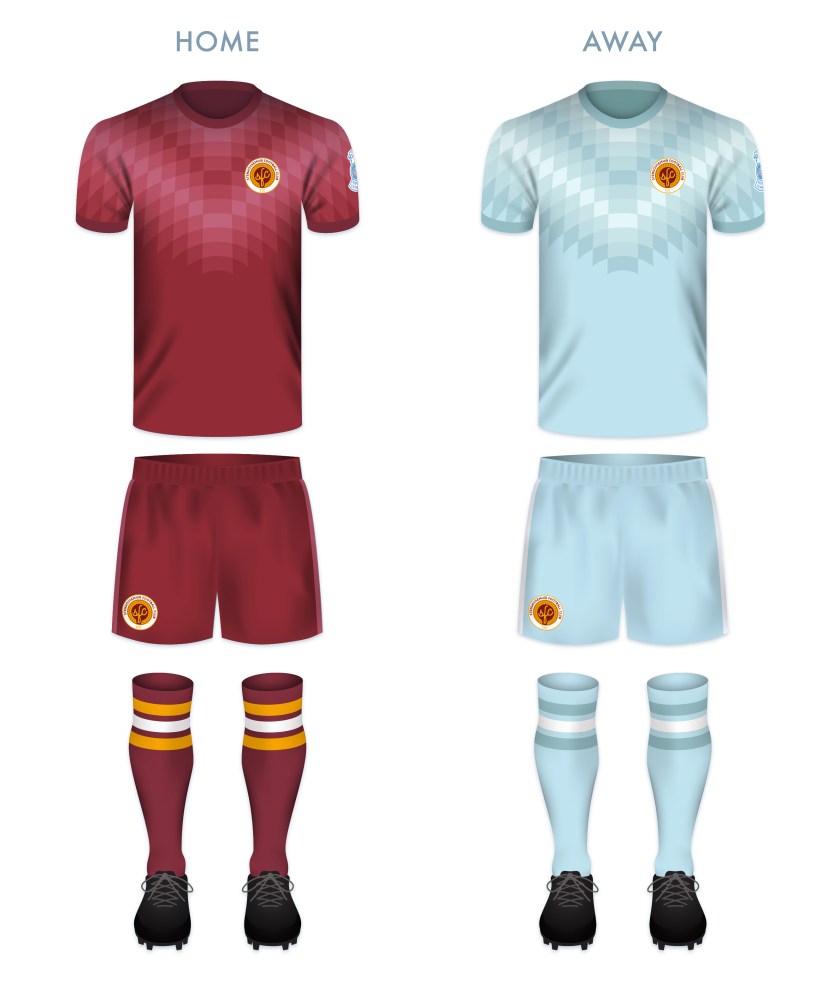
In redesigning the home kit, I first experimented with a wave pattern, but determined that, along with the ship’s wheel badge, this would be over the top. Instead, I have used the traditional Stranraer blue shirt with white accents, drawing particular inspiration from the very tasteful 2008/09 home shirt. The away shirt is bright yellow, with a mustard harlequin pattern, inspired in part by the 1996/97 home kit.

StrFC kit-01

StrFC badge new-01

As ever, I am indebted to Dave at Historical Football Kits for some of the historical information used above.

18 May 201816 June 2020 E Tagged badge, Blues, brand, crest, design, Dumfries and Galloway, Dumfriesshire, Europe, football, Inch, logo, rebrand, redesign, Scotland, Scottish League 2, Scottish League Two, Scottish Professional Football League, SPFL, SPFL League 2, SPFL League Two, sport, Stranraer, Stranraer FC, Stranraer Football Club, The Blues, UK, United Kingdom Leave a comment

ReBrand: Stenhousemuir FC

graphic

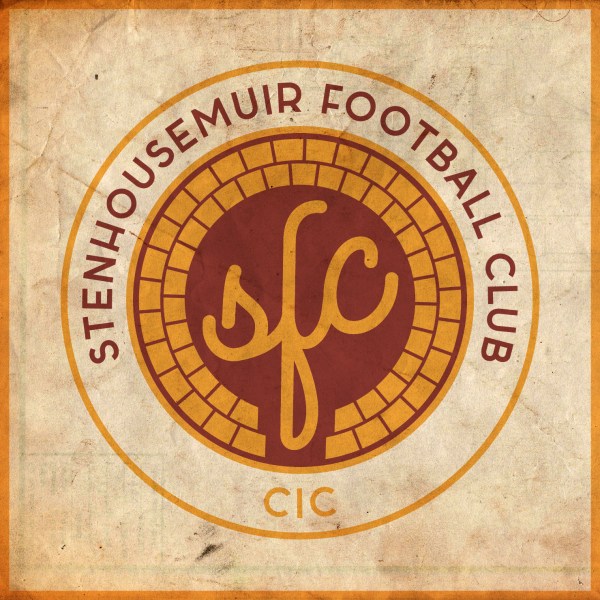
SteFC badge new-01.jpgStenhousemuir Football Club was established in 1884 after breaking away from local junior side Heather Rangers Football Club. By 1890, the club was playing their home matches at Ochilview Park, where they have played ever since. In 2009, Stenhousemuir became the first football club in Scotland to become a Community Interest Company (CIC).
The club’s shirt did not feature a badge until 1984, marking their centenary year. This first badge was an odd number, featuring the club’s sponsor, Hogan Sports (written as ‘Hogan’s Sports’ on the badge). From 1985 until 1991, Stenhousemuir’s shirts featured a stylised ‘SFC’ monogram. This was replaced by a heraldic badge, which did not find favour with the club’s supporters. The heraldic emblem was abandoned after two seasons, when a round badge, derived from the 1985 monogram, was introduced. The Stenhousemuir badge has been based on this 1993 design ever since.

For my redesign, I wanted to hold to the spirit of the quirky brown-and-amber 1993 badge. I decided that the badge could benefit from a local or historical reference, without diving into a full-on heraldic design. The town of Stenhousemuir comes from a particular stone structure (‘sten house’ = ‘stone house’). This round structure, referred to as ‘Arthur’s O’en’ (‘Arthur’s Oven’) was most likely a Roman temple and stood to the north of the River Carron. It was demolished in 1743, but not before some detailed illustrations of it were made. One particular illustration of the foundation of the temple served as my inspiration as I found that it suited a round badge. The entrance to the temple also serves as a handsome frame for the lowest terminus of the ‘F’ in my new monogram. My redesign featuring a new monogram and an illustration of the temple’s foundation is found below:

SteFC badge-01

The redesigned kits are based on traditional Stenhousemuir colours, with the home kit inspired primarily by the 2017/18 home kit and the away kit inspired primarily by 2003/04 away kit, with a wee touch of 1980s Adidas kits.

SteFC kit-01

SteFC badge new-01.jpg

As ever, I am indebted to Dave at Historical Football Kits for some of the historical information used above.

16 May 201824 February 2020 E Tagged badge, brand, CIC, Community Interest Company, crest, design, Europe, Falkirk, football, Heather Rangers, Heather Rangers FC, Heather Rangers Football Club, Heather Rangers Juniors, logo, rebrand, redesign, Scotland, Scottish League 2, Scottish League Two, Scottish Professional Football League, SPFL, SPFL League 2, SPFL League Two, sport, Stenhousemuir, Stenhousemuir FC, Stenhousemuir Football Club, Stenhousemuir Football Club Community Interest Company, Stenny, Stenny FC, The Warriors, UK, United Kingdom, Warriors Leave a comment

ReBrand: Raith Rovers FC

graphic

RRFC badge new-01Raith Rovers Football Club was established in 1883. The club draws its name, Raith, from a vague historical association with the region of Fife from Kirkcaldy (where the club is based) to Lochgelly.

Throughout their history, the Rovers have won the second tier on five occasions and have appeared in the Scottish Cup final once, losing 2-0 to Falkirk in 1912/13. The club reached the final of the 1948/49 Scottish League Cup, but experienced another 2-0 loss, this time to Rangers. The club would have to wait until 1994/95 League Cup final to receive their first and only major honour to date, defeating Celtic 6-5 on penalties after ending extra time 2-2.

The Rovers first used a badge on their kits during the 1912/13 season. This early badge included a lion rampant holding a belt buckle, the latter of which being derived from the Kirkcaldy coat of arms. A variation of this badge was used until the 1949/50 season, when the Scottish royal coat of arms, featuring a yellow shield with a red lion rampant, was used to mark the Rovers’ promotion to the Scottish top tier. The following season, the more traditional badge returned to the kit.

By the 1960s, crests became less popular in Scottish football in favour of calligraphic club initials. A new badge was used intermittently between 1976 and 1985, when another badge came into use. By 1998, the traditional badge was again reinstated and some variation of this badge has been used ever since.

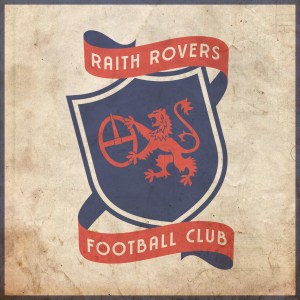
For years I assumed, having only seen the badge at a relative distance or in a low resolution, that the Rovers’ insignia was a depiction of a horse holding a globus cruciger (Latin for ‘cross-bearing orb’), a medieval symbol representing the authority of Christ or Christianity over the world. For my redesign, I sought to make both the lion rampant and the buckle more identifiable. I have also included the club’s name within a banner, which resembles the Scottish Football Association crest used until 2012. This is also a call back to the 1949/50 season, when the Rovers were promoted to the top tier and their badge was nearly identical to that used by the Scottish national team.

RRFC badge-01

The home kit is inspired by the Rovers’ home kits from 1950 to 1954, in particular, the kit worn during the 1953/54 season. The away kit is a hooped version of the Rovers’ traditional red away colour scheme.

RRFC kit-01

RRFC badge new-01

As ever, I am indebted to Dave at Historical Football Kits for some of the historical information used above.

16 May 201824 February 2020 E Tagged badge, brand, buckle, crest, design, Europe, Ferguson, Fife, football, Kirkcaldy, lion rampant, logo, Raith, Raith Rovers, Raith Rovers FC, Raith Rovers Football Club, rebrand, redesign, Rovers, RRFC, Scotland, Scottish League 1, Scottish League One, Scottish Professional Football League, SPFL, SPFL League 1, SPFL League One, sport, The Rovers, UK, United Kingdom 1 Comment

ReBrand: Montrose FC

graphic

MoFC badge new-01Established in 1879, Montrose Football Club were founding members of the Forfarshire Football Association in 1883. It would be another 40 years before Montrose would join the ranks of the Scottish Football League. Since that time, the club has been been hacking away in the lower leagues of Scottish football with little to show for it apart from local cup victories (they are ten-time winners of the Forfarshire Cup) and a handful of appearances in the later stages of the Scottish Cup and Scottish League Cup.

Despite a history of many disappointments, the 2017/18 season was strong for Montrose, with the club finishing at the top of the Scottish League Two table, thus gaining promotion to League One (Montrose’s first departure from the bottom tier since the 1995/96 season). This is all the more significant due to the fact that only a few seasons earlier, in 2014/15, Montrose narrowly avoided losing their place in the Scottish Professional Football League by defeating the Highland Football League champions, Brora Rangers in a play-off.

Except for different versions of the club’s initials, the current badge, introduced in 1990, is the only badge that Montrose has ever used. This features a rose (from the folk etymology of Montrose, ‘Mount of Roses’), a football, the club name and the date of the club’s founding.

I first attempted to redesign the Montrose badge in 2014. For this initial redesign, I drew inspiration from a badge that was used for only one season (1973/74), featuring an ‘M’ flanked by an ‘F’ and a ‘C’. In this initial redesign, the diagonal strokes on the ‘M’ meet well below the baseline. In addition to the very deep crotch on the ‘M’, I decided to add the rose and the date of the club’s founding to create a stronger sense of centrality. This initial redesign, on the left below, was published on 3 November 2014:

Montrose FC oldI was quite sold on my 2014 redesign, but I thought that I ought to challenge myself further in this round by tackling the badge from another angle. Using the same rose motif, I constructed a round badge, with the rose superimposed over a football. I was aiming for clean and basic with this design.
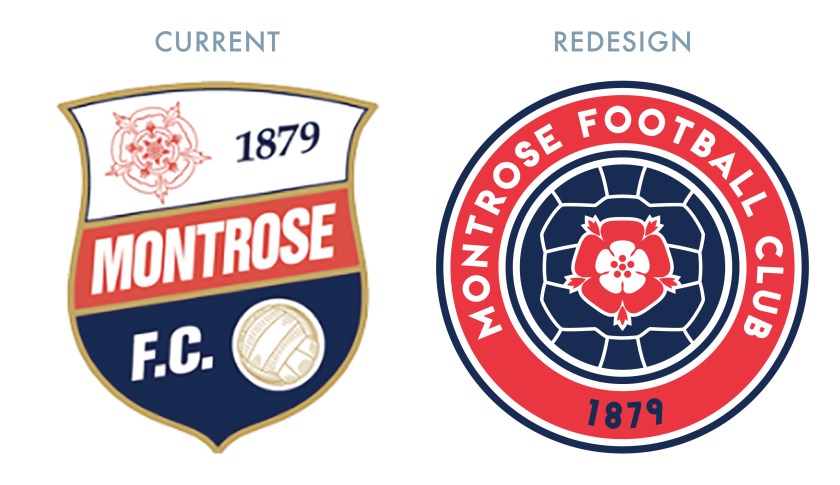
MoFC badge-01

The home kit is inspired by Montrose kits from 1959 to 1970. The away strip makes use of the colour scheme of the badge, dominated by red. The shorts for both kits feature only the central badge image of the rose superimposed over the football.

MoFC kit-01

MoFC badge new-01

As ever, I am indebted to Dave at Historical Football Kits for some of the historical information used above.

15 May 201824 February 2020 E Tagged Angus, badge, brand, branding, crest, Europe, football, Gable Endies, Ladbrokes League 1, Ladbrokes League One, logo, Montrose, Montrose FC, Montrose Football Club, rebrand, redesign, rose, Scotland, Scottish League 1, Scottish League One, Scottish Professional Football League, SPFL, SPFL League 1, SPFL League One, sport, The Gable Endies, UK, United Kingdom Leave a comment

ReBrand: Forfar Athletic FC

graphic

FAFC badge new-01Forfar Athletic Football Club was established when the now-defunct Angus Athletic Football Club (1883-1885) second team of the broke away from their mother club in 1885. This young team, dubbed ‘the Loons’ (East Angus Scots for ‘young men’) proved their meddle early on, defeating the established Dundonian club, Our Boys, 1-0 in their first match on 16 May 1885.

Since joining the Scottish Football League for the 1921/22 season, the Loons have competed in the professional game in Scotland, but have yet to reach the top tier. Their best Scottish League Cup and Scottish Cup performances came in the 1977/78 and 1981/82 seasons, respectively. In both competitions, the Loons reached the semi-finals, where they lost to Rangers on both occasions. The first was a 5-2 loss in the 1977/78 League Cup, which Rangers would go on to win. In the 1981/82 Scottish Cup, Forfar Athletic forced a replay against Rangers after a 0-0 draw. Unfortunately for the Loons, the replay resulted in a 3-1 loss and the club would go away empty-handed once again.

The Loons’ 1960/61 shirt featured a badge consisting of the four heraldic symbols of the former royal burgh of Forfar within a shield: a Scots fir tree, a bull’s head, a stag’s head and a depiction of the former Castle of Forfar with three towers. A round badge featuring these symbols without a shield came into regular use in 1980. Some version of this badge has been used ever since, with the current badge, in use since 2007, placing the heraldic symbols within a shield once again.

For my redesign, I considered working with the current badge, but decided that, as these symbols are so far removed from the people of Forfar (the castle being destroyed in 1313), I would go another route. This began with a sketch of a highly-stylised, round monogram. Eventually, I placed the monogram within a ring. The outer ring contains two jute plant flowers, a reference to the contribution of the jute industry to the growth of the town in the nineteenth and twentieth centuries. The textile theme is recalled once again by the knot that borders the badge.

FAFC badge-01

For the home strip, I went with the Loons’ classic light blue colour scheme. This particular rendering is inspired by the kits used between 1983 and 1986. The away strip is inspired by an odd move for the club. Between 1955 and 1967, Forfar Athletic departed from their traditional blues in favour of a green home strip. My design draws mostly from the kit used from August to December 1967, but with vertical stripes composed of a diamond pattern.

FAFC kit-01

FAFC badge new-01

Thank you to Forfar Athletic supporter David Carnegie and to Dave at Historical Football Kits for some of the historical information used above.

14 May 201824 February 2020 E Tagged Angus, Angus Athletic, Angus Athletic FC, Angus Athletic Football Club, badge, brand, branding, Europe, football, Forfar, Forfar Athletic, Forfar Athletic FC, Forfar Athletic Football Club, Forfarshire, jute, Ladbrokes League 1, Ladbrokes League One, logo, Loons, monogram, Our Boys, Our Boys FC, Our Boys Football Club, rebrand, redesign, Scotland, Scottish League 1, Scottish League One, Scottish Professional Football League, Sky Blues, SPFL, SPFL League 1, SPFL League One, sport, texture, The Loons, The Sky Blues, UK, United Kingdom Leave a comment

Posts navigation

← Previous
Next →
Widgets
Create a website or blog at WordPress.com
Privacy & Cookies: This site uses cookies. By continuing to use this website, you agree to their use.
To find out more, including how to control cookies, see here: Cookie Policy
  • Subscribe Subscribed
    • ellliottt
    • Join 53 other subscribers
    • Already have a WordPress.com account? Log in now.
    • ellliottt
    • Subscribe Subscribed
    • Sign up
    • Log in
    • Report this content
    • View site in Reader
    • Manage subscriptions
    • Collapse this bar
 

Loading Comments...