
 The Midlothian town of Bonnyrigg was first home to a club called Bonnyrigg Swifts, who were established in 1874. The Swifts gained the nickname ‘the Rose’ and in 1881, a new club, Bonnyrigg Rose Athletic Football Club, was born of the Swifts. For the vast majority of their history, the Rose competed as a junior side, having won the Scottish Junior Cup on two occasions: 1966 and 1978.
In the twentieth century, the Rose joined the Scottish Junior Football East Region Super League and were crowned league champions on four occasions (2008/09, 2011/12, 2015/16 and 2017/18), making them the most successful side in the league’s history. With each Super League championship, the Rose qualified for the first preliminary round of the Scottish Cup. Their most successful outing took place in the 2016/17 competition. Having defeated Glasgow University and Burntisland Shipyard (the latter result of 14-0 being the competitions largest margin of victory since 1984, when Stirling Albion dealt Selkirk a 20-0 dismantling), the Rose proceded to the first round proper of the Scottish Cup. There, they defeated Highland League side Turriff United 4-1 in a replay. In the second round, the Rose faced and defeated another Highland League outfit, Cove Rangers.
By the third round, the Rose and Beith were the only junior sides remaining in the competition. There, they issued a shock defeat against SPFL side Dumbarton in a replay at Dumbarton’s home ground. The rose proceeded to the fourth round as the only remaining junior side, though their draw would prove too great a challenge. Playing at Hearts‘ home ground of Tynecastle, the Rose lost 1-8 against cup-holders Hibernian in January 2017 and exited the tournament.
After their 2017/18 season, the Rose joined the East of Scotland Football League and in their inaugural season, won their conference (B) and qualified for the league’s championship playoff. They competed against other conference winners, Penicuik Athletic (Conference A winners) and Broxburn Athletic (Conference C winners) in order to gain the prize of promotion to the Lowland Football League. Ultimately, the Rose defeated both of their opponents and on 14 June 2019, Bonnyrigg Rose gained admittance into the Scottish Football Association.
The Rose went from strength to strength in the Lowland League, finishing second-top in their inaugural season and third in 2020/21. The 2021/22 season proved to be Bonnyrigg’s finest, finishing with 28 wins, three draws and three losses, enough to secure their place as Lowland League champions and gaining a spot against Highland League champions Fraserburgh in the first round of the SPFL League Two play-off. The Rose prevailed 3-2 on aggregate, setting them up for a two-leg play-off against League Two bottom-dwellers, Cowdenbeath. Bonnyrigg defeated Cowdenbeath 4-0 over two legs and entered the SPFL for the 2022/23 season.
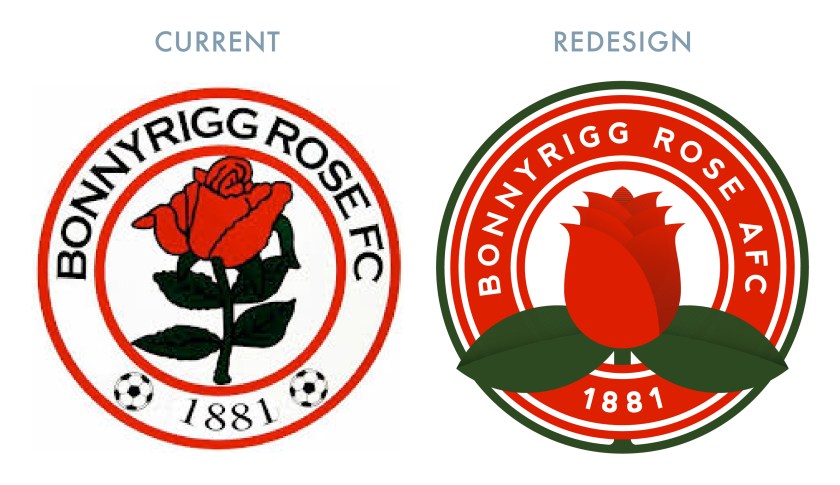
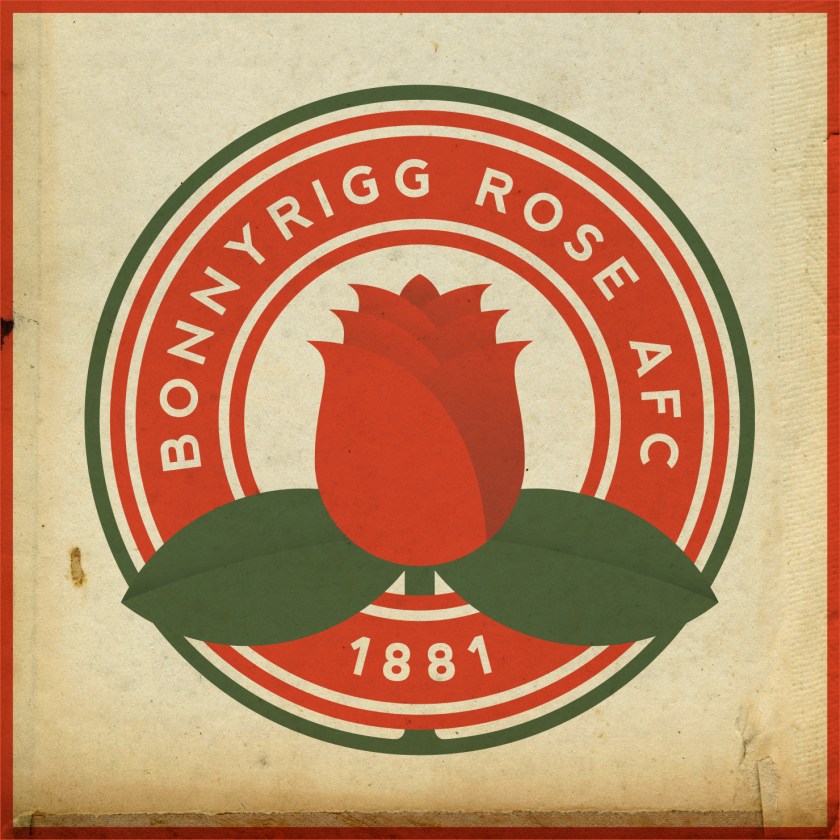
I’m going to come out and say it – I don’t like the current Bonnyrigg Rose badge. I find the club’s name to crammed together (it doesn’t even reflect the club’s actual name: Bonnyrigg Rose Athletic Football Club). Additionally, the typeface differs from that used in the club’s year of foundation. I also find the other features (the rose and the footballs) jarring. But this is the badge of a junior side and I’ve seen worse. Still, the Rose have climbed the ladder in phenomenal fashion and are now part of the Lowland League. Therefore, a redesign is in order. My design is simple and clean, incorporating a stylised (and more symmetrical) rose and opting to remove the footballs.
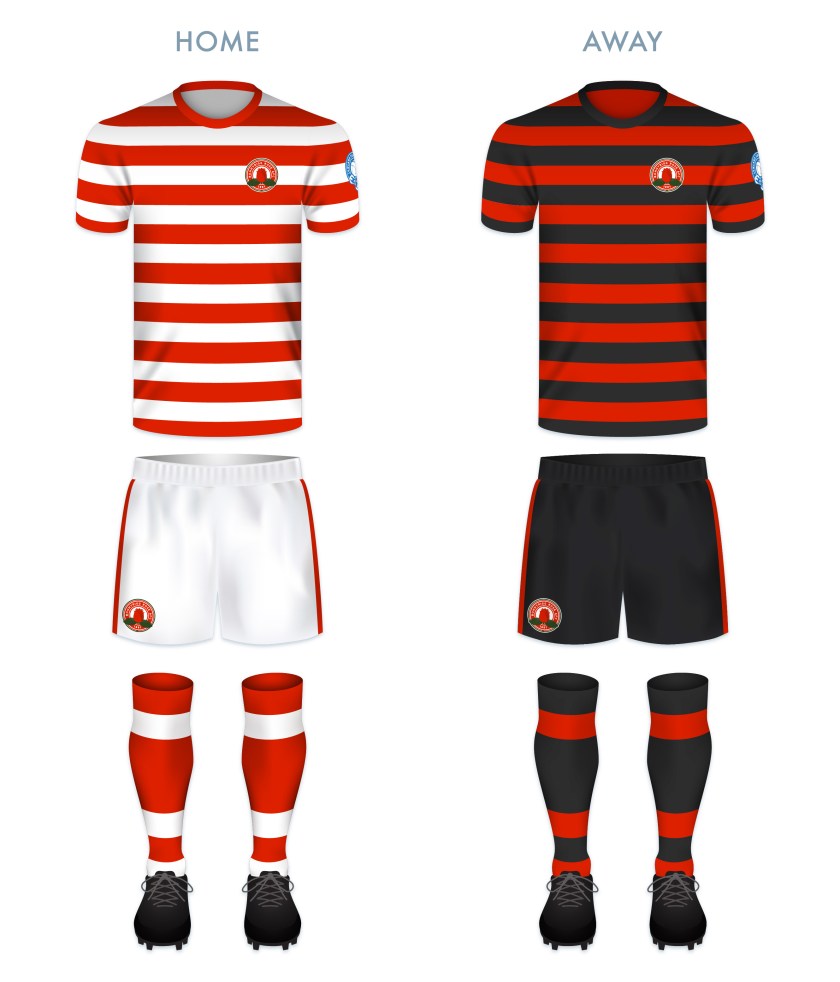
Bonnyrigg Rose’s home kits have long featured red and white hoops. For these kits, I have decided to borrow from the schemes for both the home and away kits of the 2018/19 season.
 Cove Rangers Football Club was established in 1922. The club takes its name from Cove Bay, located in the southeastern corner of the city of Aberdeen, in which they play.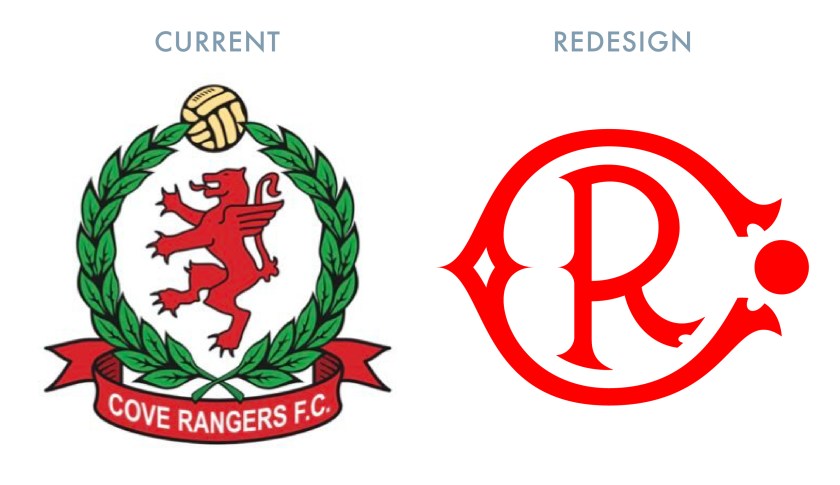


 I first began redesigning Scottish football badges in 2013 as a personal challenge. Eventually, I lost a bit of steam, but have found myself reembarking on the endeavour as of late. In 2018, I set myself the task of tweaking or completely redesigning my initial rebrandings, particularly those which I have found uninspiring or too similar to current badges. I have also expanded beyond my original redesigns (the 2013/14 top tier and a smattering of lower division clubs) to include the

 Stirling Albion Football Club was established in 1945. The club’s formation was tied closely to the end of the Second World War and the dissolution of an earlier Stirling-based club, King’s Park FC (1875). King’s Park were members of the Scottish Football League from 1931 until 1939. In 1940, their home ground, Forthbank Park, was bombed by the Luftwaffe and King’s Park never played again.


 Peterhead Football Club was established in 1891 by a number of local football enthusiasts. The passion of this young club caught the attention of the town’s Feuars Managers and a plot of land was gifted to the club within Peterhead’s Raemoss Park. Recreation Park, as it this original home ground was called, opened that same year. Although the stage was set for competition, Peterhead would have to wait until their admittance into the small Aberdeenshire Football Association (consisting of only six sides) in 1900 before playing competitive football.
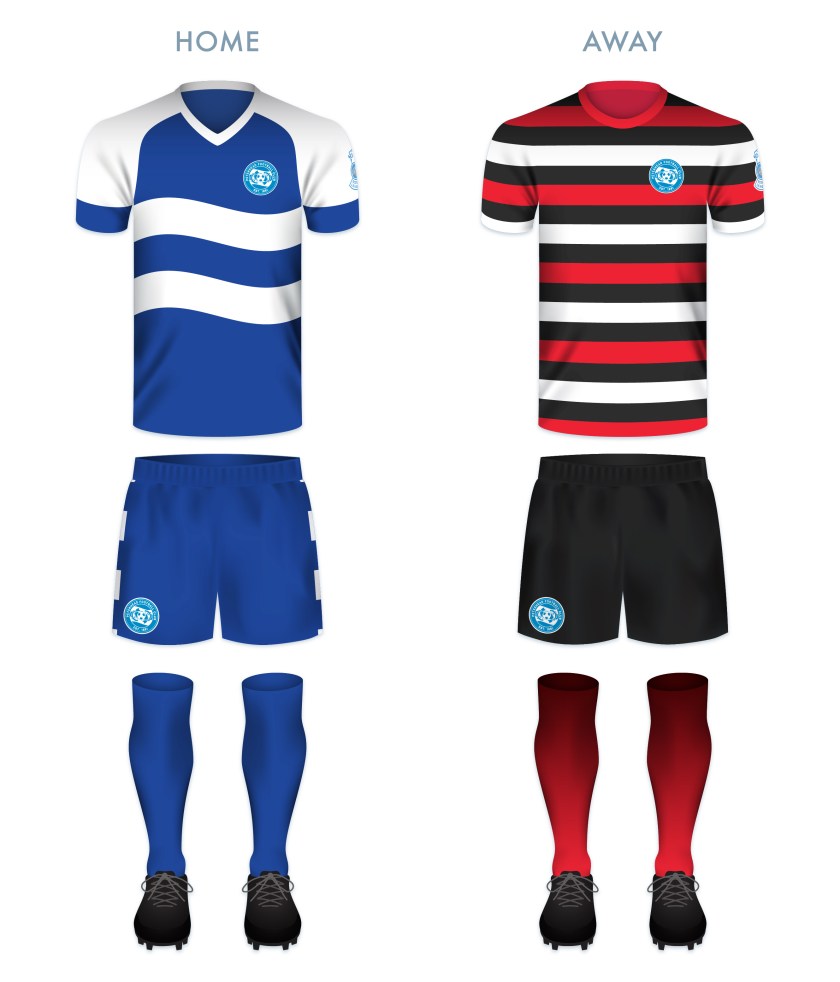

 Elgin City Football Club was established when two Elgin-based clubs, Rovers FC (1887) and Vale of Lossie FC (1888) united in 1893. For more than a century, the club competed in the
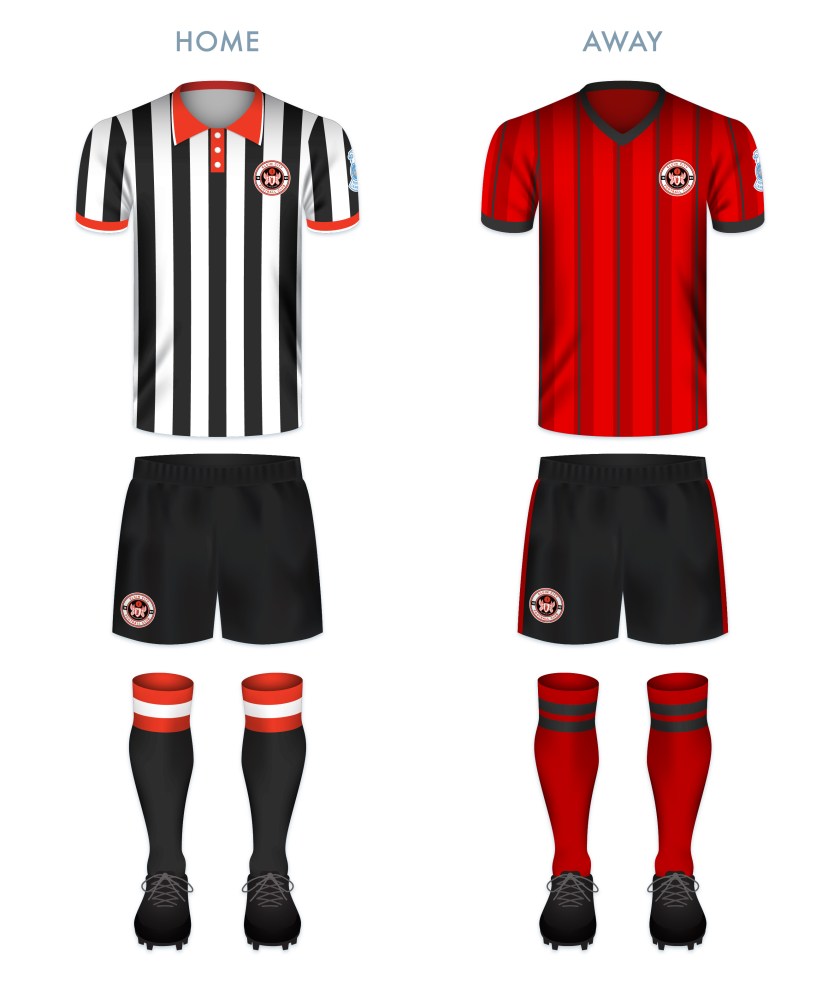
 Edinburgh City Football Club was first formed in 1928 as an amateur side, akin to Queen’s Park. Although the club joined the Scottish Football League in 1931, they struggled throughout the fifteen subsequent seasons and reverted to junior status in 1946. By 1955, the lease at their playing ground (City Park) expired and the football club folded, continuing only as a social club.
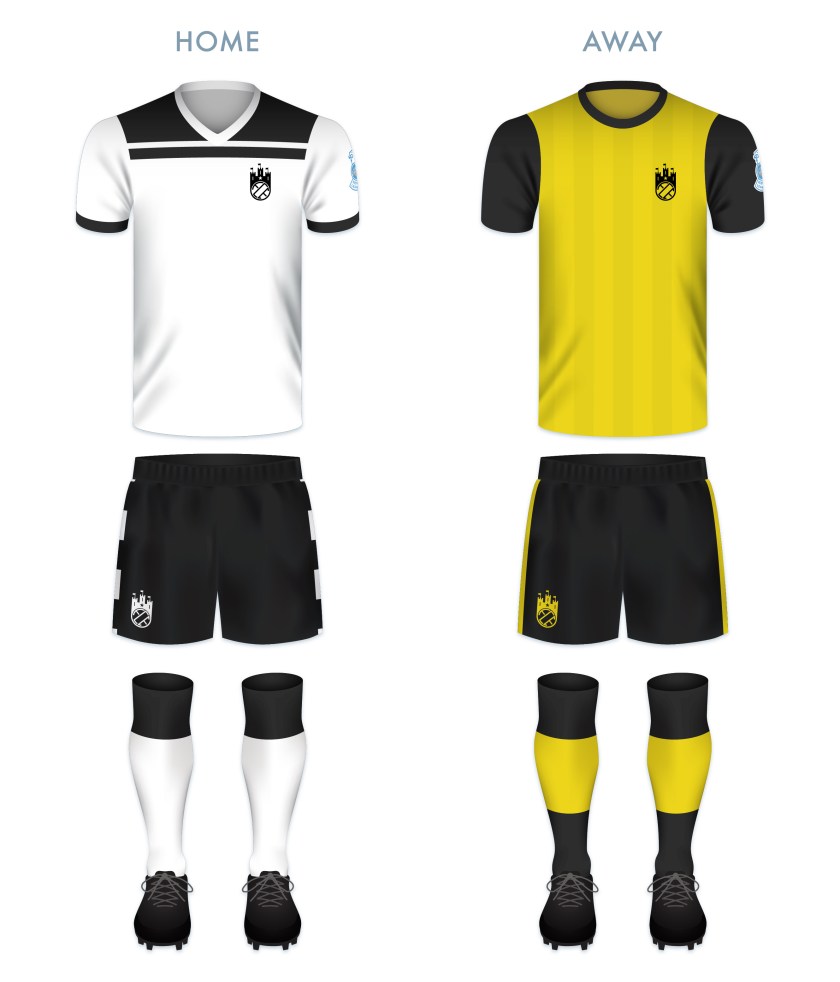

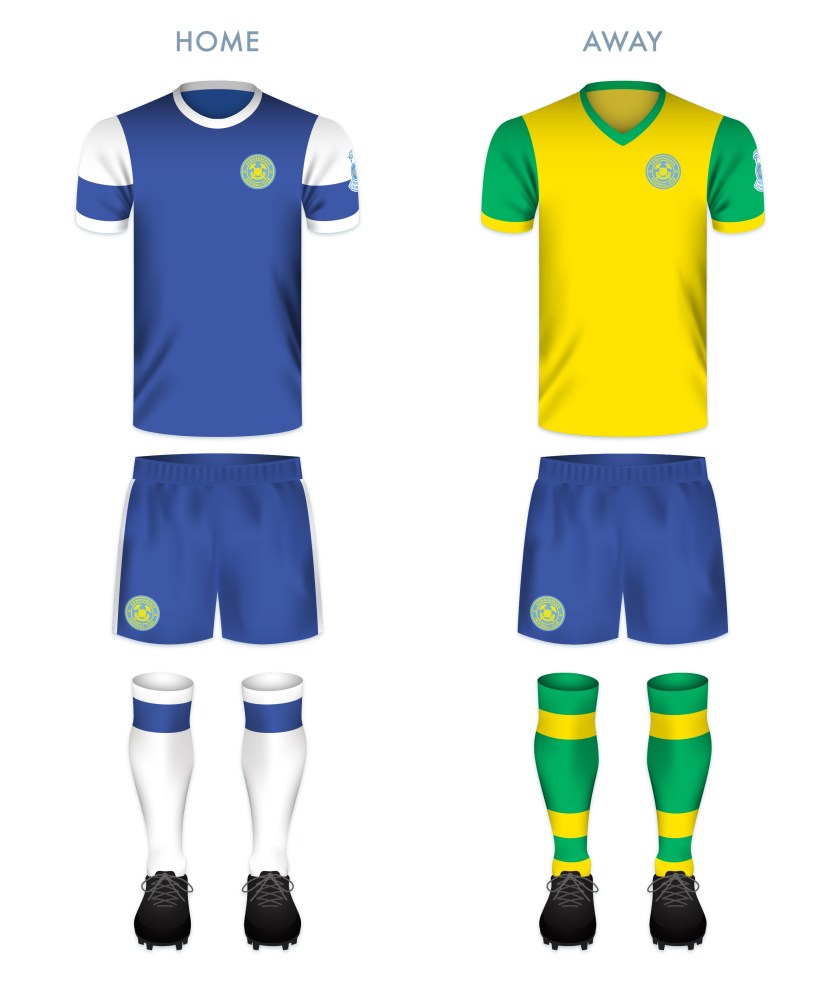
 The exact year that Cowdenbeath Football Club was established is unclear. The current club had its genesis in the union of two local clubs (Cowdenbeath Rangers and Cowdenbeath Thistle), which took place in 1881. It has been suggested by the club’s historian, David Allan, that the club retained the name ‘Cowdenbeath Rangers’ until 1882, when the club merged with a Raith Rovers FC (not to be confused with the current

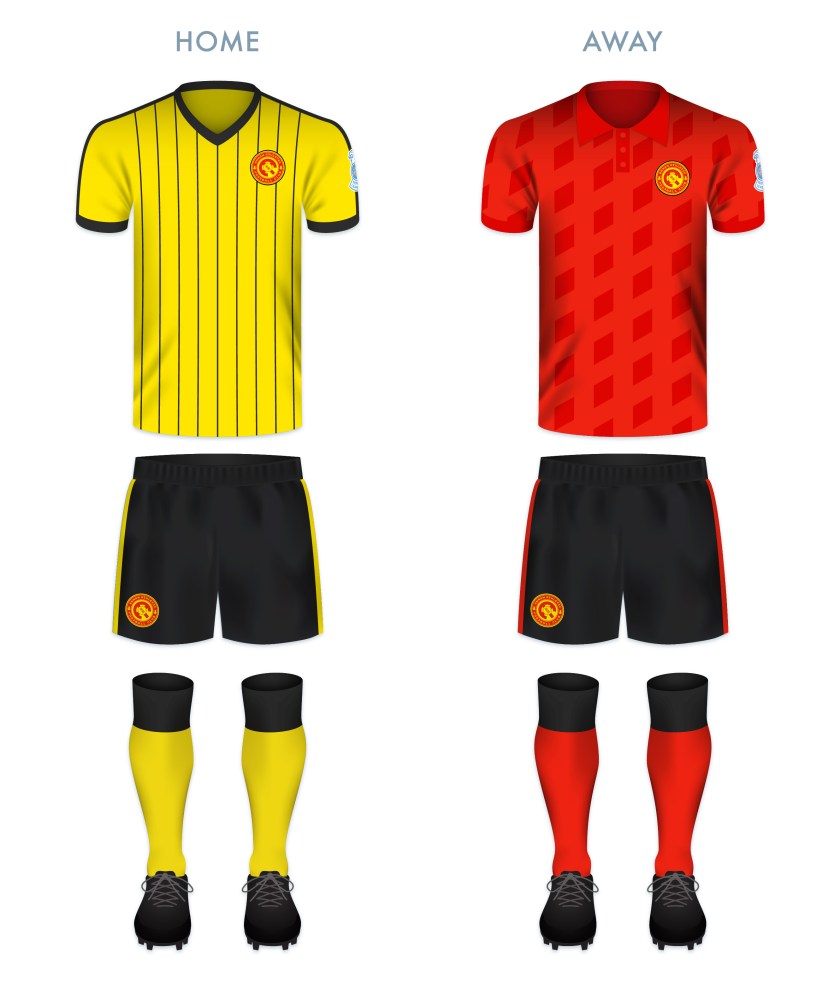
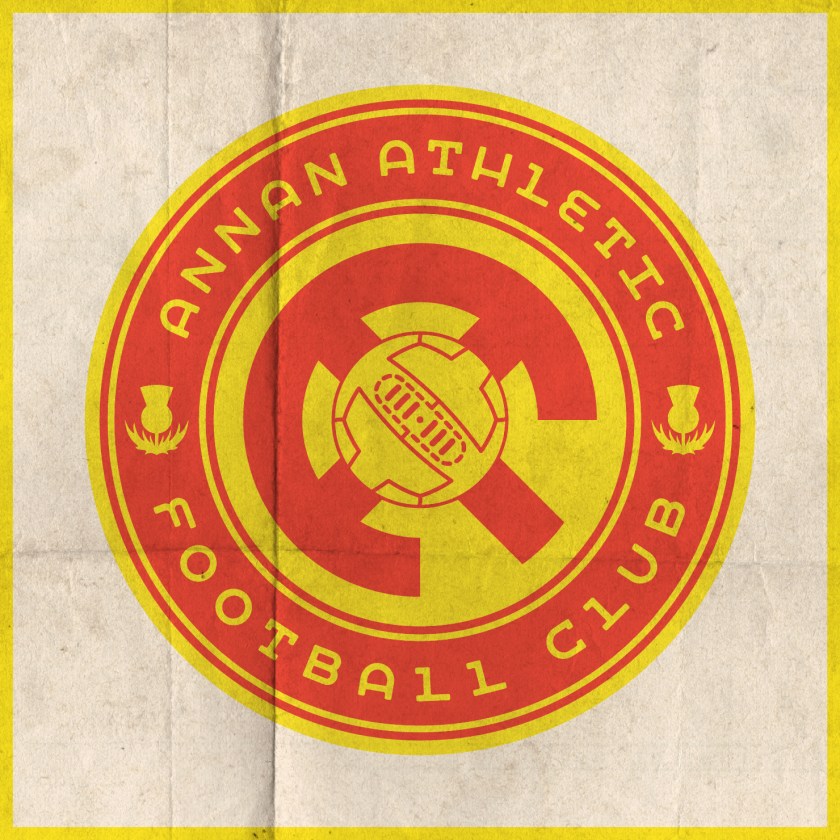
 Annan Athletic Football Club was established as a junior side in 1942. Following the dissolution of the Dumfries and District Junior League in the early 1950s, Annan Athletic joined the Carlisle and District Football League.

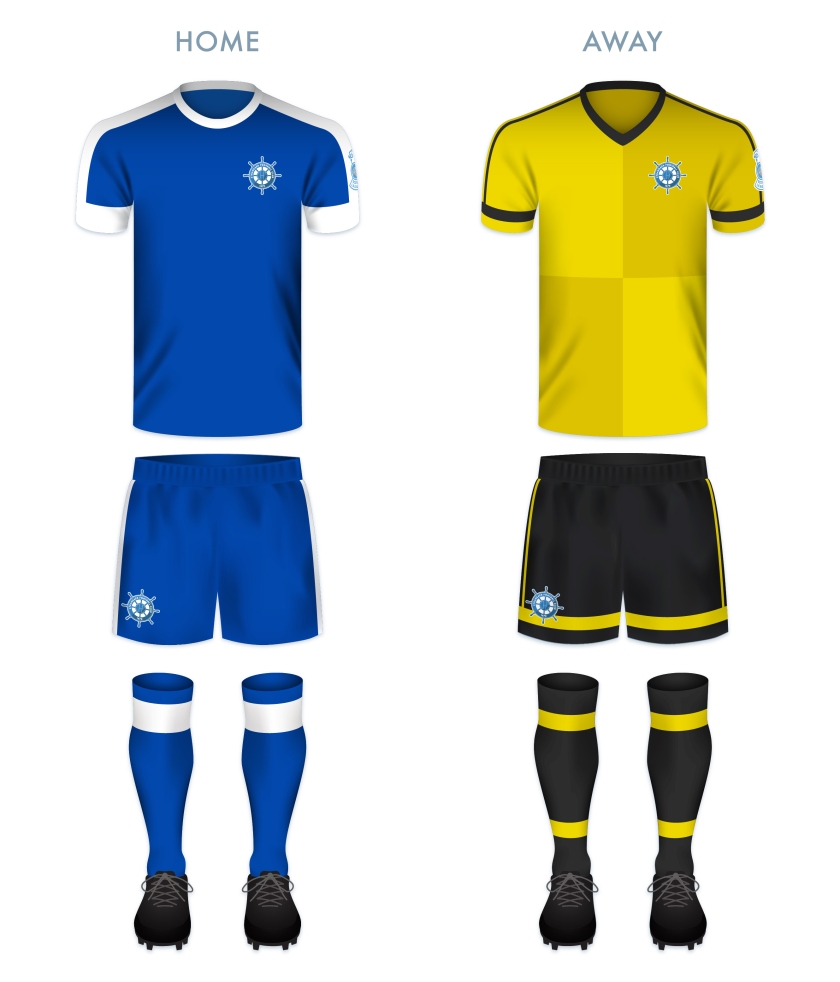
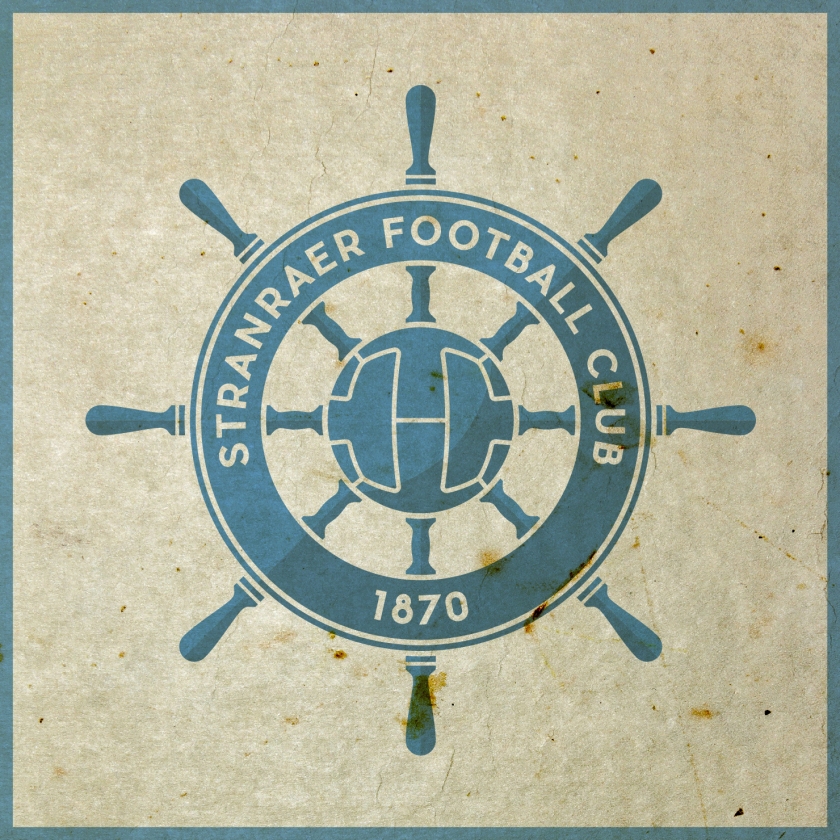
 Stranraer Football Club was established in 1870, making it the third-oldest club in Scotland, after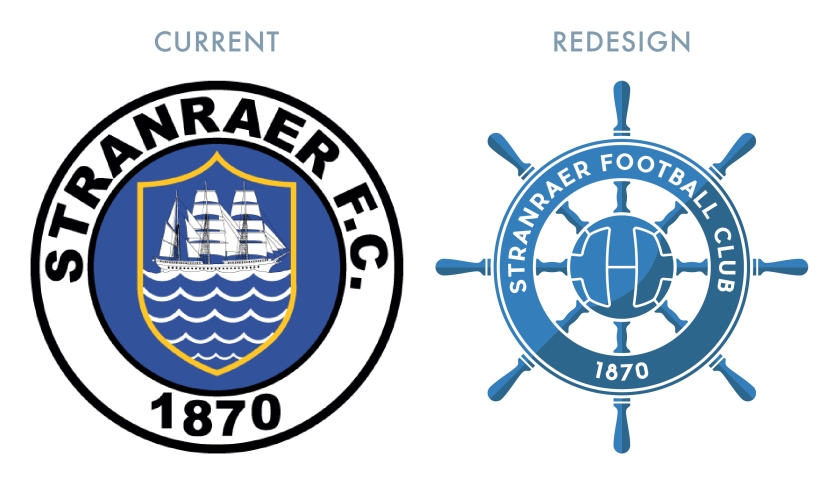
 ellliottt