
 Cove Rangers Football Club was established in 1922. The club takes its name from Cove Bay, located in the southeastern corner of the city of Aberdeen, in which they play.
In 1947, the club became a founding member of the Aberdeen Amateur Football Association. That season, Cove Rangers won the first of their 11 amateur championships. In 1948, they began to play at Allen Park. Among them, their highlight came in the 1964/65 season, when the club went unbeaten in the league.
Cove Rangers competed as amateurs until 1985, when they became a junior side. The following season, they became a senior side and joined the Highland Football League. By the 1990s, Cove Rangers began to rack up local silverware and in 2001, they won the first of their six Highland League championships. In 2016, in order to comply with SPFL regulations, the club relocated from Allen Park to their new Balmoral Stadium ground.
The club continued their dominance of the Highland League, finishing at the top of the table over two consecutive seasons between 2017 and 2019. After being crowned league champions at the end of the 2017/18 season, Cove Rangers secured an SPFL promotion playoff by defeating the Lowland League champions Spartans. Ultimately, Cove Rangers lost 3-2 to Cowdenbeath over two legs to remain in the Highland League. The club remained competitive and secured another SPFL promotion playoff the following season with a 5-1 aggregate victory over Lowland League champions East Kilbride over two legs. This time, Cove Rangers faced Berwick Rangers. The Aberdeen side dominated Berwick, winning 0-7 over two legs and gaining promotion into the bottom tier of the SPFL for the 2019/20 season.
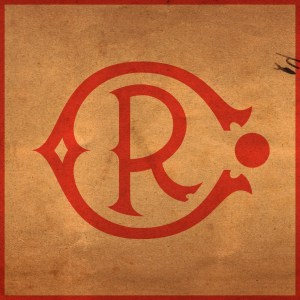
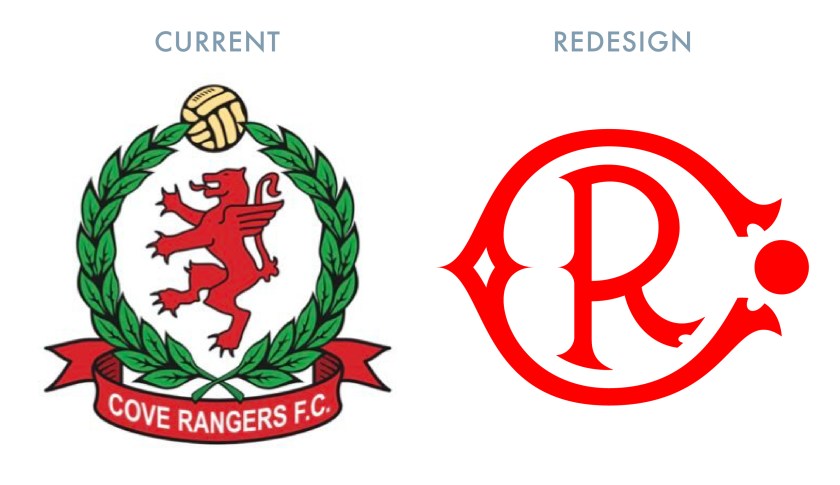
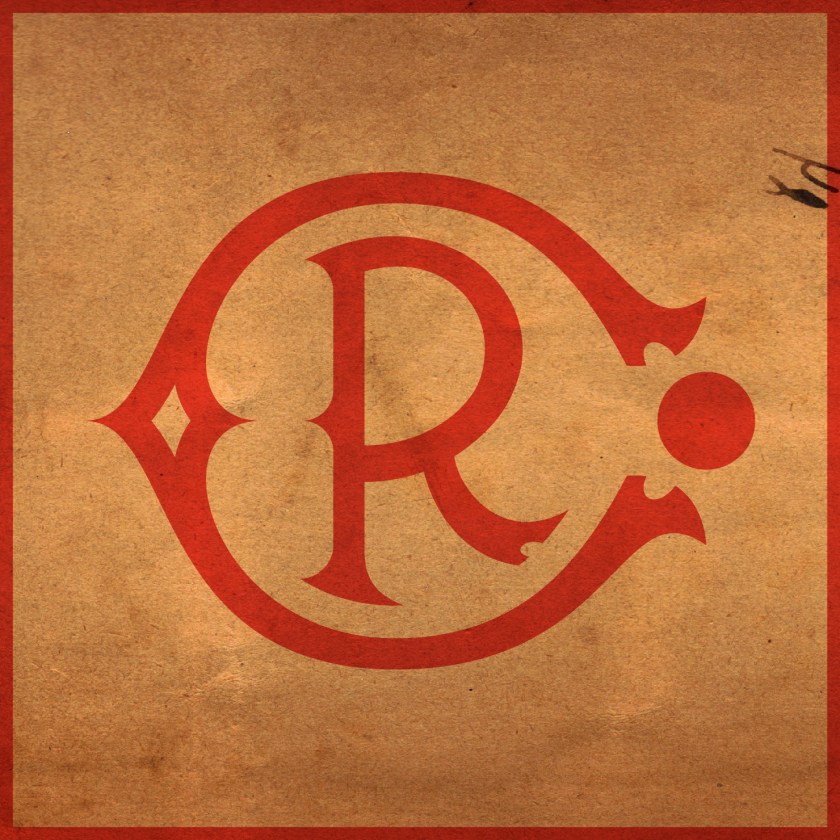
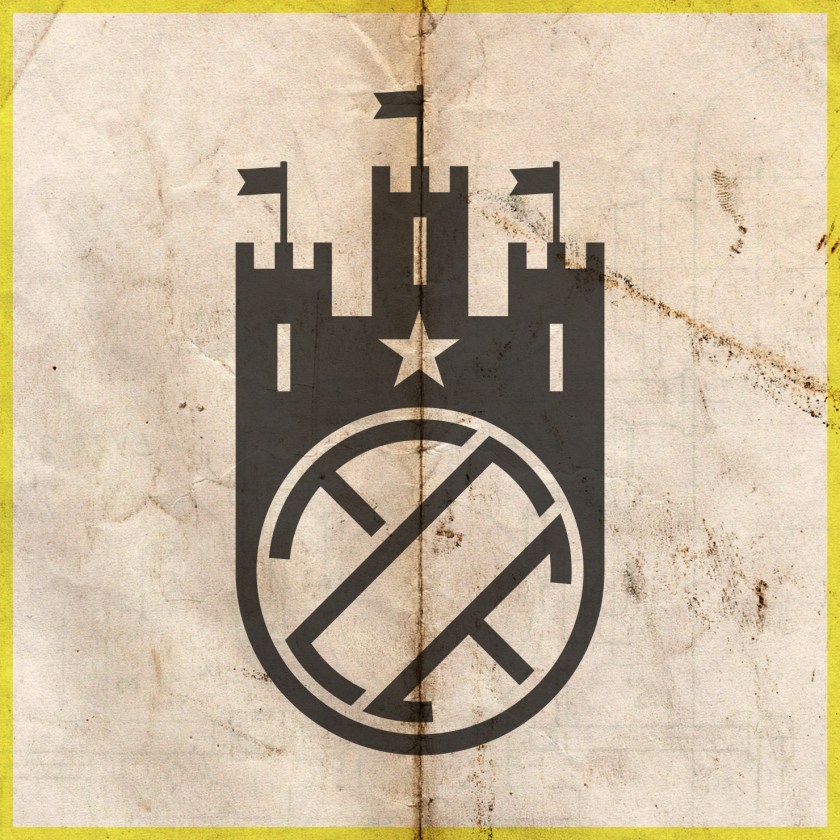
In redesigning the Cove Rangers badge, I wanted to call back to the early twentieth century. I was unconvinced by the olive branches encircling a griffin rampant and decided on a stylised monogram. After first illustrating the ‘C’, I realised that the ends of the legs resembled boots and decided to place a circle, representing a football, between them.
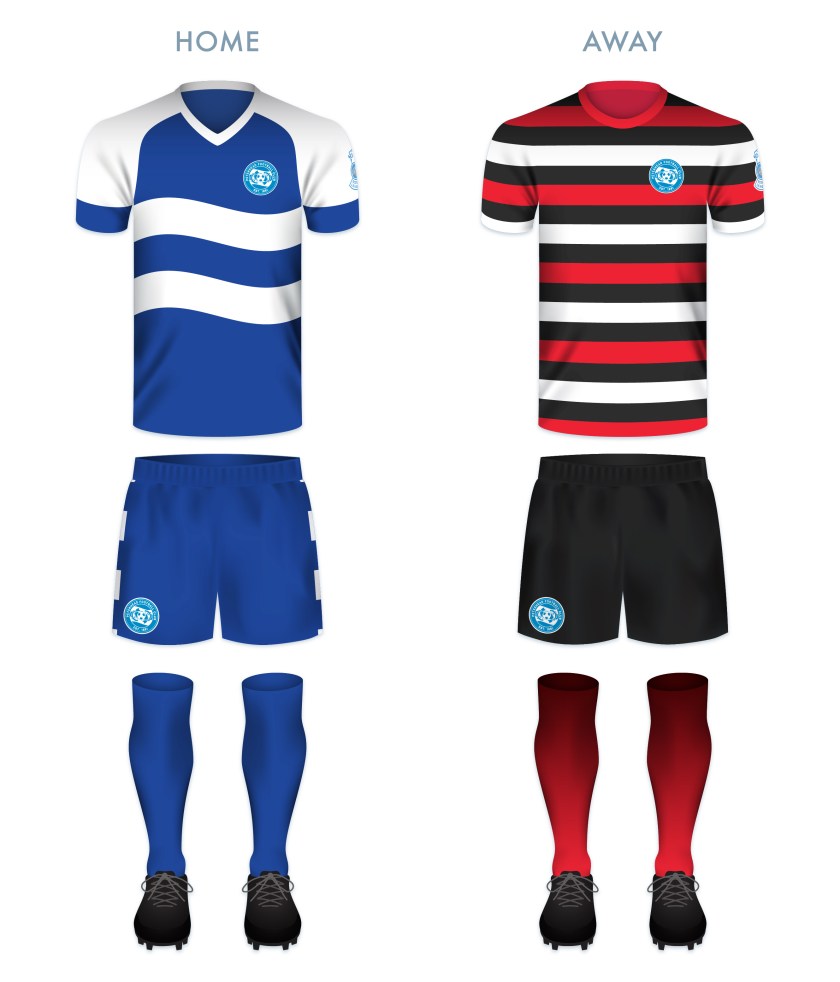
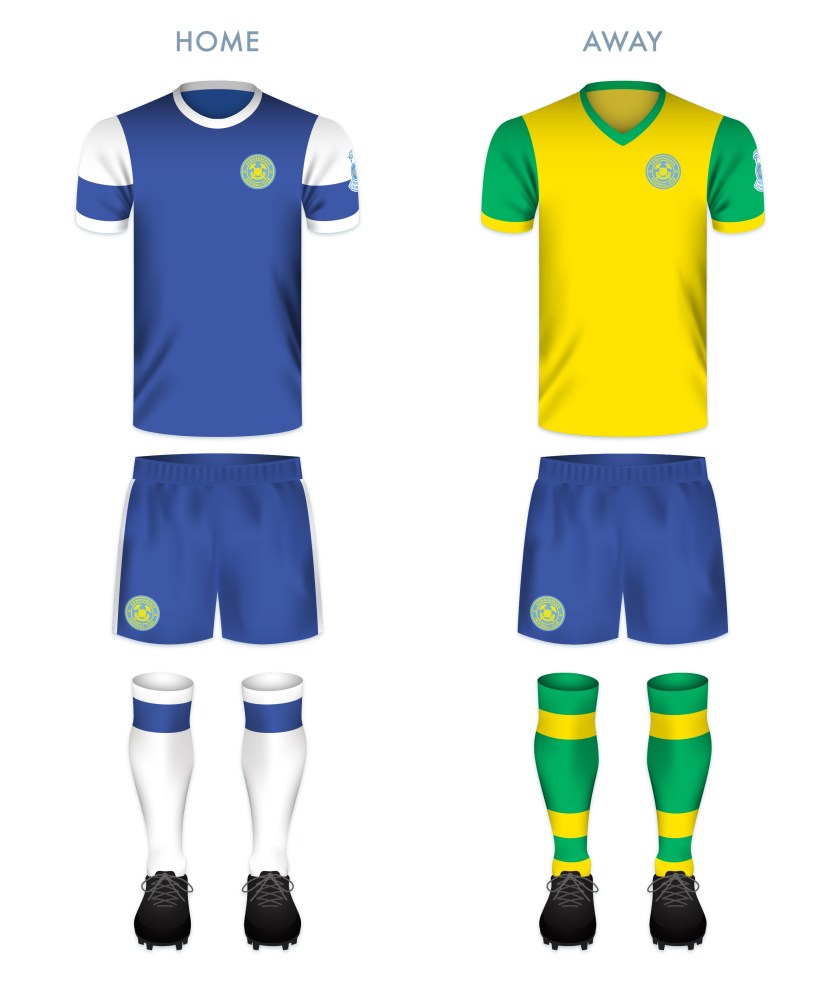
For the home kit, I was inspired by the Cove home kit from the 1982/83 season. The layout of the away kit is also inspired by a Cove home kit from the 1980s – that used in the 1986/87 season.

 I first began redesigning Scottish football badges in 2013 as a personal challenge. Eventually, I lost a bit of steam, but have found myself reembarking on the endeavour as of late. In 2018, I set myself the task of tweaking or completely redesigning my initial rebrandings, particularly those which I have found uninspiring or too similar to current badges. I have also expanded beyond my original redesigns (the 2013/14 top tier and a smattering of lower division clubs) to include the


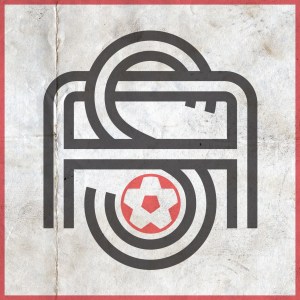 Stirling Albion Football Club was established in 1945. The club’s formation was tied closely to the end of the Second World War and the dissolution of an earlier Stirling-based club, King’s Park FC (1875). King’s Park were members of the Scottish Football League from 1931 until 1939. In 1940, their home ground, Forthbank Park, was bombed by the Luftwaffe and King’s Park never played again.


 Queen’s Park Football Club was established in 1867, making it the oldest football club in Scotland. It can be argued that no single club has had such an influence on the game of football in Britain—and in turn, the world—than Queen’s Park. They invented the passing game (as opposed to the tactic of a ‘rolling-maul’ like that used in rugby, the primary tactic employed by all other football clubs of this early era), as well as the crossbar on goals, the half-time interval and free kicks.


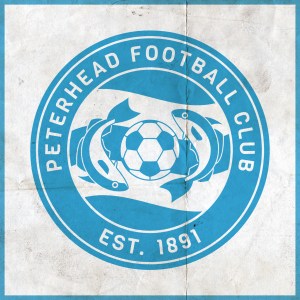 Peterhead Football Club was established in 1891 by a number of local football enthusiasts. The passion of this young club caught the attention of the town’s Feuars Managers and a plot of land was gifted to the club within Peterhead’s Raemoss Park. Recreation Park, as it this original home ground was called, opened that same year. Although the stage was set for competition, Peterhead would have to wait until their admittance into the small Aberdeenshire Football Association (consisting of only six sides) in 1900 before playing competitive football.

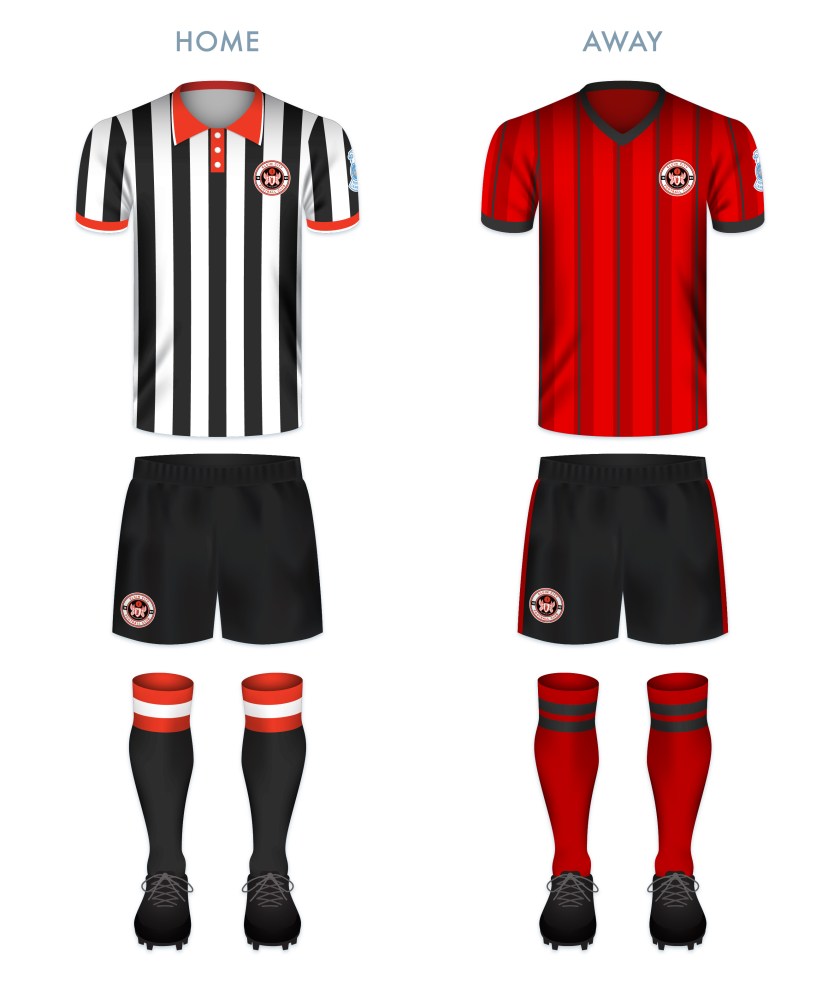
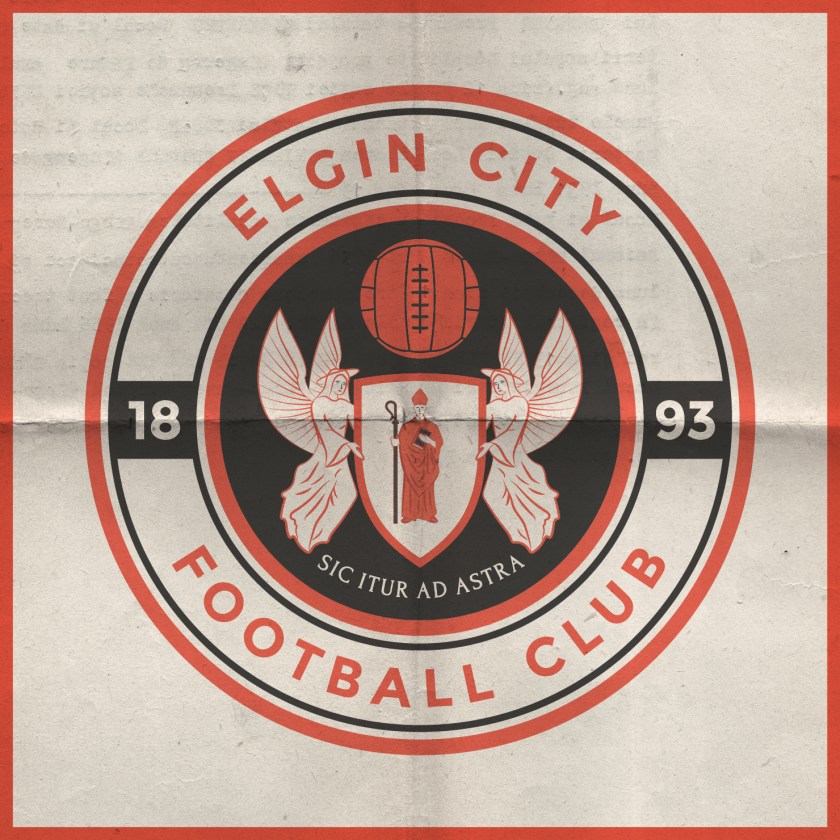
 Elgin City Football Club was established when two Elgin-based clubs, Rovers FC (1887) and Vale of Lossie FC (1888) united in 1893. For more than a century, the club competed in the
 Edinburgh City Football Club was first formed in 1928 as an amateur side, akin to Queen’s Park. Although the club joined the Scottish Football League in 1931, they struggled throughout the fifteen subsequent seasons and reverted to junior status in 1946. By 1955, the lease at their playing ground (City Park) expired and the football club folded, continuing only as a social club.
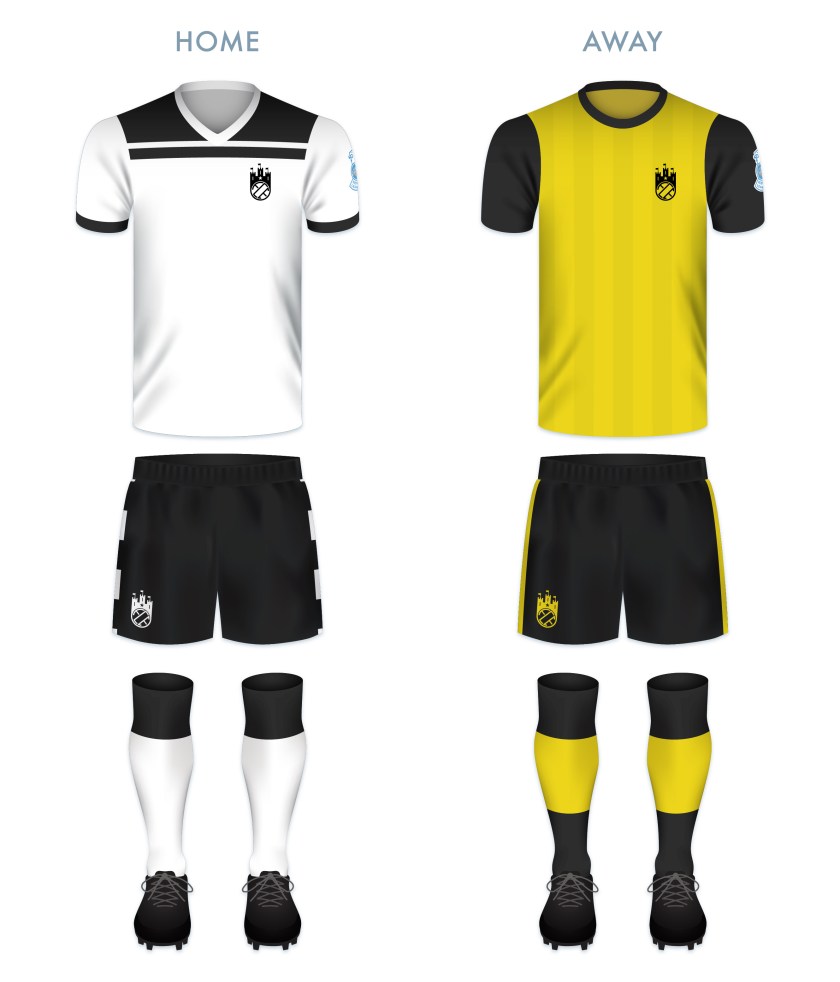
 The exact year that Cowdenbeath Football Club was established is unclear. The current club had its genesis in the union of two local clubs (Cowdenbeath Rangers and Cowdenbeath Thistle), which took place in 1881. It has been suggested by the club’s historian, David Allan, that the club retained the name ‘Cowdenbeath Rangers’ until 1882, when the club merged with a Raith Rovers FC (not to be confused with the current

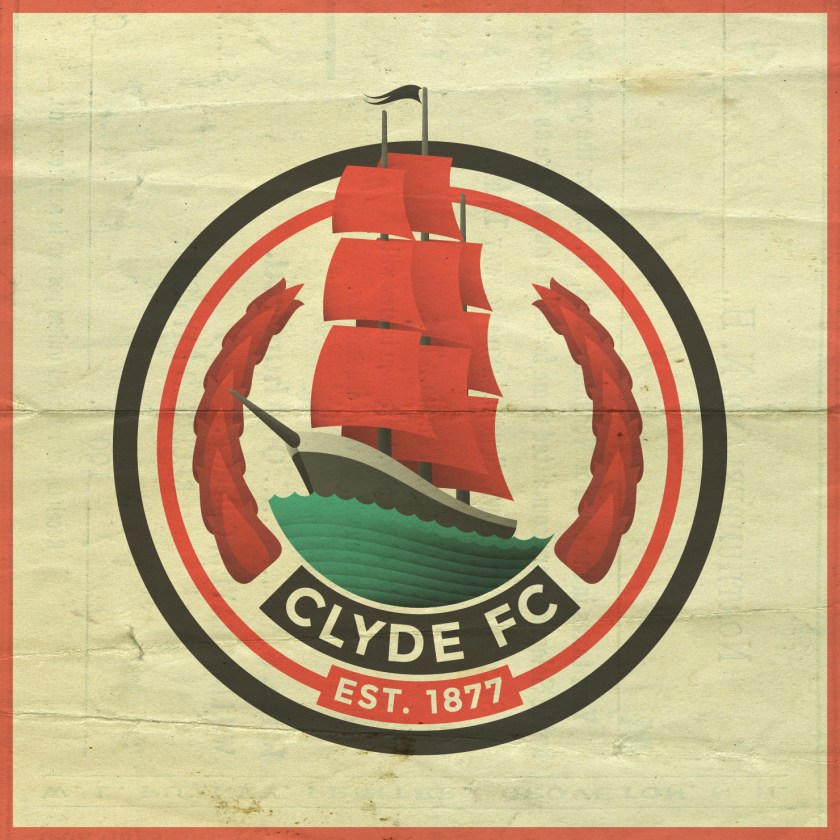
 Clyde Football Club was established in 1877. The club’s first home ground was called Barrowfield Park, located near the Glasgow district of Bridgeton, on the northern bank of the River Clyde, from which the club took its name.

 ellliottt